


x


 Bestil tryk Køb højopløseligt billede
 Del
Del
 Detaljer
 Tilføj til favoritter
 Download
 Lignende værker
 Røntgenundersøgelse
 Diasshow
 Acrylic On CanvasWallArtConcrete Art
 1949
1949 72.0 x 53.0 cm
 Centro Cultural Banco do Brasil Rio de Janeiro
Håndmalet olie på lærred i din valgte størrelse og ramme, udført efter bestilling af vores kunstnere.





























Vælg mellem vores forudindstillede størrelser, der matcher kunstværkets originale proportioner.

Du kan indtaste dine egne mål for at passe til en bestemt ramme eller plads. Hvis den valgte størrelse ikke stemmer overens med det originale billedes proportioner, vil vi enten beskære kunstværket eller udvide maleriet med yderligere håndmalede elementer. En digital skitse sendes til din godkendelse, før produktionen påbegyndes.
Bemærk venligst, at forhåndsvisningen på skærmen ikke afspejler den faktiske beskæring eller udvidelse. Kun skitsen vil nøjagtigt vise den endelige komposition.
Selvom specialmål er mulige, anbefaler vi at vælge en dimension fra den foruddefinerede liste for at bevare de originale proportioner.
Levering i hele verden () på 3/4 uger i stedet for de standard 5 uger. (22 juli). Ingen kompromiser med kvaliteten.


Sem título
Størrelse på reproduktion

Waldemar Cordeiro was a significant figure in the Brazilian art scene, recognized as both an influential artist and a compelling art critic. Born in Recife, Brazil, in 1924, he tragically passed away in 1973. His legacy is deeply intertwined with the Concrete Art movement in Latin America, where he played a pivotal role in shaping the artistic landscape of his country.
Cordeiro's career began with an innovative foray into computer art – a groundbreaking pursuit for its time. He was among the first artists to experiment with this emerging medium, establishing himself as a pioneer in the field. His involvement with Grupo Ruptura proved crucial in his artistic development. This group of artists aimed to advance modern art in Brazil and became instrumental in fostering the Concrete Art movement.
Cordeiro’s artistic style is characterized by a distinct use of strong geometric shapes and bold colors. His work reflects a commitment to creating objects that exist independently of representational imagery, aligning with the core principles of Concrete Art. He collaborated with other notable artists like Carlos Alberto Zilio, another prominent figure in Brazilian Concrete Art. Some of his most recognized works are displayed at the Museu de Valores do Banco Central do Brasil in Brasília. His paintings often feature alongside works by Amílcar Augusto Pereira de Castro, known for his contributions to the neo-constructivist movement.
Cordeiro’s dedication to Grupo Ruptura directly contributed to the development of the Concrete Art movement. This movement emphasized creating works that exist as objects rather than representations of reality, prioritizing pure form and geometric abstraction. His theoretical writings significantly shaped the philosophy behind this movement. He was influenced by Max Bill's Concrete Art concepts and Visual Gestalt principles. Cordeiro’s work also reflects a Marxist political perspective, believing art should be accessible to all and rejecting “art for art’s sake.”
Waldemar Cordeiro's legacy continues to resonate within the art world. His contributions to Concrete Art have inspired generations of artists, and his work stands as a testament to innovation and experimentation. Institutions like the Museu de Valores do Banco Central do Brasil and the São Paulo Museum of Modern Art recognize his significant impact. Beyond painting, he was also a landscape designer, creating sculptural gardens and public spaces that disseminated modern architecture and landscaping throughout Brazil. His pioneering use of computers in art, known as Arteonica, further solidified his place as a visionary artist who pushed the boundaries of artistic expression.

1924 - 1973 , Brazil

Oplev de 25 mest ikoniske kunstværker fra Metropolitan Museum of Art i New York! Fra Monet til Van Gogh – lær historierne bag mesterværkerne og find inspiration til dit hjem. Køb museumskvalitets reproduktioner på Most-Famous-Paintings.com.
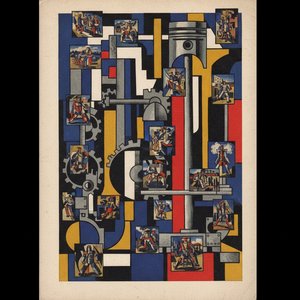
Oplev Fernand Légers 25 mest ikoniske kunstværker! Dyk ned i kubismens verden, maskinæraen og hans farverige malerier. Find inspiration til din boligindretning & køb reproduktioner af højeste kvalitet på Most-Famous-Paintings.com.
Oplev James Abbott McNeill Whistlers 25 mest ikoniske kunstværker. Fordyb dig i æstetismens verden, tonale malerier & harmoniske kompositioner. Find reproduktioner af højeste kvalitet og inspiration til din indretning på Most-Famous-Paintings.com.
Oplev Henri Matisse' 25 mest ikoniske kunstværker – fra Fauvisme til Paper Cutouts. Lær historien bag farvernes mester og find inspiration til din boligindretning med museumskvalitets reproduktioner på Most-Famous-Paintings.com.
Oplev de 25 mest ikoniske kunstværker fra National Gallery of Art, Washington! Fra Cézannes revolutionerende stil til Matisses farverige mesterværker. Find inspiration og køb museumskvalitets reproduktioner på Most-Famous-Paintings.com.


Hold dig opdateret med de seneste kunstnyheder, eksklusive tilbud og indretningsideer.
Fortæl os om dit projekt, og vores kunsteksperter vil give dig 3 personlige kunstforslag.
Vi kuraterer 3 valgmuligheder kun til dig – Gratis!


 Del
Del

 Se mere







 Glasmulighed er kun tilgængelig i størrelser under 110 cm


