x

Giclée- eller lærredstryk i museumskvalitet med hurtig produktion og fleksible muligheder for finish. ( Køb håndlavet maleri Køb billede)





























Vælg mellem vores forudindstillede størrelser, der matcher kunstværkets originale proportioner.

Du kan indtaste dine egne mål for at passe til en specifik ramme eller et bestemt område. Hvis den valgte størrelse ikke stemmer overens med det originale billedes proportioner, vil vi enten beskære kunstværket eller udvide billedet med en spejlet eller ensfarvet kant. En digital mockup vil blive sendt til din godkendelse, før produktionen påbegyndes.
Bemærk venligst, at forhåndsvisningen på skærmen ikke afspejler den faktiske beskæring eller udvidelse. Kun mockuppen vil nøjagtigt vise den endelige komposition.
Selvom specialmål er tilgængelige, anbefaler vi at vælge et mål fra den foruddefinerede liste for at bevare de originale proportioner.
Verdensomspændende levering () på 2 uger i stedet for de sædvanlige 4/5 uger. (17 august)


Painting
Størrelse på reproduktion
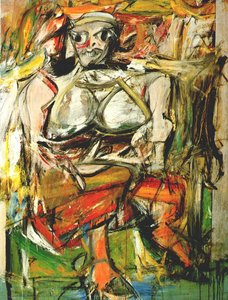
Willem de Kooning's "Painting," completed in 1948, isn’t merely a canvas adorned with black and white; it’s an embodiment of the turbulent energy that defined Abstract Expressionism at its nascent stage. This monumental work, measuring over four by five feet, immediately commands attention not through representational imagery – there is none to be found – but through a visceral engagement with line, form, and texture. De Kooning, a pivotal figure in American art’s post-war transformation, wasn't interested in replicating the world; he sought to distill its essence, its anxieties, and its raw vitality onto the surface of the canvas.
The painting’s genesis lies within de Kooning’s exploration of the human form, a subject he had wrestled with for decades. However, by 1948, this engagement shifted dramatically. Rather than meticulously rendering figures, he began transferring fragmented sketches – hints of limbs, torsos, and even suggestive anatomical details – onto the canvas as a starting point. These ghostly outlines then became the foundation for a dynamic process of layering, scraping, and reworking. The result is a complex interplay between control and chaos, a deliberate tension that mirrors the artist’s own internal state during this period.
De Kooning's technique in "Painting" is nothing short of revolutionary. He eschewed traditional brushwork, favoring instead a rapid, almost frantic application of paint – primarily enamel sign paint, a readily available industrial product – using his fingers, palette knives, and even rags to manipulate the medium. The lines aren’t clean or precise; they are jagged, broken, and often overlapping, creating a sense of movement and instability. Thick impasto areas contrast sharply with thinner washes, adding depth and texture to the composition. The painting is not built up gradually but rather through a series of impulsive gestures, as if the artist were wrestling with the image itself.
Notice how the black forms, delineated by stark white lines, seem to both define and dissolve into one another. These shapes aren’t static; they vibrate with an internal energy, suggesting a constant state of flux. The use of negative space is equally crucial – the areas *between* the forms are just as important as the forms themselves, contributing to the painting's overall sense of dynamism.
While de Kooning vehemently resisted assigning definitive meaning to his work, "Painting" undeniably evokes a powerful emotional response. The fragmented figures, reminiscent of both human anatomy and abstract shapes, can be interpreted as representing the anxieties and uncertainties of post-war America. The painting’s chaotic composition mirrors the social and political upheaval of the time, while its stark black and white palette suggests a sense of isolation and alienation.
Some viewers have identified hints of female forms within the abstract shapes – breasts, limbs, even suggestive buttocks – reflecting de Kooning's ongoing exploration of the feminine. However, these figures are never fully realized; they remain elusive and ambiguous, adding to the painting’s unsettling power. The overall effect is one of intense emotionality, a raw expression of the artist’s inner turmoil.
"Painting" stands as a pivotal work in de Kooning's oeuvre and a cornerstone of Abstract Expressionism. Its innovative technique, its exploration of form and gesture, and its profound emotional resonance continue to captivate viewers today. The painting’s influence can be seen in the works of countless artists who followed in de Kooning’s footsteps, solidifying his place as one of the most important figures in 20th-century art. Reproductions of this dynamic masterpiece offer a glimpse into the mind of a visionary artist grappling with the complexities of modern life.


1904 - 1997 , Holland
Explore the profound emotional depth of Lyrical Abstraction. Discover how masters like Raymond Parker used color and form to bridge Impressionism and Abstract Expressionism. Learn about this pivotal movement through our expert-led art history guide.

Explore the profound history and emotional depth of Abstract Expressionism. From Jackson Pollock to Mark Rothko, master the nuances of the New York School through our expert art history guide. Discover museum-quality hand-painted reproductions for your collection.

Explore the profound emotional depth of Color Field painting. Discover the history of mid-century abstraction, from Rothko to Newman, and learn how pure color transforms the viewer's experience through our expert art history guide.


Hold dig opdateret med de seneste kunstnyheder, eksklusive tilbud og indretningsideer.
Fortæl os om dit projekt, og vores kunsteksperter vil give dig 3 personlige kunstforslag.
Vi kuraterer 3 valgmuligheder kun til dig – Gratis!


 Se i fuld skala
 Del
Del Del
Del
 Detaljer

 Download
 Lignende værker
 Røntgenundersøgelse
 Diasshow

 Se mere







 Glasmulighed er kun tilgængelig i størrelser under 110 cm