


x


Giclée- eller lærredstryk i museumskvalitet med hurtig produktion og fleksible muligheder for finish. ( Switch to hand made Painting Switch to Image)





























Vælg mellem vores forudindstillede størrelser, der matcher kunstværkets originale proportioner.

Du kan indtaste dine egne mål for at passe til en specifik ramme eller et bestemt område. Hvis den valgte størrelse ikke stemmer overens med det originale billedes proportioner, vil vi enten beskære kunstværket eller udvide billedet med en spejlet eller ensfarvet kant. En digital mockup vil blive sendt til din godkendelse, før produktionen påbegyndes.
Bemærk venligst, at forhåndsvisningen på skærmen ikke afspejler den faktiske beskæring eller udvidelse. Kun mockuppen vil nøjagtigt vise den endelige komposition.
Selvom specialmål er tilgængelige, anbefaler vi at vælge et mål fra den foruddefinerede liste for at bevare de originale proportioner.
Verdensomspændende levering () på 2 uger i stedet for de sædvanlige 4/5 uger. (29 juli)


Plate seven, from A Rake's Progress
Størrelse på reproduktion
William Hogarth's "Plate Seven" from his sprawling moral epic, *A Rake’s Progress*, is not merely a painting; it’s a meticulously crafted tableau of despair and the corrosive power of unchecked indulgence. Completed in 1735, this watercolor on paper offers a chilling glimpse into the mind of Tom Rakewell, now utterly consumed by madness after squandering his inheritance on fleeting pleasures. The scene unfolds within Bedlam, London's infamous asylum, a space rendered with unsettling realism and imbued with a palpable sense of confinement – both physical and mental. Hogarth’s genius lies in his ability to transform a single, dramatic moment into a profound commentary on societal decay and the consequences of moral bankruptcy.
The composition is dominated by Tom Rakewell himself, depicted as a gaunt, almost skeletal figure, his eyes wide with terror and confusion. He's surrounded by a chaotic assortment of Bedlam inmates – some weeping, others howling, still others seemingly lost in their own private torment. The figures are rendered with remarkable detail, each expression conveying a unique level of anguish. Notice the stark contrast between Rakewell’s pale complexion and the vibrant, almost lurid colors used to depict the asylum's surroundings; this immediately establishes a symbolic tension – the external world of Bedlam mirroring the internal turmoil within the protagonist.
While often categorized as part of the Rococo style—noted for its ornate details and curving lines—Hogarth’s approach to *A Rake's Progress* transcends simple categorization. He employs elements of Rococo, particularly in the decorative patterns within the asylum walls and the overall sense of theatricality, but grounds them firmly in a distinctly English moralistic sensibility. Crucially, Hogarth’s masterful use of watercolor is what truly elevates this work. The medium allows for incredible subtlety – he captures the textures of clothing, the sheen of sweat on skin, and the flickering light with breathtaking precision.
To fully appreciate “Plate Seven,” it’s essential to understand the social and economic landscape of 18th-century England. The period witnessed a dramatic rise in wealth alongside increasing social inequality, creating a fertile ground for moral corruption. *A Rake's Progress* directly addresses this reality, exposing the excesses and vices of London’s elite through the tragic story of Tom Rakewell. Hogarth wasn’t simply depicting madness; he was indicting a society obsessed with superficial pleasures and devoid of ethical restraint.
The painting reflects the anxieties surrounding social mobility and the perceived decline of traditional values. Bedlam itself represents a societal failure – a place where those deemed ‘mad’ were often abandoned, highlighting the neglect of the vulnerable within a rapidly changing world. The series as a whole served as a powerful visual sermon, warning against the dangers of unchecked ambition and the pursuit of fleeting gratification.
Beyond its narrative content, “Plate Seven” is rich in symbolism. Rakewell’s descent into madness can be interpreted as a metaphor for the loss of reason and judgment when consumed by vice. The asylum walls, with their grotesque decorations, symbolize the prison of the mind – a space where logic and morality are abandoned. Even the lighting contributes to the painting's emotional impact: the dim, flickering light within Bedlam creates an atmosphere of claustrophobia and despair.
Ultimately, “Plate Seven” is a profoundly unsettling yet undeniably captivating work. It’s a testament to Hogarth’s artistic skill and his unwavering commitment to exposing the darker side of human nature. At Most-Famous-Paintings, we are proud to offer meticulously crafted reproductions that allow you to experience the full power and emotional resonance of this iconic masterpiece – a window into a turbulent era and a timeless warning against the perils of excess.

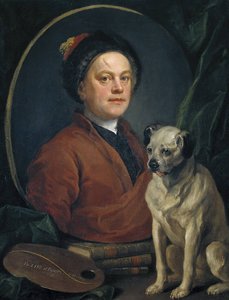
1697 - 1764 , Storbritannien

Oplev de 10 mest legendariske akvarelmesterværker, der har ændret kunsthistorien! Fra Turner til Monet – lær om teknikken og historierne bag ikoniske værker. Find museumskvalitets reproduktioner & inspiration til din indretning på Most-Famous-Paintings.com.

Explore the satirical world of William Hogarth, pioneering British painter & engraver. Discover his iconic works like *A Rake's Progress* and insightful social commentary on 18th-century London life.

Explore the captivating world of watercolor painting! Discover its rich history, essential techniques, influential artists & collecting tips. A comprehensive guide for art enthusiasts from Most-Famous-Paintings.

Explore the captivating history of watercolor painting, from ancient techniques to modern masters like Kandinsky & Blake. Discover essential artists, collecting tips & the emotional power of this luminous medium. Expert insights for art enthusiasts.

Explore the captivating world of watercolor painting! Discover its rich history, essential techniques, influential artists & collecting tips from art experts. A comprehensive guide for enthusiasts.


Hold dig opdateret med de seneste kunstnyheder, eksklusive tilbud og indretningsideer.
Fortæl os om dit projekt, og vores kunsteksperter vil give dig 3 personlige kunstforslag.
Vi kuraterer 3 valgmuligheder kun til dig – Gratis!


 Preview
 Del
Del Del
Del
 Detaljer

 Download
 Lignende værker
 Røntgenundersøgelse
 Diasshow

 Se mere







 Glasmulighed er kun tilgængelig i størrelser under 110 cm


