x


 Gemälde kaufen Bild kaufen
 Versenden
 Details anzeigen
 Zu Favoriten hinzufügen
 Herunterladen
 Ähnliche Objekte
 Röntgenaufnahme
 Diashow anzeigen
Giclée- oder Leinwanddruck in Museumsqualität mit schneller Produktion und flexiblen Veredelungsoptionen.





























Wählen Sie aus unseren vordefinierten Größen, die den ursprünglichen Proportionen des Kunstwerks entsprechen.

Sie können Ihre eigenen Maße eingeben, um ein bestimmtes Format oder einen speziellen Platz einzupassen. Wenn das von Ihnen gewählte Format nicht den Proportionen des Originalbildes entspricht, werden wir das Kunstwerk entweder beschneiden oder das Bild mit einem gespiegelten oder einfarbigen Rand erweitern. Ein digitaler Entwurf wird Ihnen zur Genehmigung zugesandt, bevor die Produktion beginnt.
Bitte beachten Sie, dass die Vorschau auf dem Bildschirm nicht den tatsächlichen Zuschnitt oder die Erweiterung widerspiegelt. Nur der Entwurf zeigt die endgültige Komposition präzise an.
Obwohl Sondermaße verfügbar sind, empfehlen wir die Auswahl eines Maßes aus der vordefinierten Liste, um die ursprünglichen Proportionen zu bewahren.
Weltweiter Versand () innerhalb von 2 Wochen statt der üblichen 4/5 Wochen. (22 Juli)


Der Diener
Größe der Reproduktion
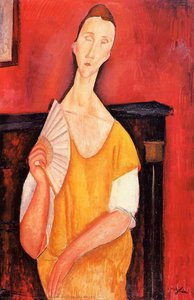
Amedeo Clemente Modigliani’s “Der Diener” (The Servant), painted in 1916, is more than just a portrait; it's a poignant meditation on loneliness, longing and the quiet dignity of an unseen life. This oil on canvas work, now residing within the Kunsthaus Zürich, immediately draws the viewer into its melancholic embrace. The painting’s power lies not in grand gestures or dramatic poses, but rather in the subtle nuances of expression – the downward tilt of the head, the slightly parted lips, and most notably, the eyes that seem to hold a universe of unspoken sorrow.
Modigliani's signature style is powerfully evident here. He eschews traditional realism, instead favoring elongated features and a flattened perspective, hallmarks of his Expressionist period. The figure’s face, particularly her profile, possesses an almost sculpted quality – a deliberate distortion that emphasizes the vulnerability beneath the surface. The muted color palette—primarily greens, blacks, and browns—contributes significantly to the painting's somber mood. These earthy tones evoke a sense of confinement and quiet desperation, mirroring the subject’s apparent isolation.
To fully appreciate “Der Diener,” it’s crucial to understand the artist’s personal circumstances and the broader artistic currents of the time. Born in Livorno into a Jewish family, Modigliani experienced significant hardship throughout his life – recurring illnesses and financial instability shaped his perspective profoundly. This biographical backdrop undoubtedly informs the painting's pervasive sense of melancholy. His exposure to the philosophical writings of Nietzsche, Baudelaire, and Lautréamont—introduced by his mother and grandfather—provided a framework for exploring themes of alienation, beauty, and the darker aspects of human existence – concepts that resonate deeply within this portrait.
The painting emerged during a period of intense artistic experimentation in Europe. Expressionism was gaining momentum, rejecting academic conventions in favor of subjective emotional expression. Modigliani’s work, alongside that of artists like Kirchner and Munch, sought to capture the anxieties and uncertainties of a rapidly changing world. “Der Diener” can be seen as a microcosm of this broader movement, reflecting a growing sense of disillusionment with societal norms and an exploration of the inner lives of individuals.
Modigliani’s masterful technique is evident in the rich texture and depth achieved through his use of oil paint. He employs a broken brushstroke, layering colors to create subtle gradations and atmospheric effects. The way he renders light and shadow—particularly around the face—is remarkably evocative, drawing attention to the subject's features and imbuing them with an almost haunting quality. The slightly blurred edges contribute to the painting’s dreamlike atmosphere, suggesting a state of suspended animation or introspection.
Notice how Modigliani utilizes the background – a simple green wall – not as mere decoration but as a visual metaphor for the subject's confinement and isolation. The muted tones further emphasize her solitude, creating a powerful contrast between her internal world and the external environment. The painting’s composition is deliberately understated, focusing entirely on the figure and allowing the viewer to project their own emotions and interpretations onto the scene.
"Der Diener" transcends a simple depiction of a servant; it's an exploration of human vulnerability. The subject’s averted gaze suggests a quiet resignation, a sense that she is both present and distant. Her attire—a simple black dress—underscores her position as someone who exists largely unseen and unheard. Yet, within this apparent anonymity lies a profound dignity – a testament to the resilience of the human spirit in the face of adversity.
Ultimately, “Der Diener” is a timeless masterpiece that continues to resonate with viewers today. It’s a poignant reminder of the beauty and sadness inherent in the everyday lives of ordinary people, and a powerful expression of Modigliani's unique artistic vision. High-quality reproductions of this evocative work are available through Most-Famous-Paintings.com, allowing you to bring this captivating portrait into your own home or office – a testament to the enduring legacy of Amedeo Clemente Modigliani.


1884 - 1920 , Italien

Entdecken Sie die 25 ikonischsten Gemälde von Amedeo Modigliani! Erfahren Sie mehr über seine einzigartigen Porträts, den Expressionismus & seinen Stil. Hochwertige Kunstdrucke auf Most-Famous-Paintings.com – für Kunstliebhaber & stilvolles Wohnen.

Entdecken Sie die 10 berühmtesten Porträtkunstwerke der Geschichte! Von Mona Lisa bis Van Gogh – erfahren Sie die Geschichten hinter den Meisterwerken und lassen Sie sich von Renaissance, Barock & mehr inspirieren. Kunstdrucke in Museumqualität auf Most-Famous-Paintings.com.
Entdecken Sie die 25 bedeutendsten Gemälde von Egon Schiele! Tauchen Sie ein in die Welt des Expressionismus, erfahren Sie mehr über seine Technik und emotionale Tiefe. Hochwertige Kunstdrucke & Leinwandbilder auf Most-Famous-Paintings.com.

Entdecken Sie die Top 10 berühmter Gemälde, beherrscht von dunklen Tönen! Von Caravaggio bis Manet – erfahren Sie die Geschichten hinter Meisterwerken der Kunstgeschichte. Finden Sie Ihre perfekte Reproduktion auf .

Entdecken Sie die 25 Meisterwerke von Francis Bacon! Erleben Sie existenzielle Schmerz, expressive Porträts & dunkle Farben. Kunstreproduktionen in Museumsqualiät auf Most-Famous-Paintings.com – für Ihre Wanddekoration.


Bleiben Sie über die neuesten Kunstnachrichten, exklusive Angebote und Dekorationsideen auf dem Laufenden.
Erzählen Sie uns von Ihrem Projekt und unsere Kunstexperten erstellen für Sie 3 personalisierte Kunstvorschläge.
Wir kuratieren 3 Optionen exklusiv für Sie – kostenlos!


 Teilen


 Weiterlesen







 Die Glasoption ist nur in Größen unter 110 cm verfügbar.