x


 Preview
 Druck bestellen Bild kaufen
 Versenden
 Details anzeigen
 Zu Favoriten hinzufügen
 Herunterladen
 Ähnliche Objekte
 Röntgenaufnahme
 Diashow anzeigen
 Öl auf LeinwandWandkunstExpressionist Portraiture
 1915
1915 54.0 x 45.0 cm
Handgemaltes Ölgemälde auf Leinwand in Ihrer Wunschgröße und mit Rahmen, auf Bestellung von unseren Künstlern angefertigt.





























Wählen Sie aus unseren vordefinierten Größen, die den ursprünglichen Proportionen des Kunstwerks entsprechen.

Sie können Ihre eigenen Maße eingeben, um einen bestimmten Rahmen oder Platz auszufüllen. Wenn die gewählte Größe nicht den Proportionen des Originalbildes entspricht, werden wir das Kunstwerk entweder beschneiden oder das Gemälde durch zusätzliche, handgemalte Elemente erweitern. Ein digitales Mockup wird Ihnen zur Genehmigung zugesandt, bevor die Produktion beginnt.
Bitte beachten Sie, dass die Bildschirmvorschau nicht die tatsächliche Beschneidung oder Erweiterung widerspiegelt. Nur das Mockup zeigt die endgültige Komposition exakt an.
Obwohl Sondermaße verfügbar sind, empfehlen wir, eine Größe aus der vordefinierten Liste zu wählen, um die ursprünglichen Proportionen beizubehalten.
Weltweiter Versand () in nur 3 bis 4 Wochen statt der üblichen 5 Wochen. (25 Juli). Keine Kompromisse bei der Qualität.


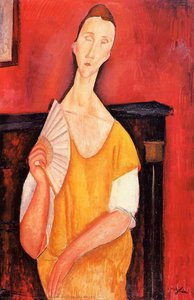
Leon Indenbaum
Größe der Reproduktion
Amedeo Modigliani’s “Leon Indenbaum,” painted in 1915, is more than just a portrait; it's a poignant distillation of the anxieties and artistic currents swirling through early 20th-century Europe. This intimate oil on canvas, measuring a modest 54 x 45 cm, offers a glimpse into the soul of its subject – Leon Indenbaum, a Russian sculptor grappling with his own identity and the uncertainties of a rapidly changing world. The painting immediately draws the eye to the figure’s stark features: the shaved head, a deliberate rejection of conventional notions of masculinity; the thick-rimmed glasses, suggesting intellectual curiosity and perhaps a degree of isolation; and the prominent nose, a defining characteristic that lends the portrait an almost sculptural quality.
Modigliani's masterful technique is immediately apparent. He employs elongated forms, a hallmark of his style, to subtly distort the subject’s features, creating a sense of unease and introspection. The simplification of the face – the smooth planes, the lack of sharp angles – contributes to this feeling, mirroring the emotional landscape he sought to capture. The background, with its barely discernible writing, adds another layer of mystery, hinting at a private world, perhaps filled with thoughts and anxieties that remain unspoken. It’s a deliberate choice by Modigliani to draw focus entirely onto Indenbaum's face, amplifying his internal state.
“Leon Indenbaum” firmly resides within the realm of Expressionism, a movement that sought to convey subjective emotions and experiences rather than objective reality. The painting isn’t concerned with a realistic depiction of the subject; instead, it aims to reveal his inner world – a sense of melancholy, perhaps even loneliness. This is powerfully achieved through Modigliani's use of color: muted tones dominate, punctuated by subtle highlights that draw attention to key features and create an atmosphere of quiet contemplation. The brushstrokes are loose and expressive, contributing to the overall feeling of movement and emotional intensity.
Modigliani’s artistic lineage is complex, drawing inspiration from a diverse range of influences. The echoes of Cubism, with its fragmented forms and multiple perspectives, can be detected in the subtle distortions of the face. Similarly, elements of Fauvism – particularly the bold use of color – are present, though tempered by Modigliani’s characteristic restraint. However, it is his deeply personal approach that truly distinguishes his work; he wasn't simply replicating artistic trends but channeling his own emotional responses onto the canvas.
To understand “Leon Indenbaum” fully, we must consider its historical context. 1915 was a year of immense upheaval – the outbreak of World War I cast a long shadow over Europe, disrupting lives and shattering illusions. Artists like Modigliani were grappling with these anxieties, seeking to express the profound sense of loss and uncertainty that permeated society. The painting can be seen as a reflection of this broader cultural mood, capturing a moment of quiet introspection amidst the chaos of the era.
The inclusion of writing on the wall is particularly significant. It suggests a dialogue between the subject and his own thoughts, perhaps even a struggle with identity or purpose. It’s a subtle detail that adds depth to the portrait and invites viewers to contemplate the complexities of human experience. The fact that this painting was later acquired by the Henry and Rose Pearlman Foundation and is now part of the Princeton University Art Museum underscores its enduring value as an example of Modigliani's artistic vision.
Most-Famous-Paintings offers exquisite, hand-painted reproductions of “Leon Indenbaum,” allowing you to bring this captivating artwork into your own space. These meticulously crafted reproductions faithfully capture the nuances of Modigliani’s technique and emotional intensity, ensuring that you experience the painting's beauty and power firsthand. Whether you are an art collector, a design enthusiast, or simply someone seeking to add a touch of artistic elegance to your home, a Most-Famous-Paintings reproduction of “Leon Indenbaum” is a timeless investment – a testament to the enduring legacy of Amedeo Modigliani and his profound exploration of the human condition.


1884 - 1920 , Italien

Elevate your home with bespoke high-realism oil pet portraits by Most-Famous-Paintings's master artists. We transform cherished memories into museum-grade, hand-painted masterpieces on fine canvas. Experience unparalleled craftsmanship, personalized service, and a 100% satisfaction guarantee.


Bleiben Sie über die neuesten Kunstnachrichten, exklusive Angebote und Dekorationsideen auf dem Laufenden.
Erzählen Sie uns von Ihrem Projekt und unsere Kunstexperten erstellen für Sie 3 personalisierte Kunstvorschläge.
Wir kuratieren 3 Optionen exklusiv für Sie – kostenlos!


 Teilen

 Weiterlesen







 Die Glasoption ist nur in Größen unter 110 cm verfügbar.