


x


 Preview
 Druck bestellen Bild kaufen
 Versenden
 Details anzeigen
 Zu Favoriten hinzufügen
 Herunterladen
 Ähnliche Objekte
 Röntgenaufnahme
 Diashow anzeigen
Handgemaltes Ölgemälde auf Leinwand in Ihrer Wunschgröße und mit Rahmen, auf Bestellung von unseren Künstlern angefertigt.





























Wählen Sie aus unseren vordefinierten Größen, die den ursprünglichen Proportionen des Kunstwerks entsprechen.

Sie können Ihre eigenen Maße eingeben, um einen bestimmten Rahmen oder Platz auszufüllen. Wenn die gewählte Größe nicht den Proportionen des Originalbildes entspricht, werden wir das Kunstwerk entweder beschneiden oder das Gemälde durch zusätzliche, handgemalte Elemente erweitern. Ein digitales Mockup wird Ihnen zur Genehmigung zugesandt, bevor die Produktion beginnt.
Bitte beachten Sie, dass die Bildschirmvorschau nicht die tatsächliche Beschneidung oder Erweiterung widerspiegelt. Nur das Mockup zeigt die endgültige Komposition exakt an.
Obwohl Sondermaße verfügbar sind, empfehlen wir, eine Größe aus der vordefinierten Liste zu wählen, um die ursprünglichen Proportionen beizubehalten.
Weltweiter Versand () in nur 3 bis 4 Wochen statt der üblichen 5 Wochen. (26 Juli). Keine Kompromisse bei der Qualität.


The Cyclops Polyphemus
Größe der Reproduktion
Annibale Carracci’s *The Cyclops Polyphemus*, completed in 1605, stands as a cornerstone of Baroque art—a dramatic distillation of classical mythology infused with the fervor and theatricality characteristic of Rome under Pope Paul V. Located within Palazzo Farnese, Rome, this fresco isn't merely a depiction of Homer’s epic tale; it’s an immersive experience designed to provoke awe and instill fear, mirroring the artistic ambitions of its time.
Carracci’s stylistic approach—a masterful blend of Florentine linear draftsmanship inherited from Raphael and Venetian coloristic exuberance—immediately distinguishes itself. He eschewed the idealized forms favored by Renaissance artists, opting instead for a palpable sense of physicality and emotional intensity. The artist's technique involved meticulous layering of pigments onto wet plaster, creating a luminous surface that captures both light and shadow with breathtaking precision – a hallmark of chiaroscuro championed by Michelangelo.
The narrative itself recounts Polyphemus’s relentless pursuit of Acis and Galatea, portraying the monstrous Cyclops as a formidable adversary armed with a bow and arrow. Carracci skillfully utilizes dramatic lighting to heighten tension, casting harsh shadows that emphasize Polyphemus's grotesque features and conveying the desperation of his victims. The composition is carefully balanced, guiding the viewer’s gaze across the scene and amplifying its emotional impact.
Beyond its captivating visual drama, *The Cyclops Polyphemus* resonates with profound symbolic meaning. Polyphemus embodies primal savagery—a rejection of civilized restraint—while Acis and Galatea represent innocence and vulnerability. Carracci’s depiction underscores the enduring fascination with themes of heroism, terror, and moral struggle – anxieties prevalent during the Counter Reformation.
Carracci's influence extended far beyond Palazzo Farnese. His workshop served as a training ground for future Baroque masters like Domenichino and Guido Reni, disseminating his innovative techniques and stylistic sensibilities throughout Italy. The fresco’s bold use of color and expressive gesture established new standards for artistic representation, propelling Baroque art to unprecedented heights of grandeur and emotional resonance.
Carracci's mastery of fresco technique is evident in the remarkable durability of *The Cyclops Polyphemus*. The pigments bind permanently to the plaster surface, ensuring that its vibrant colors retain their luminosity for centuries. When considering reproductions, it’s crucial to utilize archival-quality materials—such as pigment dispersions and substrates—to faithfully capture the original artwork's essence.
Reproductions should prioritize accurate color rendition and textural detail, striving to convey not only what was seen but also how it *felt*. High-resolution prints or canvases offer optimal visual fidelity, allowing viewers to appreciate Carracci’s artistic genius from afar—a testament to the enduring power of Baroque art.
*The Cyclops Polyphemus* remains a captivating exemplar of Baroque artistry—a masterpiece that continues to inspire admiration and provoke contemplation. Its masterful composition, evocative lighting, and profound symbolic depth solidify Carracci’s place among the titans of Italian Renaissance art.


1560 - 1609 , Italien

Explore the dramatic world of Baroque art! Discover iconic artists like Caravaggio & Rubens, defining techniques, and its lasting impact on art history. Expert insights for collectors & enthusiasts at Most-Famous-Paintings.

Explore the profound history of grief in art, from Renaissance masterpieces to Baroque drama. Discover how artists captured loss, mourning & faith through powerful imagery. Expert insights at Most-Famous-Paintings.

Explore the profound history of grief in art with Most-Famous-Paintings. Discover Renaissance & Baroque masterpieces depicting loss, mourning, and faith. Expert insights & handmade reproductions available.

Explore the dramatic world of Baroque art! Discover iconic masters like Caravaggio & Rembrandt, their techniques, and the movement's lasting impact. Expert insights for collectors & enthusiasts at Most-Famous-Paintings.
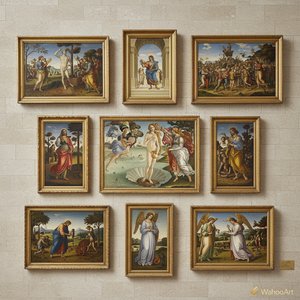
Entdecken Sie die 10 prägendsten Meisterwerke der Frührenaissance! Von Giotto bis Botticelli – erleben Sie Kunstgeschichte hautnah. Hochwertige Reproduktionen für Ihr Zuhause auf .


Bleiben Sie über die neuesten Kunstnachrichten, exklusive Angebote und Dekorationsideen auf dem Laufenden.
Erzählen Sie uns von Ihrem Projekt und unsere Kunstexperten erstellen für Sie 3 personalisierte Kunstvorschläge.
Wir kuratieren 3 Optionen exklusiv für Sie – kostenlos!


 Teilen


 Weiterlesen







 Die Glasoption ist nur in Größen unter 110 cm verfügbar.


