x


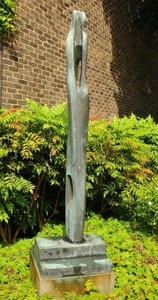
 StoneSculptureAbstraction-Création
 Modern
 53.0 x 34.0 cm
 Tate Britain
Giclée- oder Leinwanddruck in Museumsqualität mit schneller Produktion und flexiblen Veredelungsoptionen. ( Switch to hand made Painting Switch to Image)
Wählen Sie aus unseren vordefinierten Größen, die den ursprünglichen Proportionen des Kunstwerks entsprechen.

Sie können Ihre eigenen Maße eingeben, um ein bestimmtes Format oder einen speziellen Platz einzupassen. Wenn das von Ihnen gewählte Format nicht den Proportionen des Originalbildes entspricht, werden wir das Kunstwerk entweder beschneiden oder das Bild mit einem gespiegelten oder einfarbigen Rand erweitern. Ein digitaler Entwurf wird Ihnen zur Genehmigung zugesandt, bevor die Produktion beginnt.
Bitte beachten Sie, dass die Vorschau auf dem Bildschirm nicht den tatsächlichen Zuschnitt oder die Erweiterung widerspiegelt. Nur der Entwurf zeigt die endgültige Komposition präzise an.
Obwohl Sondermaße verfügbar sind, empfehlen wir die Auswahl eines Maßes aus der vordefinierten Liste, um die ursprünglichen Proportionen zu bewahren.
Weltweiter Versand () innerhalb von 2 Wochen statt der üblichen 4/5 Wochen. (29 Juli)


Three Forms
Größe der Reproduktion
In the quiet, monochromatic realm of Barbara Hepworth’s Three Forms, we encounter a profound dialogue between matter and void. Captured in a striking black-and-white composition, this work serves as a masterclass in the minimalist aesthetic that defined much of the twentieth-century sculptural revolution. The photograph presents three abstract sculptures, each a testament to Hepworth's ability to breathe life into stone. Arranged with meticulous balance upon a rectangular platform, these organic shapes emerge from a deep, velvety black background, creating an atmosphere of intense focus and meditative stillness. There is no distraction here—only the pure, unadulated interplay of light and shadow that defines the very soul of modernism.
The visual journey through this piece is one of tactile discovery. As the eye wanders across the smooth, rounded contours of the sculptures, one can almost feel the polished surface of the marble or alabaster from which they were birthed. Hepworth’s technique involves a delicate dance with geometry; while the sculptures themselves possess soft, flowing lines reminiscent of weathered river stones or celestial bodies, they are anchored by the sharp, decisive edge of the platform. This juxtaposition of organic fluidity and geometric stability creates a rhythmic tension, inviting the viewer to contemplate the relationship between the natural world and human intervention.
To understand Three Forms is to understand the historical weight of the Unit One movement. As a pioneer who sought to bridge the gap between Surrealism and pure Abstraction, Hepworth utilized light as a sculptural tool. In this particular rendering, the directional lighting acts as an invisible chisel, carving out bright highlights that define the sculptures' three-dimensional presence and casting deep, dramatic shadows that suggest hidden depths within the stone. This interplay of luminance does more than just illuminate; it imbues the inanimate objects with a sense of movement and breath, making the static forms feel vibrantly alive.
For the discerning collector or interior designer, this work offers an unparalleled opportunity to introduce a sense of timeless sophistication into a space. The monochromatic palette ensures that the piece remains versatile, acting as a focal point that complements both contemporary minimalist interiors and more classical, opulent settings. It is not merely a photograph of sculpture, but an evocative window into the heart of British Modernism—a piece that promises to bring a sense of structural harmony, intellectual depth, and quiet elegance to any curated collection.

Hepworths künstlerische Entwicklung war von verschiedenen Einflüssen geprägt. Ihre frühen Werke zeigten noch vereinfachte, naturalistische Formen, doch sie konzentrierte sich zunehmend auf formale Aspekte. Die Begegnung mit Künstlern wie Brancusi und Arp in Paris trug maßgeblich zu ihrer Hinwendung zur Abstraktion bei. Sie experimentierte mit Collage, Fotogrammen und Drucken und entwickelte eine einzigartige Sensibilität für ihre Materialien. Ihre Arbeit wurde von der direkten Bearbeitung des Materials geprägt, wobei sie oft Fäden, Drähte und farbiges Pigment in ihre Skulpturen integrierte.

1903 - 1975 , Vereinigtes Königreich
Entdecken Sie die 25 Meisterwerke von Fernand Léger! Tauchen Sie ein in die Welt des Kubismus, Tubismus & der Avantgarde. Hochwertige Kunstreproduktionen für Ihr Zuhause – jetzt auf Most-Famous-Paintings.com!
Entdecken Sie die 25 bedeutendsten Gemälde von Wassily Kandinsky! Tauchen Sie ein in die Welt der abstrakten Kunst, des Expressionismus und der Farbkomposition. Hochwertige Kunstdrucke & Inspiration für Ihr Zuhause auf Most-Famous-Paintings.com.

Entdecken Sie die 25 berühmtesten Kunstwerke des Metropolitan Museum of Art, New York! Von Van Gogh bis Monet – erleben Sie Geschichten hinter Meisterwerken. Hochwertige Reproduktionen & Inspiration für Ihr Zuhause auf Most-Famous-Paintings.com.

Entdecken Sie das Werk von Barbara Hepworth – einer Meisterin der abstrakten Skulptur. Erfahren Sie mehr über ihre einzigartige Formensprache, Materialien und ihren Einfluss auf die moderne Kunst. Wertvolle Einblicke für Sammler und Kenner.
Entdecken Sie die 25 ikonischsten Kunstwerke des MoMA New York! Von Van Goghs Sternennacht bis Warhols Campbell Soup Dosen – erleben Sie moderne Meisterwerke. Hochwertige Kunstreproduktionen & Inspiration für Ihr Zuhause auf Most-Famous-Paintings.com.


Bleiben Sie über die neuesten Kunstnachrichten, exklusive Angebote und Dekorationsideen auf dem Laufenden.
Erzählen Sie uns von Ihrem Projekt und unsere Kunstexperten erstellen für Sie 3 personalisierte Kunstvorschläge.
Wir kuratieren 3 Optionen exklusiv für Sie – kostenlos!


 Versenden
 Teilen
 Details anzeigen

 Herunterladen
 Ähnliche Objekte
 Diashow anzeigen
 Weiterlesen




































 Die Glasoption ist nur in Größen unter 110 cm verfügbar.