


x


Handgemaltes Ölgemälde auf Leinwand in Ihrer Wunschgröße und mit Rahmen, auf Bestellung von unseren Künstlern angefertigt. ( Switch to Print Switch to Image)
Wählen Sie aus unseren vordefinierten Größen, die den ursprünglichen Proportionen des Kunstwerks entsprechen.

Sie können Ihre eigenen Maße eingeben, um einen bestimmten Rahmen oder Platz auszufüllen. Wenn die gewählte Größe nicht den Proportionen des Originalbildes entspricht, werden wir das Kunstwerk entweder beschneiden oder das Gemälde durch zusätzliche, handgemalte Elemente erweitern. Ein digitales Mockup wird Ihnen zur Genehmigung zugesandt, bevor die Produktion beginnt.
Bitte beachten Sie, dass die Bildschirmvorschau nicht die tatsächliche Beschneidung oder Erweiterung widerspiegelt. Nur das Mockup zeigt die endgültige Komposition exakt an.
Obwohl Sondermaße verfügbar sind, empfehlen wir, eine Größe aus der vordefinierten Liste zu wählen, um die ursprünglichen Proportionen beizubehalten.
Weltweiter Versand () in nur 3 bis 4 Wochen statt der üblichen 5 Wochen. (29 Juli). Keine Kompromisse bei der Qualität.


Prophet with Scroll
Größe der Reproduktion
Donatello’s “Prophet with Scroll,” crafted between 1415 and 1418, stands as a pivotal work in the burgeoning Early Renaissance of Florence. More than simply a depiction of biblical prophecy, this monumental marble sculpture offers a profound meditation on human experience – a poignant blend of solemnity, introspection, and an enduring sense of spiritual yearning. Located within the third level of Giotto’s Campanile, it was originally intended to adorn the east side of the bell tower, commanding attention with its scale and emotive power.
The sculpture portrays an anonymous prophet, rendered in a remarkably realistic style that departs significantly from the stylized conventions of the International Gothic. Donatello masterfully employed classical influences – particularly evident in the figure’s anatomical precision and balanced composition – while simultaneously imbuing it with a distinctly human quality. The prophet stands erect, his gaze fixed forward with an intensity that suggests both profound contemplation and a weighty responsibility. His smock and cloak are simple yet dignified, reflecting a rejection of ostentatious display and a focus on inner virtue.
What immediately draws the viewer’s eye is the prophet's face – a masterpiece of expressive realism. Donatello eschews idealized beauty, instead presenting a figure marked by age, weariness, and perhaps even sorrow. The furrowed brow, the downturned mouth, and the deeply set eyes convey a sense of melancholy and burdened wisdom. This isn’t a triumphant messenger; rather, it's an individual grappling with the complexities of faith, duty, and the weight of prophecy. The subtle details – the slight wrinkles around the eyes, the hint of sadness in his posture – speak volumes about the human condition.
Crucially, Donatello doesn’t simply depict a prophet delivering a message; he captures the *process* of receiving it. The figure extends both hands towards a scroll, suggesting an active engagement with divine revelation. This gesture invites us to consider the role of the individual in interpreting and responding to spiritual guidance – a theme that resonated deeply within the humanist philosophy gaining traction during this period.
Sculpted from pristine white marble, “Prophet with Scroll” showcases Donatello’s exceptional technical skill. The smooth, polished surface reflects light beautifully, enhancing the figure's luminosity and creating a sense of ethereal presence. The drapery is rendered with remarkable detail, conveying both weight and fluidity. Donatello’s mastery of anatomy is particularly evident in the prophet’s musculature and skeletal structure – a testament to his rigorous study of classical sculpture.
It's important to note that this wasn’t a solitary endeavor; Donatello likely employed assistants in the creation of this monumental work. However, the overall vision and artistic direction undoubtedly rested with him, resulting in a piece that embodies both individual genius and collaborative effort. The statue’s placement within Giotto’s Campanile further elevates its significance, transforming it into a focal point for the entire city.
Beyond its immediate visual appeal, “Prophet with Scroll” is rich in symbolic meaning. The scroll itself represents divine revelation – the transmission of God's word to humanity. The prophet’s solitary stance reflects the often-isolated role of a messenger, burdened with delivering difficult truths. Yet, his gaze and gesture suggest an unwavering commitment to his task, embodying the ideals of courage, integrity, and spiritual devotion.
Donatello’s “Prophet with Scroll” remains one of the most celebrated works of the Early Renaissance. It exemplifies the period's shift towards humanism – a renewed interest in classical antiquity and a celebration of individual potential. Its enduring power lies not only in its technical brilliance but also in its profound exploration of the complexities of faith, humanity, and the search for meaning within a rapidly changing world. Reproductions capture this essence beautifully, offering a timeless reminder of the beauty and depth of Renaissance art.


1386 - 1466 , Italien

Explore the Renaissance! Discover key artists like Leonardo & Michelangelo, the rise of Humanism, and groundbreaking techniques such as chiaroscuro. A comprehensive guide for art enthusiasts.

Explore the groundbreaking innovations & humanist ideals of Early Renaissance art (c. 1400-1500). Discover masterpieces by Botticelli, Fra Angelico & more. A deep dive for art enthusiasts.

Explore the refined tastes of European aristocracy from the Renaissance to the Belle Époque. Discover how art collecting shaped history & influenced iconic styles. Expert insights for discerning collectors.
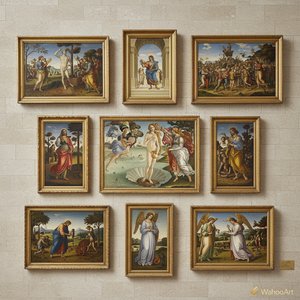
Entdecken Sie die 10 prägendsten Meisterwerke der Frührenaissance! Von Giotto bis Botticelli – erleben Sie Kunstgeschichte hautnah. Hochwertige Reproduktionen für Ihr Zuhause auf .

Entdecken Sie die bahnbrechenden Innovationen der Frührenaissance! Erfahren Sie mehr über Künstler wie Brunelleschi, Masaccio und Donatello sowie die humanistischen Ideale, die diese Epoche prägten. Expertenwissen von Most-Famous-Paintings.


Bleiben Sie über die neuesten Kunstnachrichten, exklusive Angebote und Dekorationsideen auf dem Laufenden.
Erzählen Sie uns von Ihrem Projekt und unsere Kunstexperten erstellen für Sie 3 personalisierte Kunstvorschläge.
Wir kuratieren 3 Optionen exklusiv für Sie – kostenlos!


 Versenden
 Teilen
 Details anzeigen

 Herunterladen
 Ähnliche Objekte
 Diashow anzeigen


 Weiterlesen




































 Die Glasoption ist nur in Größen unter 110 cm verfügbar.


