x


Giclée- oder Leinwanddruck in Museumsqualität mit schneller Produktion und flexiblen Veredelungsoptionen. ( Switch to hand made Painting Switch to Image)





























Wählen Sie aus unseren vordefinierten Größen, die den ursprünglichen Proportionen des Kunstwerks entsprechen.

Sie können Ihre eigenen Maße eingeben, um ein bestimmtes Format oder einen speziellen Platz einzupassen. Wenn das von Ihnen gewählte Format nicht den Proportionen des Originalbildes entspricht, werden wir das Kunstwerk entweder beschneiden oder das Bild mit einem gespiegelten oder einfarbigen Rand erweitern. Ein digitaler Entwurf wird Ihnen zur Genehmigung zugesandt, bevor die Produktion beginnt.
Bitte beachten Sie, dass die Vorschau auf dem Bildschirm nicht den tatsächlichen Zuschnitt oder die Erweiterung widerspiegelt. Nur der Entwurf zeigt die endgültige Komposition präzise an.
Obwohl Sondermaße verfügbar sind, empfehlen wir die Auswahl eines Maßes aus der vordefinierten Liste, um die ursprünglichen Proportionen zu bewahren.
Weltweiter Versand () innerhalb von 2 Wochen statt der üblichen 4/5 Wochen. (29 Juli)


Fähnrichberg
Größe der Reproduktion
Edward Hopper’s “Lighthouse Hill,” painted in 1927, isn't merely a depiction of a coastal scene; it’s a profound meditation on solitude and the quiet dignity of American life. The painting immediately draws us into a world imbued with a palpable sense of introspection – a feeling that resonates deeply within the viewer long after the initial glance. Hopper, a master of capturing fleeting moments of human experience, expertly utilizes light and shadow to create an atmosphere both serene and subtly melancholic. The composition itself is deceptively simple: a solitary lighthouse perched atop a rolling hill, guarding against the vastness of the sea, with two modest houses nestled amongst the landscape below. Yet, within this apparent simplicity lies a complex tapestry of emotions and observations.
Hopper’s technique is characterized by a remarkable restraint – a deliberate avoidance of overt sentimentality or dramatic flourishes. He employs a precise, almost photographic realism, meticulously rendering the textures of the weathered stone of the lighthouse, the rough-hewn wood of the houses, and the subtle shifts in color across the sky. This commitment to detail isn’t about creating a perfect representation; rather, it serves to heighten our awareness of the scene's quiet details. The influence of William Merritt Chase, Hopper’s early instructor at the New York School of Art, is clearly evident in his focus on capturing light and atmosphere. However, Hopper transcends mere imitation, imbuing these techniques with a distinctly modern sensibility – a sensitivity to the alienation and isolation that were becoming increasingly prevalent in American society during this period.
The lighthouse itself is a potent symbol of guidance, resilience, and perhaps even loneliness. Standing sentinel against the elements, it represents a steadfast presence amidst uncertainty. The two houses, positioned on the hillside, suggest a sense of community, yet their distance from one another hints at an underlying isolation – a common theme in Hopper’s work. The vast expanse of the sky, rendered in shades of blue and grey, contributes to this feeling of openness and vulnerability. It's important to note that 1927 was a time of significant social and economic change in America; the rise of industrialization and urbanization were leading to a growing sense of displacement and anonymity. Hopper’s paintings often reflect these anxieties, offering a poignant glimpse into the lives of ordinary people grappling with the challenges of modernity.
“Lighthouse Hill” evokes a powerful emotional response – a quiet contemplation of the beauty and melancholy inherent in the everyday. It’s not a painting that shouts for attention; instead, it invites us to pause, observe, and reflect. The muted palette, combined with Hopper's masterful use of light and shadow, creates an atmosphere of stillness and introspection. Many viewers interpret the scene as a metaphor for the human condition – a yearning for connection amidst isolation, a search for meaning in a seemingly indifferent world. The painting’s enduring appeal lies in its ability to tap into our deepest emotions and resonate with our own experiences of solitude and longing. It is a testament to Hopper's skill as an artist and his profound understanding of the human psyche.
Most-Famous-Paintings bietet hochwertige, handgemalte Reproduktionen von Edward Hoppers “Lighthouse Hill”. Wir verwenden ausschließlich die besten Materialien und Techniken, um sicherzustellen, dass Ihre Reproduktion den Originalkunstwerk so authentisch wie möglich darstellt. Ob als Wandbild für Ihr Wohnzimmer oder als einzigartige Ergänzung Ihrer Sammlung – eine Most-Famous-Paintings-Reproduktion von "Lighthouse Hill" ist ein Ausdruck von Stil und Raffinesse. Kontaktieren Sie uns noch heute, um Ihre individuelle Größe und Druckoptionen zu besprechen.


1931 - 1967 , Vereinigte Staaten von Amerika
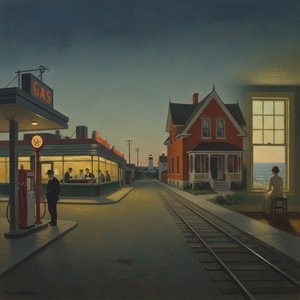
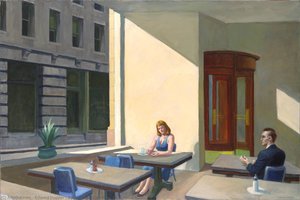
Entdecken Sie die 25 Meisterwerke von Edward Hopper! Tauchen Sie ein in amerikanische Kunst, Realismus & Isolation. Hochwertige Reproduktionen & Inspiration für Ihr Zuhause bei Most-Famous-Paintings.com.

Entdecken Sie die 25 berühmtesten Kunstwerke des Metropolitan Museum of Art, New York! Von Van Gogh bis Monet – erleben Sie Geschichten hinter Meisterwerken. Hochwertige Reproduktionen & Inspiration für Ihr Zuhause auf Most-Famous-Paintings.com.
Entdecken Sie die 25 ikonischsten Meisterwerke der National Gallery Washington! Von Cézanne bis Picasso – erfahren Sie die Geschichten hinter berühmten Gemälden, Kunststilen & Farbpaletten. Hochwertige Kunstdrucke online bei Most-Famous-Paintings.com.
Entdecken Sie die 25 Meisterwerke von Paul Cézanne! Tauchen Sie ein in die Welt des Impressionismus und Postimpressionismus. Erfahren Sie mehr über seine Stillleben, Landschaften & berühmten Gemälde – jetzt hochwertige Kunstdrucke auf Most-Famous-Paintings.com.

Entdecken Sie die 25 Meisterwerke von Sir Alfred James Munnings! Erleben Sie seine beeindruckenden Pferdebilder, geprägt vom Impressionismus und Realismus. Hochwertige Kunstdrucke & Reproduktionen auf Most-Famous-Paintings.com – für elegante Wandkunst & stilvolles Interieurdesign.


Bleiben Sie über die neuesten Kunstnachrichten, exklusive Angebote und Dekorationsideen auf dem Laufenden.
Erzählen Sie uns von Ihrem Projekt und unsere Kunstexperten erstellen für Sie 3 personalisierte Kunstvorschläge.
Wir kuratieren 3 Optionen exklusiv für Sie – kostenlos!


 Preview
 Versenden
 Teilen
 Details anzeigen

 Herunterladen
 Ähnliche Objekte
 Röntgenaufnahme
 Diashow anzeigen


 Weiterlesen







 Die Glasoption ist nur in Größen unter 110 cm verfügbar.