x

Handgemaltes Ölgemälde auf Leinwand in Ihrer Wunschgröße und mit Rahmen, auf Bestellung von unseren Künstlern angefertigt. ( Zum Druck bestellen Zum Bild wechseln)





























Wählen Sie aus unseren vordefinierten Formaten, die den ursprünglichen Proportionen des Kunstwerks entsprechen.

Sie können Ihre eigenen Maße eingeben, um einen bestimmten Rahmen oder Platz auszufüllen. Wenn die gewählte Größe nicht den Proportionen des Originalbildes entspricht, werden wir das Kunstwerk entweder beschneiden oder das Gemälde durch zusätzliche, handgemalte Elemente erweitern. Ein digitales Mockup wird Ihnen zur Genehmigung zugesandt, bevor die Produktion beginnt.
Bitte beachten Sie, dass die Bildschirmvorschau nicht die tatsächliche Beschneidung oder Erweiterung widerspiegelt. Nur das Mockup zeigt die endgültige Komposition exakt an.
Obwohl Sondermaße verfügbar sind, empfehlen wir, eine Größe aus der vordefinierten Liste zu wählen, um die ursprünglichen Proportionen beizubehalten.
Weltweiter Versand () in nur 3 bis 4 Wochen statt der üblichen 5 Wochen. (6 August). Keine Kompromisse bei der Qualität.


untitled (7228)
Format der Reproduktion
Egon Schiele’s “Untitled (7228),” a stark black and white depiction of a densely populated cityscape, isn’t merely a painting; it’s a distilled essence of anxiety, mortality, and the relentless march of time. Created during his tragically short but intensely productive career – spanning from 1890 to 1918 – this work embodies the core tenets of Expressionism, capturing not just visual reality but also the emotional turmoil simmering beneath its surface. The image presents a scene dominated by towering buildings, their silhouettes punctuated by the solemnity of church spires and the subtle chaos of chimneys rising from humble dwellings. A blanket of snow covers the ground, lending an atmosphere of quiet desolation and emphasizing the cold, isolating nature of urban existence.
Schiele’s technique is immediately arresting. He employs a deliberately angular and fragmented approach to his lines, creating a sense of unease and distortion. The buildings aren't rendered with smooth, idealized forms; instead, they are jagged, almost skeletal, suggesting fragility and decay. This deliberate roughness contrasts sharply with the meticulous detail he applies to certain elements – perhaps the texture of the snow or the intricate patterns on some of the rooftops – creating a dynamic tension within the composition. The limited palette of black, white, and grey further amplifies this effect, stripping away any potential for warmth or comfort and forcing the viewer to confront the stark realities presented.
Schiele’s personal life profoundly shaped his artistic vision, and “Untitled (7228)” is deeply intertwined with themes of loss and mortality. His father's death from syphilis at a young age cast a long shadow over his existence, fueling an obsession with the fragility of human life and the inevitability of decay. This preoccupation manifests powerfully in the painting’s overall mood – a palpable sense of melancholy and impending doom. The repetitive nature of the buildings, mirroring the relentless cycle of urban life, can be interpreted as a metaphor for the cyclical nature of existence itself, constantly reminding us of our own mortality.
The image also subtly echoes Schiele's fascination with death, a recurring motif in his oeuvre. While not explicitly depicting a corpse or a funeral scene, the painting’s somber atmosphere and the suggestion of isolation evoke a sense of mourning. The stark contrast between light and shadow further contributes to this feeling of unease, as if the city itself is shrouded in grief.
Beyond its emotional impact, “Untitled (7228)” offers a fascinating study in architectural symbolism. The variety of building styles – from grand churches to modest houses – reflects the social stratification of the era and hints at the underlying tensions within urban society. The towering spires of the churches can be interpreted as symbols of authority and tradition, while the smaller dwellings represent the struggles of everyday life. The chimneys, a common feature of European cities, suggest both warmth and industry, but also the potential for pollution and decay.
Interestingly, Schiele’s early interest in trains – a motif that occasionally appears in his work – is subtly present here as well. The dense arrangement of buildings can be seen as a visual equivalent to a railway station, evoking a sense of movement, transit, and the constant flow of people through the city. This connection adds another layer of complexity to the painting’s meaning, suggesting a broader commentary on human experience and the relentless pursuit of progress.
Most-Famous-Paintings offers meticulously crafted hand-painted reproductions of Egon Schiele's “Untitled (7228),” allowing you to bring this powerfully evocative artwork into your home or office. Each reproduction is created using traditional oil painting techniques, faithfully capturing the artist’s distinctive style and emotional intensity. More than just a decorative piece, this reproduction serves as a poignant reminder of Schiele's profound insights into the human condition – a testament to the beauty and sorrow inherent in our shared experience. Explore the full artwork details here.

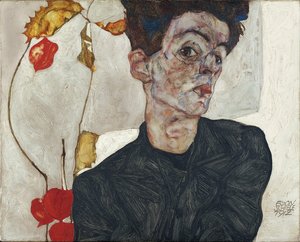
1890 - 1918 , kroatien
Entdecken Sie die faszinierende Welt monochromer Innenräume! Expertenwissen zu Farbpsychologie, Lichtgestaltung & Materialwahl für elegante, zeitlose Designs. Inspiration & Fallstudien.
Entdecken Sie die 10 prägendsten Meisterwerke des Expressionismus! Von Munch bis Kandinsky – erfahren Sie die Geschichten hinter den berühmtesten Gemälde und Künstler. Hochwertige Kunstdrucke online bei kaufen & Ihr Zuhause mit Emotionen füllen.

Explore the captivating world of Cornelis Springer (1817-1891), a Dutch master renowned for his detailed cityscapes and atmospheric paintings. Discover his life, style & available artworks at Most-Famous-Paintings.
Entdecken Sie die Top 10 Gemälde, die von tiefem Schwarz und dramatischer Atmosphäre geprägt sind. Von Caravaggio bis Manet – Kunstgeschichte erleben & hochwertige Reproduktionen auf finden! Jetzt entdecken.

Explore the rich history & artistic power of black and white photography. From early techniques to iconic masters like Ansel Adams, discover why monochrome continues to captivate art lovers today. Expert insights for collectors.


Bleiben Sie über die neuesten Kunstnachrichten, exklusive Angebote und Dekorationsideen auf dem Laufenden.
Erzählen Sie uns von Ihrem Projekt, und unsere Kunstexperten erstellen für Sie drei personalisierte Kunstvorschläge.
Wir kuratieren 3 Optionen exklusiv für Sie – kostenlos!


 In echtem Maßstab anzeigen
 Versenden
 Teilen
 Details anzeigen

 Herunterladen
 Ähnliche Objekte
 Röntgenaufnahme
 Diashow starten
 Mehr anzeigen







 Die Glasoption ist nur in Größen unter 110 cm verfügbar.