x


 Druck bestellen Bild kaufen
 Versenden
 Details anzeigen
 Zu Favoriten hinzufügen
 Herunterladen
 Ähnliche Objekte
 Röntgenaufnahme
 Diashow anzeigen
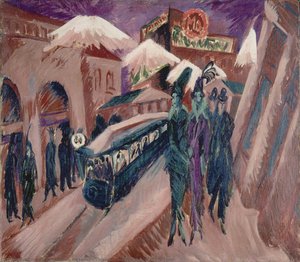
 Öl auf LeinwandWandkunstExpressionist Urbanity
 1912
1912 101.0 x 113.0 cm
 Staatsgalerie Moderner Kunst
Handgemaltes Ölgemälde auf Leinwand in Ihrer Wunschgröße und mit Rahmen, auf Bestellung von unseren Künstlern angefertigt.





























Wählen Sie aus unseren vordefinierten Größen, die den ursprünglichen Proportionen des Kunstwerks entsprechen.

Sie können Ihre eigenen Maße eingeben, um einen bestimmten Rahmen oder Platz auszufüllen. Wenn die gewählte Größe nicht den Proportionen des Originalbildes entspricht, werden wir das Kunstwerk entweder beschneiden oder das Gemälde durch zusätzliche, handgemalte Elemente erweitern. Ein digitales Mockup wird Ihnen zur Genehmigung zugesandt, bevor die Produktion beginnt.
Bitte beachten Sie, dass die Bildschirmvorschau nicht die tatsächliche Beschneidung oder Erweiterung widerspiegelt. Nur das Mockup zeigt die endgültige Komposition exakt an.
Obwohl Sondermaße verfügbar sind, empfehlen wir, eine Größe aus der vordefinierten Liste zu wählen, um die ursprünglichen Proportionen beizubehalten.
Weltweiter Versand () in nur 3 bis 4 Wochen statt der üblichen 5 Wochen. (18 Juli). Keine Kompromisse bei der Qualität.


Rotes Eilsabethufer, Berlin
Größe der Reproduktion
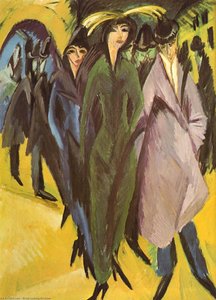
Ernst Ludwig Kirchner’s *Rotes Elisabethufer*, painted in 1912, isn’t merely a cityscape; it’s a visceral snapshot of early 20th-century Berlin – a city brimming with restless energy and the anxieties of modernity. This oil on canvas, measuring a substantial 101 x 113 cm, housed within the Staatsgalerie in Munich, captures a pivotal moment in Kirchner's artistic journey and the broader trajectory of German Expressionism. The painting immediately assaults the senses with its bold palette: fiery reds dominate the composition, particularly in the prominent bridge that arches dramatically across the river, while blues and greens provide a stark contrast, hinting at both the industrial grit and the fleeting beauty of the urban landscape.
Kirchner was a central figure in Die Brücke (The Bridge), a group of artists who deliberately rejected the academic traditions of their time. They sought to express raw emotion and subjective experience through distorted forms, jarring colors, and an unflinching portrayal of modern life. *Rotes Elisabethufer* embodies this ethos perfectly. The figures depicted – pedestrians strolling along the embankment, individuals clustered near the bridge – are not rendered with realistic detail but rather as fragmented shapes, imbued with a sense of urgency and alienation. Their postures suggest movement, yet there’s no clear direction or destination; they seem caught in the relentless current of urban existence.
The composition itself is deliberately unsettling. Kirchner employs a dynamic, almost frenetic approach to perspective, creating a sense of depth that feels simultaneously inviting and disorienting. The bridge, rendered in intense red, acts as a visual anchor, drawing the eye into the heart of the scene. However, its exaggerated form and vibrant hue contribute to the overall feeling of unease. The castle-like building on the opposite bank isn’t a comforting landmark but rather a looming presence, adding to the painting's sense of claustrophobia and impending doom – a common theme in Kirchner’s work reflecting the anxieties of his time.
Kirchner’s masterful technique lies not in meticulous realism but in his ability to convey emotion through brushwork. Thick, impasto strokes create a palpable texture, emphasizing the physicality of the paint itself. The colors are applied with an almost violent energy, creating a sense of movement and dynamism. The distortion of forms – elongated figures, skewed angles, and exaggerated proportions – is not arbitrary; it’s a deliberate strategy to communicate the psychological state of the subjects, reflecting the emotional turmoil simmering beneath the surface of modern life.
*Rotes Elisabethufer* resonates with deeper symbolic meaning. The “Red Elisabeth Bridge,” as it's often referred to, was a significant landmark in Berlin, connecting the city’s burgeoning industrial district with its historic center. However, Kirchner transforms this familiar scene into something far more complex and unsettling. The bridge becomes a symbol of transition, of the collision between tradition and modernity, between past and future. The river itself can be interpreted as a metaphor for the flow of time, carrying both promise and peril.
Furthermore, the painting’s vibrant colors – particularly the dominant red – are often associated with passion, energy, and even danger. Kirchner uses this color to heighten the emotional intensity of the scene, conveying a sense of urgency and excitement while simultaneously hinting at underlying anxieties. The overall effect is one of profound psychological depth, inviting viewers to contemplate the complexities of urban life and the human condition.
*Rotes Elisabethufer* stands as a cornerstone of German Expressionism and a testament to Kirchner’s unique artistic vision. Its influence can be seen in the works of subsequent generations of artists, who continued to explore themes of alienation, anxiety, and social critique. The painting's raw emotional power and innovative use of color and form continue to resonate with audiences today, solidifying its place as a masterpiece of modern art. Reproductions of this iconic work offer a powerful window into the soul of Berlin at the dawn of the 20th century – a city grappling with rapid change and searching for meaning in an increasingly complex world.

Ernst Ludwig Kirchner, eine zentrale Figur des deutschen Expressionismus, wurde am 6. Mai 1880 in Aschaffenburg, Bayern, geboren. Sein Familienhintergrund – preußischer Herkunft väterlicherseits und hugenottische Abstammung mütterlicherseits – prägte seine künstlerische Identität maßgeblich. Häufige Umzüge während seiner Kindheit – aufgrund der Stellensuche seines Vaters – führten dazu, dass Kirchner Schulen in Frankfurt und Perlen besuchte, bevor er sich mit seiner Familie in Chemnitz niederließ, als sein Vater eine Position an der örtlichen Technischen Hochschule annahm.
Im Jahr 1901 begann Kirchner ein Studium der Architektur an der Königlichen Technischen Hochschule (RTH) in Dresden. Er wandte sich jedoch bald der Malerei zu und fand Inspiration in den Werken von Künstlern wie Albrecht Dürer, wobei er zusammen mit seinem Freund Fritz Bleyl eine radikale Kunstauffassung entwickelte.
Ein Wendepunkt in Kirchners Karriere war die Gründung von Die Brücke („Die Brücke“) im Jahr 1905, zu der er sich mit Bleyl, Karl Schmidt-Rottluff und Erich Heckel zusammenschloss. Diese Gruppe strebte danach, die Kluft zwischen traditionellen akademischen Stilen und einer emotional aufgeladenen, modernen Form des Ausdrucks zu überbrücken. Sie suchten Inspiration in primitiver Kunst, insbesondere aus Afrika und Ozeanien, sowie in den Werken von Vincent van Gogh und Edvard Munch.
Kirchners künstlerischer Stil zeichnet sich durch kräftige Farben, expressive Pinselstriche und oft verstörende Kompositionen aus. Er stellte häufig urbane Szenen dar und porträtierte so die Entfremdung und Ängste des modernen Lebens im frühen 20. Jahrhundert in Deutschland. Seine Werke umfassen auch eine bedeutende Anzahl von Aktzeichnungen in natürlichen Landschaften, die seine Faszination für Bewegung und Form zeigen.
Zu Kirchners bedeutendsten Werken gehören:
Kirchners Leben war von persönlichen Turbulenzen geprägt. Er erlitt während des Ersten Weltkriegs einen psychischen Zusammenbruch und zog sich daraufhin nach die Schweiz zurück. Der Aufstieg des Nationalsozialismus brachte weitere Not mit sich; über 600 seiner Werke wurden beschlagnahmt und als "entartete Kunst" gebrandmarkt. Kirchner beging im Juni 1938 in Davos, Schweiz, unter dem Druck von Verfolgung und gesundheitlichem Niedergang tragischerweise Selbstmord.
Trotz dieses tragischen Endes lebt Ernst Ludwig Kirchners Vermächtnis fort. Er bleibt eine zentrale Figur des deutschen Expressionismus und beeinflusst mit seinem kühnen Stil und seinen emotional aufgeladenen Darstellungen des modernen Lebens Generationen von Künstlern. Seine Werke werden weiterhin in wichtigen Museen auf der ganzen Welt ausgestellt und sind bei Sammlern sehr begehrt.
Beeinflusst von: Albrecht Dürer, Vincent van Gogh, Edvard Munch, Primitive Kunst (Afrikanisch & Ozeanisch)
Beeinflusste: Kirchners Werk hatte einen tiefgreifenden Einfluss auf nachfolgende Generationen von Expressionisten und Modernen Künstlern. Seine Erforschung psychologischer Themen und seine innovative Verwendung von Farbe und Form inspirieren bis heute zeitgenössische Kunstpraktiken.
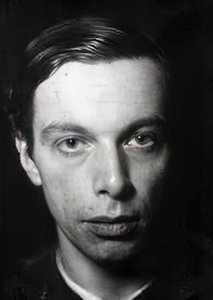
1880 - 1938 , Deutschland
Entdecken Sie die 25 Meisterwerke von Mark Rothko! Tauchen Sie ein in die Welt der abstrakten Kunst, des Expressionismus und der Farbfeldmalerei. Hochwertige Kunstdrucke & Reproduktionen auf Most-Famous-Paintings.com – für Ihre Wohnräume.

Entdecken Sie die 25 Meisterwerke von Claude Monet! Tauchen Sie ein in die Welt des Impressionismus, erleben Sie Seerosen, Sonnenaufgänge & Kathedralen. Hochwertige Reproduktionen für Ihr Zuhause – exklusiv auf Most-Famous-Paintings.com.
Entdecken Sie die 25 Meisterwerke von Paul Cézanne! Tauchen Sie ein in die Welt des Impressionismus und Postimpressionismus. Erfahren Sie mehr über seine Stillleben, Landschaften & berühmten Gemälde – jetzt hochwertige Kunstdrucke auf Most-Famous-Paintings.com.
Entdecken Sie die 10 bedeutendsten Werke des Deutschen Expressionismus! Kirchner, Nolde & Co. – ihre Geschichten, Techniken und zeitlose Schönheit. Hochwertige Kunstdrucke auf Most-Famous-Paintings.com kaufen und Ihr Zuhause mit emotionaler Kunst bereichern. Jetzt entdecken!
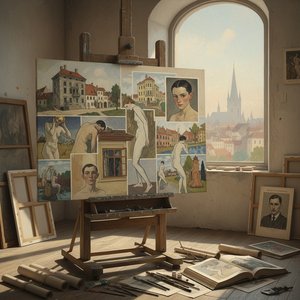
Entdecken Sie die 25 bedeutendsten Gemälde von Egon Schiele! Tauchen Sie ein in die Welt des Expressionismus, erfahren Sie mehr über seine Technik und emotionale Tiefe. Hochwertige Kunstdrucke & Leinwandbilder auf Most-Famous-Paintings.com.


Bleiben Sie über die neuesten Kunstnachrichten, exklusive Angebote und Dekorationsideen auf dem Laufenden.
Erzählen Sie uns von Ihrem Projekt und unsere Kunstexperten erstellen für Sie 3 personalisierte Kunstvorschläge.
Wir kuratieren 3 Optionen exklusiv für Sie – kostenlos!


 Teilen

 Weiterlesen







 Die Glasoption ist nur in Größen unter 110 cm verfügbar.