
Wunschliste Warenkorb Cart
PreviewPreview Druck bestellen Druck bestellenGemälde kaufen Gemälde kaufen VersendenVersenden
Details anzeigenDetails anzeigen Zu Favoriten hinzufügen Zu Favoriten hinzufügen HerunterladenHerunterladen Ähnliche ObjekteÄhnliche Objekte RöntgenaufnahmeRöntgenaufnahme Diashow anzeigenDiashow anzeigen

Contrast of Forms

Contrast of Forms by Fernand Léger: This vibrant abstract painting utilizes bold reds, yellows, and blues to depict dynamic geometric shapes—circles, squares, triangles—reflecting the influence of industrial design and capturing the energy of the early 20th century.

Erkunden Sie die Kunst von Fernand Léger (1881-1955), einem Pionier des Kubismus und der 'Tubism'. Entdecken Sie seine mutigen, figurativen Gemälde, die das moderne Leben, Maschinen und die menschliche Form feiern. Ein Vorläufer des Pop Art!

Erwerben Sie ein hochauflösendes, optimiertes digitales Bild, das der Online-Vorschau weit überlegen ist.

Jede Datei wird von unseren hauseigenen Spezialisten mit modernsten Werkzeugen und fachmännischer manueller Retusche sorgfältig vorbereitet. Wir stellen sicher, dass jedes Bild eine außergewöhnliche Klarheit, präzise Farbgenauigkeit und feinste Details aufweist.

Die endgültige Datei wird innerhalb von 72 Stunden per E-Mail zugestellt und ist für den sofortigen Einsatz in professionellen, redaktionellen und Druckumgebungen optimiert. Es handelt sich um dieselbe Qualität, der führende Designstudios, Verlage und Galerien vertrauen.

Digitales Kunstwerk

Laden Sie eine hochauflösende Datei für die persönliche Präsentation, den Druck und kreative Projekte herunter.

Endpreis

$9.99

In jeder Bestellung digitaler Bilder enthalten

Professionelle digitale Bereitstellung, garantiert

Wenn Sie sich für Most-Famous-Paintings.com entscheiden, erhalten Sie nicht nur ein Bild – Sie erhalten ein professionell aufbereitetes digitales Kunstwerk, das mit höchster Präzision erstellt und durch eine Zufriedenheitsgarantie abgesichert wird. Hier ist alles, was automatisch mit Ihrer Bestellung geliefert wird:

shipping_icon
Schnelle E-Mail-Zustellung

Ihre hochauflösende digitale Bilddatei wird Ihnen innerhalb von 72 Stunden nach der Bestellung per E-Mail zugestellt – bereit zur sofortigen Verwendung.

canvas_icon
KI-optimierte digitale Datei

Ihre Kunstwerke werden professionell mithilfe fortschrittlicher KI-Tools und manueller Bearbeitung optimiert, um maximale Detailtreue, Klarheit und Farbgenauigkeit zu gewährleisten.

insurance_icon
Kostenloser lebenslanger erneuter Versand

Datei versehentlich gelöscht oder verloren? Keine Sorge – wir senden sie Ihnen jederzeit kostenlos erneut zu.

tax_icon
Keine Einfuhrgebühren – jemals

Genießen Sie Ihr Kunstwerk sofort ohne Zollgebühren, Einfuhrabgaben oder Versandkosten – digitale Downloads sind immer steuerfrei.

color_icon
Garantierte Farbtreue

Wir garantieren, dass Ihr digitales Bild die Originalfarben mithilfe professioneller Werkzeuge und Farbmanagement so präzise wie möglich wiedergibt.

return_icon
60-Tage-Zufriedenheitsgarantie

Sollten Sie mit Ihrem digitalen Bild nicht zufrieden sein, werden wir es überarbeiten oder Ihnen innerhalb von 60 Tagen 100% erstatten – ohne Wenn und Aber.

guarantee_icon
100% Geld-zurück-Garantie

Nicht zufrieden? Erhalten Sie innerhalb von 60 Tagen nach Erhalt Ihrer digitalen Datei eine vollständige Rückerstattung – ohne Angabe von Gründen.

discount_icon
Rabatte bei Großbestellungen

3 Bilder kaufen, 10% sparen – 5 Bilder kaufen, 15% sparen – Ab 10 Bildern 20% sparen. Ideal für kreative Projekte, Galerien und Agenturen.

Eckdaten auf einen Blick

  • Influences: Georges Braque
  • Location: Private Collection
  • Artist: Fernand Léger
  • Subject or theme: Industrial Landscape
  • Artistic style: Abstract Expressionism
  • Year: 1918
  • Medium: Oil Paint

Kunst-Quiz

Jede Frage hat nur eine richtige Antwort.

Frage 1:
What artistic movement is Fernand Léger primarily associated with?
Frage 2:
The painting prominently features geometric shapes like circles and squares. What does this symbolize in Léger's artistic vision?
Frage 3:
What color dominates the composition of Léger's artwork?
Frage 4:
Fernand Léger created this painting in what year?
Frage 5:
Léger’s style is characterized by its bold use of color and simplified forms. How does this approach reflect the cultural anxieties of the early 20th century?

Details zum Sammlerstück

A Symphony of Form and Color: Exploring Fernand Léger’s “Contrast of Forms”

The canvas breathes with an energy that transcends mere pigment; it pulsates with the rhythm of industrial progress, captured in the bold strokes and vibrant hues of Fernand Léger’s “Contrast of Forms,” painted in 1918. This monumental artwork isn't merely a depiction of shapes—it’s an assertion of their significance as conduits for conveying emotion and embodying the transformative forces reshaping European society at the dawn of the twentieth century. Léger, deeply influenced by Cubism’s fragmentation of perspective and its embrace of geometric abstraction, nevertheless refused to abandon entirely the tangible world he knew so intimately. He sought instead to synthesize these influences into a uniquely expressive style that would resonate with audiences grappling with anxieties about urbanization and technological advancement.

The Style: Geometric Abstraction Rooted in Observation

Léger’s distinctive approach can be characterized as geometric abstraction tempered by meticulous observation. Unlike many artists of his time who pursued pure abstraction, Léger painstakingly analyzed the forms found in factories and machines—the repetitive arcs of cranes, the angular planes of buildings, the rhythmic movement of pistons—translating these visual cues into simplified geometric shapes: circles, squares, triangles, rectangles. However, these shapes aren’t presented as sterile representations; they are imbued with color – predominantly reds, yellows, and blues – that convey a palpable sense of dynamism and excitement. The artist deliberately avoids blending colors smoothly, opting instead for juxtaposed hues that create visual tension and reinforce the artwork's underlying message about disruption and transformation.

Technique: Bold Brushstrokes and Layered Texture

The execution of “Contrast of Forms” exemplifies Léger’s masterful technique. He employed thick brushstrokes—often applied with a palette knife—to build up layers of textured paint, creating surfaces that appear to shimmer and vibrate with movement. This tactile quality is crucial to conveying the artwork's emotional impact; it invites viewers to engage physically with the painting, mirroring the physicality of industrial labor and stimulating their senses. Léger’s layering technique isn’t merely decorative; it serves a conceptual purpose—to represent the multifaceted nature of modernity itself, highlighting both its visual complexity and its underlying structural unity. The artist meticulously planned each brushstroke, ensuring that it contributed to the overall composition while simultaneously conveying a specific mood or feeling.

Historical Context: Embracing the Machine Age

“Contrast of Forms” emerged during a period of profound societal upheaval in Europe—the First World War had shattered illusions about progress and stability, accelerating urbanization and propelling industrialization at an unprecedented pace. Léger’s artwork reflects this turbulent climate by confronting viewers with images of machines and factories – symbols of both technological prowess and social alienation. The artist deliberately eschewed sentimental depictions of rural life, recognizing that the anxieties of his era demanded a new aesthetic vocabulary—one capable of capturing the unsettling beauty of the machine age. By presenting geometric shapes bathed in vibrant colors, Léger sought to articulate not only the visual characteristics of modernity but also its psychological consequences.

Symbolism: Red as Passion and Transformation

The dominant color palette – particularly the pervasive use of red – carries significant symbolic weight within “Contrast of Forms.” Traditionally associated with passion, energy, and revolution, red underscores Léger’s conviction that industrial progress represented a fundamental shift in human experience. The large red circle at the center of the painting symbolizes not merely visual dominance but also the transformative power of technology—its ability to reshape landscapes, cultures, and even consciousness itself. Léger's deliberate choice of color is therefore inseparable from his artistic vision: it’s an embodiment of the artwork’s core message about embracing change and confronting uncertainty with courage and conviction.

Emotional Impact: A Visionary Expression of Modern Anxiety

Ultimately, “Contrast of Forms” succeeds in conveying a powerful emotional response—a blend of exhilaration and apprehension that captures the spirit of its time. The artwork's dynamic composition and vibrant colors stimulate the senses, inviting viewers to contemplate the implications of industrialization for human existence. Léger’s bold brushstrokes and textured surfaces evoke a visceral connection with the materiality of the painting itself, mirroring the physicality of labor and stimulating contemplation about the relationship between humanity and technology. “Contrast of Forms” remains an enduring testament to Léger's artistic genius—a visionary expression of modern anxiety that continues to inspire audiences today.

Biografie des Künstlers

frühes Leben und Ausbildung

Fernand Légér, ein französischer Maler, Bildhauer und Filmemacher, wurde am 4. Februar 1881 in Argentan, Orne, Niedergermanien geboren. Sein Vater züchtete Rinder, und Légér erhielt zunächst eine Ausbildung als Architekt von 1897 bis 1899. Er zog dann im Jahr 1900 nach Paris und unterstützte sich dort als Architektenzeichner.

Künstlerische Entwicklung

Légers frühe Werke wurden vom Impressionismus beeinflusst, wie in Le Jardin de ma Mère (Mein Muttergarten) (1905) zu sehen ist. Nach dem Besuch der Schule für dekorative Künste und der Académie Julian begann er ab seinem 25. Lebensjahr ernsthaft als Maler zu arbeiten. Sein Stil entwickelte sich zu einer persönlichen Form des Kubismus, der von Kritikern als "Tubism" bezeichnet wurde, da er sich auf zylindrische Formen konzentrierte.

Kubismus und die Puteaux-Gruppe

Im Jahr 1910 stellte Légér im Salon d’Automne zusammen mit Jean Metzinger und Henri Le Fauconnier aus. Er schloss sich der Puteaux-Gruppe an, auch bekannt als die Section d’Or (die Goldene Proportion), zusammen mit anderen Künstlern wie Francis Picabia und Marcel Duchamp.

Krieg und seine Auswirkungen auf Légers Werk

Légers Erfahrungen im Ersten Weltkrieg hatten einen erheblichen Einfluss auf sein Werk. Während seiner Zeit an der Front produzierte er Skizzen von Artilleriegeschützen, Flugzeugen und Soldaten. Sein Gemälde Soldat mit Pfeife (1916) spiegelt diese Zeit wider.

Spätere Werke und Vermächtnis

Légers Nachkriegszeitliche Arbeiten, die von glatten, maschinellen Formen geprägt waren, verknüpften ihn mit der Tradition der französischen figurativen Malerei. Seine "animierten Landschaften" von 1921 zeigten Figuren und Tiere in harmonischen, stromlinienförmigen Formen. Schlüsselwerke: Museen, die Légers Werk ausstellen:
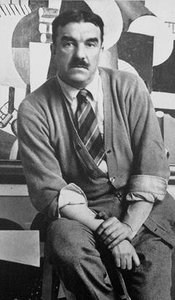
Fernand Léger

Fernand Léger

1881 - 1955 , Frankreich

Kurzinfos

  • Beeinflusste Kunstrichtungen: ['Pop Art']
  • Beeinflusste Künstler: ['Paul Cézanne']
  • Bemerkenswerte Werke:
    • Die Sitzende Frau
    • Maschinenelement
    • Der Große Umzug
    • Die Stadt
  • Geburtsdatum: 04. Februar 1881
  • Geburtsort: Argentan, Frankreich
  • Künstlerische Richtung: Kubismus, Tubismus
  • Nationalität: Französisch
  • Sterbedatum: 1955
  • Vollständiger Name: Fernand Léger
  • Von Kunstbewegungen Beeinflusst: ['Cézannismus']
  • Von Künstlern Beeinflusst: ['Impressionismus']

