


x

 Acrylic On CanvasWallArtCubist Still Life
 1944Modern
 21.0 x 14.0 cm
Handgemaltes Ölgemälde auf Leinwand in Ihrer Wunschgröße und mit Rahmen, auf Bestellung von unseren Künstlern angefertigt. ( Switch to Print Switch to Image)





























Wählen Sie aus unseren vordefinierten Größen, die den ursprünglichen Proportionen des Kunstwerks entsprechen.

Sie können Ihre eigenen Maße eingeben, um einen bestimmten Rahmen oder Platz auszufüllen. Wenn die gewählte Größe nicht den Proportionen des Originalbildes entspricht, werden wir das Kunstwerk entweder beschneiden oder das Gemälde durch zusätzliche, handgemalte Elemente erweitern. Ein digitales Mockup wird Ihnen zur Genehmigung zugesandt, bevor die Produktion beginnt.
Bitte beachten Sie, dass die Bildschirmvorschau nicht die tatsächliche Beschneidung oder Erweiterung widerspiegelt. Nur das Mockup zeigt die endgültige Komposition exakt an.
Obwohl Sondermaße verfügbar sind, empfehlen wir, eine Größe aus der vordefinierten Liste zu wählen, um die ursprünglichen Proportionen beizubehalten.
Weltweiter Versand () in nur 3 bis 4 Wochen statt der üblichen 5 Wochen. (28 Juli). Keine Kompromisse bei der Qualität.


New York
Größe der Reproduktion
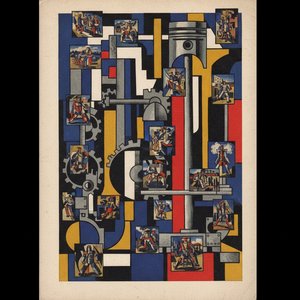
Fernand Léger's 1944 painting, "New York," is more than just a depiction of an American cityscape; it’s a vibrant declaration of the modern age. Executed in a moment of significant social and artistic change – following World War II and amidst the burgeoning industrial expansion of the United States – the work embodies Léger's signature style: a bold, geometric abstraction infused with a profound appreciation for the dynamism of machinery and urban life. Measuring 21 x 14 cm, this intimate scale allows for an intensely focused engagement with the painting’s complex composition.
Léger's artistic journey was profoundly shaped by his experiences during World War I, witnessing firsthand the devastating impact of industrial warfare. This experience fueled his desire to translate the raw power and geometric precision of machines into a new visual language. “New York” exemplifies this approach perfectly. The painting is deeply rooted in Cubism, particularly Léger’s own development of ‘Grob’, a style characterized by simplified forms, fragmented perspectives, and an emphasis on underlying structure. However, unlike traditional Cubist explorations, Léger wasn't primarily interested in dissecting objects; he sought to capture their *essence* – the inherent energy and mechanical logic that defined the modern world.
The use of bold, contrasting colors—primarily blues, reds, and yellows—further amplifies this sense of dynamism. These hues aren’t used for representational accuracy but rather to convey emotional intensity and visual impact, aligning with Léger's belief in art as a means of expressing fundamental truths about the universe.
“New York” was created during a period of immense transformation in American history. The post-war era saw unprecedented economic growth, technological innovation, and urbanization. The painting can be interpreted as a celebration of this progress – a visual testament to the nation’s industrial might and its role as a global superpower. The American flag itself carries significant symbolic weight, representing freedom, democracy, and national identity.
Furthermore, Léger's work reflects the broader artistic currents of the time, including Constructivism and Futurism, which similarly embraced machine aesthetics and celebrated technological advancement. His focus on geometric abstraction was a direct response to the perceived decadence of traditional art forms, advocating for a new visual language that reflected the realities of the 20th century.
"New York" possesses a powerful emotional resonance, capturing not just a physical scene but also a sense of energy, movement, and ambition. Léger’s masterful use of color and form creates a visually arresting image that continues to captivate viewers today. This painting represents a pivotal moment in the career of one of modern art's most innovative figures, solidifying his place as a pioneer of geometric abstraction and a visionary artist who dared to translate the language of machines into a profound artistic statement.

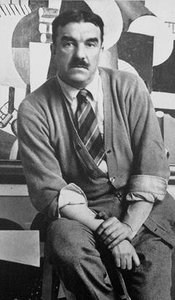
1881 - 1955 , Frankreich

Entdecken Sie Willem de Koonings revolutionäre Kunst und die Entwicklung des Abstrakten Expressionismus. Expertenanalyse, Investitionspotenzial & Sammlerwert – erfahren Sie mehr auf Most-Famous-Paintings.
Entdecken Sie die 25 Meisterwerke von Fernand Léger! Tauchen Sie ein in die Welt des Kubismus, Tubismus & der Avantgarde. Hochwertige Kunstreproduktionen für Ihr Zuhause – jetzt auf Most-Famous-Paintings.com!

Explore the revolutionary Ashcan School! Discover how artists like Henri & Sloan challenged tradition with gritty realism, capturing urban life in early 20th-century America. Learn about their impact on American art history.

Explore the art of transforming spaces with our comprehensive guide to wall decor. From historical movements to contemporary trends, discover how to curate impactful interiors and commission bespoke artwork for a truly personalized aesthetic.

Entdecken Sie die 10 Meisterwerke des Kubismus! Von Picasso bis Braque – erleben Sie die Revolution abstrakter Kunst. Kunstdrucke & Wandbilder für Ihr Zuhause auf Most-Famous-Paintings.com.


Bleiben Sie über die neuesten Kunstnachrichten, exklusive Angebote und Dekorationsideen auf dem Laufenden.
Erzählen Sie uns von Ihrem Projekt und unsere Kunstexperten erstellen für Sie 3 personalisierte Kunstvorschläge.
Wir kuratieren 3 Optionen exklusiv für Sie – kostenlos!


 Preview
 Versenden
 Teilen
 Details anzeigen

 Herunterladen
 Ähnliche Objekte
 Röntgenaufnahme
 Diashow anzeigen
 Weiterlesen







 Die Glasoption ist nur in Größen unter 110 cm verfügbar.


