


x


Giclée- oder Leinwanddruck in Museumsqualität mit schneller Produktion und flexiblen Veredelungsoptionen. ( Switch to hand made Painting Switch to Image)





























Wählen Sie aus unseren vordefinierten Größen, die den ursprünglichen Proportionen des Kunstwerks entsprechen.

Sie können Ihre eigenen Maße eingeben, um ein bestimmtes Format oder einen speziellen Platz einzupassen. Wenn das von Ihnen gewählte Format nicht den Proportionen des Originalbildes entspricht, werden wir das Kunstwerk entweder beschneiden oder das Bild mit einem gespiegelten oder einfarbigen Rand erweitern. Ein digitaler Entwurf wird Ihnen zur Genehmigung zugesandt, bevor die Produktion beginnt.
Bitte beachten Sie, dass die Vorschau auf dem Bildschirm nicht den tatsächlichen Zuschnitt oder die Erweiterung widerspiegelt. Nur der Entwurf zeigt die endgültige Komposition präzise an.
Obwohl Sondermaße verfügbar sind, empfehlen wir die Auswahl eines Maßes aus der vordefinierten Liste, um die ursprünglichen Proportionen zu bewahren.
Weltweiter Versand () innerhalb von 2 Wochen statt der üblichen 4/5 Wochen. (30 Juli)


Glas und Birne
Größe der Reproduktion
Georges Braque's “Glass und Birne” – a deceptively simple still life depicting a glass and a pear – offers a profound glimpse into the revolutionary world of early 20th-century art. Painted around 1912, this work stands as a cornerstone of Cubism, showcasing Braque’s pioneering exploration of form, perspective, and the very nature of representation. It's not merely a depiction of objects; it’s an intellectual investigation rendered in paint, a deliberate dismantling and reconstruction of reality according to the principles of his artistic vision.
The painting immediately captivates with its fragmented composition. The glass and pear are presented not as solid, unified forms, but rather as a series of interlocking planes and geometric shapes – rectangles, triangles, and sharp angles dominate the canvas. This deliberate fracturing reflects Braque’s core Cubist philosophy: to capture an object from multiple viewpoints simultaneously, presenting it as a collection of facets rather than a single, fixed perspective. The muted palette—a restrained interplay of greens, yellows, browns, and whites—further emphasizes this deconstruction, lending the scene a sense of quiet contemplation and intellectual rigor.
Braque’s approach to painting during this period was deeply influenced by Paul Cézanne's emphasis on geometric forms and his exploration of spatial relationships. However, Braque pushed these ideas further, rejecting traditional notions of depth and perspective altogether. The flattened space of “Glass und Birne” creates an illusionistic effect, drawing the viewer into a world where objects exist not as static entities but as dynamic configurations within a complex visual field. The sharp lines and broken planes contribute to this sense of movement and instability, mirroring the artist’s own questioning of established artistic conventions.
Interestingly, this work also foreshadows Braque's later experimentation with papier collé – the incorporation of real materials like newspaper clippings and fabric into his paintings. While not immediately apparent in “Glass und Birne,” the spirit of collage is present in the layering of textures and the suggestion that the painting itself is constructed from disparate elements, much like a fragmented memory.
While seemingly objective in its subject matter, "Glass und Birne" subtly hints at deeper symbolic meanings. The glass, often associated with clarity and reflection, could represent intellectual inquiry or the pursuit of knowledge. The pear, a symbol of fertility and abundance, might allude to the creative potential inherent within the artistic process itself. The overall composition evokes a sense of quiet contemplation – a moment suspended between observation and interpretation.
Despite its fragmented nature, the painting possesses an undeniable emotional resonance. It’s not a sentimental portrayal; rather, it invites the viewer to engage in a thoughtful dialogue with the artwork, to actively participate in the process of reconstructing meaning. The deliberate ambiguity encourages personal interpretation, making each viewing experience unique and rewarding.
Reproductions of “Glass und Birne” offer an exceptional opportunity to bring this pivotal work into any interior space. Most-Famous-Paintings’s hand-painted reproductions faithfully capture the nuances of Braque's technique, from the subtle layering of paint to the delicate interplay of light and shadow. Whether adorning a modern gallery or enhancing a sophisticated living room, this iconic Cubist still life continues to inspire and provoke thought – a testament to Georges Braque’s enduring legacy as one of art history’s most innovative figures.

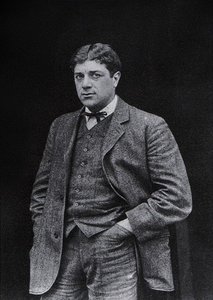
1882 - 1963 , Frankreich
Entdecken Sie die 10 Meisterwerke der geometrischen Abstraktion! Von Kandinsky bis Mondrian – erleben Sie die Geschichte, Farben & Formen dieser revolutionären Kunstrichtung. Hochwertige Kunstreproduktionen auf Most-Famous-Paintings.com

Explore the revolutionary world of Cubist Still Life with Most-Famous-Paintings. Discover Picasso & Braque's groundbreaking techniques, its philosophical roots, and lasting impact on modern art. Expert insights for collectors.

Explore Orphism, the vibrant abstract art movement pioneered by Robert & Sonia Delaunay. Discover its unique color theory, lasting influence on modern art, and how to bring this 'symphony of color' into your home with Most-Famous-Paintings.

Entdecken Sie die faszinierende Welt der Stilllebenmalerei! Von historischen Meisterwerken bis zur zeitgenössischen Abstraktion – wir bieten hochwertige Reproduktionen für luxuriöse Villa-Ambientes. Expertenberatung & Kunstsammlerqualität.

Entdecken Sie die 10 Meisterwerke des Kubismus! Von Picasso bis Braque – erleben Sie die Revolution abstrakter Kunst. Kunstdrucke & Wandbilder für Ihr Zuhause auf Most-Famous-Paintings.com.


Bleiben Sie über die neuesten Kunstnachrichten, exklusive Angebote und Dekorationsideen auf dem Laufenden.
Erzählen Sie uns von Ihrem Projekt und unsere Kunstexperten erstellen für Sie 3 personalisierte Kunstvorschläge.
Wir kuratieren 3 Optionen exklusiv für Sie – kostenlos!


 Preview
 Versenden
 Teilen
 Details anzeigen

 Herunterladen
 Ähnliche Objekte
 Röntgenaufnahme
 Diashow anzeigen

 Weiterlesen







 Die Glasoption ist nur in Größen unter 110 cm verfügbar.


