x


 Gemälde kaufen Bild kaufen
 Versenden
 Details anzeigen
 Zu Favoriten hinzufügen
 Herunterladen
 Ähnliche Objekte
 Röntgenaufnahme
 Diashow anzeigen
Giclée- oder Leinwanddruck in Museumsqualität mit schneller Produktion und flexiblen Veredelungsoptionen.





























Wählen Sie aus unseren vordefinierten Größen, die den ursprünglichen Proportionen des Kunstwerks entsprechen.

Sie können Ihre eigenen Maße eingeben, um ein bestimmtes Format oder einen speziellen Platz einzupassen. Wenn das von Ihnen gewählte Format nicht den Proportionen des Originalbildes entspricht, werden wir das Kunstwerk entweder beschneiden oder das Bild mit einem gespiegelten oder einfarbigen Rand erweitern. Ein digitaler Entwurf wird Ihnen zur Genehmigung zugesandt, bevor die Produktion beginnt.
Bitte beachten Sie, dass die Vorschau auf dem Bildschirm nicht den tatsächlichen Zuschnitt oder die Erweiterung widerspiegelt. Nur der Entwurf zeigt die endgültige Komposition präzise an.
Obwohl Sondermaße verfügbar sind, empfehlen wir die Auswahl eines Maßes aus der vordefinierten Liste, um die ursprünglichen Proportionen zu bewahren.
Weltweiter Versand () innerhalb von 2 Wochen statt der üblichen 4/5 Wochen. (23 Juli)


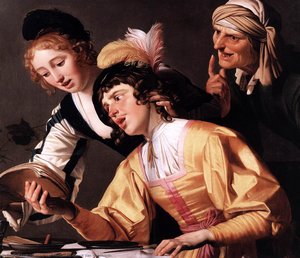
Young Drinker
Größe der Reproduktion
Gerard van Honthorst's "Young Drinker," painted circa 1625, is more than a simple depiction of youth indulging in wine; it’s a carefully constructed tableau brimming with symbolism and bathed in the dramatic chiaroscuro that defined the artist’s signature style. This captivating portrait, now housed within the Centraal Museum in Utrecht, offers a glimpse into the complexities of 17th-century Dutch society – its burgeoning mercantile class, its fascination with pleasure, and its underlying tensions between piety and indulgence. Honthorst, a key figure in the Utrecht Caravaggisti School, expertly channels the influence of Caravaggio, particularly his masterful use of light and shadow to create an atmosphere of intense drama and psychological depth.
The painting immediately draws the eye to the young man seated at a table, seemingly lost in thought as he sips from a glass. His posture is relaxed yet alert, suggesting a moment of quiet contemplation amidst the bustle of daily life. The details are meticulously rendered: the delicate curve of his neck, the subtle flush on his cheeks, and the intricate folds of his blue garment all speak to Honthorst’s exceptional technical skill. However, it's not merely a study in realism; the artist employs a sophisticated system of visual cues to convey deeper meaning.
Honthorst’s mastery lies in his manipulation of light and shadow – a technique known as *tenebrism*. He doesn't simply illuminate the scene; he sculpts it with carefully placed pools of light that dramatically contrast with areas of deep darkness. This creates a powerful sense of depth, drawing the viewer into the intimate space of the room. The candle flame, positioned strategically to highlight the young man’s face and upper body, acts as a focal point, guiding our gaze and intensifying the emotional impact of the scene. The surrounding shadows are not merely absences of light; they contribute significantly to the painting's overall mood – suggesting mystery, introspection, and perhaps even a hint of melancholy.
Notice how the light subtly reveals details while obscuring others. The open book on the table, adorned with illustrations depicting classical scenes, hints at intellectual pursuits, yet these are overshadowed by the immediate pleasure of the drink. This juxtaposition speaks to the central theme of the painting: the tension between reason and desire, knowledge and indulgence.
Beyond the technical brilliance, “Young Drinker” is rich in symbolic detail. The young man’s attire – a blue hat adorned with a feather – subtly references status and perhaps even a hint of aristocratic aspiration. The book itself offers further clues: its illustrations depict scenes from mythology, suggesting an engagement with classical ideals but also hinting at the potential for these ideals to be corrupted by earthly pleasures. Crucially, the open book is juxtaposed against the young man’s enjoyment of wine – a potent symbol of both celebration and excess.
The inclusion of the small bird in his hand adds an element of surprise and perhaps even a touch of whimsy. Birds are often associated with freedom, hope, and spirituality, yet their presence here seems somewhat incongruous, suggesting a fleeting moment of innocence amidst a world increasingly dominated by worldly concerns.
“Young Drinker” provides a valuable window into the social and cultural landscape of 17th-century Holland. It reflects the growing prosperity of the merchant class, their embrace of luxury and pleasure, and their ongoing struggle to reconcile these desires with traditional values. Honthorst’s painting captures not just a portrait but an entire era – a time of artistic innovation, economic expansion, and profound social change. Reproductions of this compelling work offer a chance to bring this evocative scene into your own home, inviting contemplation and sparking conversation about the enduring themes of human experience.


1590 - 1656 , Niederlande
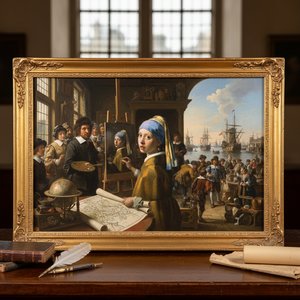
Explore the Dutch Golden Age of painting! Discover key artists like Vermeer & ter Borch, their innovative techniques, and the rich cultural context behind these Baroque masterpieces. Learn about collecting & appreciating this iconic art period.

Entdecken Sie die 10 legendärsten Öl auf Leinwand Meisterwerke! Von Van Gogh bis Monet – erfahren Sie die Geschichten hinter ikonischen Gemälden und lassen Sie sich von Kunstgeschichte inspirieren. Hochwertige Reproduktionen für Ihr Zuhause finden Sie auf .
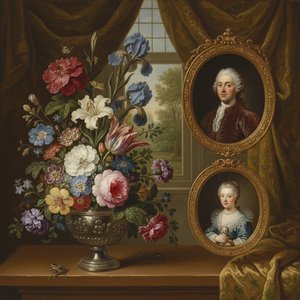
Discover the exquisite detail of Jan van Kessel the Elder's Baroque floral still lifes & captivating miniatures. Explore his artistic legacy, scientific precision, and lasting influence on 17th-century Flemish painting.

Entdecken Sie die 10 legendärsten Ölgemälde der Kunstgeschichte! Von Van Gogh bis Da Vinci – erfahren Sie die Geschichten hinter Meisterwerken wie Mona Lisa & Die Sternennacht. Hochwertige Reproduktionen auf .

Discover Cornelis van Poelenburch, a pivotal Dutch Baroque landscape painter bridging Mannerism & Italianate styles. Explore his life, key works, and lasting influence on 17th-century art with Most-Famous-Paintings.


Bleiben Sie über die neuesten Kunstnachrichten, exklusive Angebote und Dekorationsideen auf dem Laufenden.
Erzählen Sie uns von Ihrem Projekt und unsere Kunstexperten erstellen für Sie 3 personalisierte Kunstvorschläge.
Wir kuratieren 3 Optionen exklusiv für Sie – kostenlos!


 Teilen


 Weiterlesen







 Die Glasoption ist nur in Größen unter 110 cm verfügbar.