x

 Preview
 Druck bestellen Bild kaufen
 Versenden
 Details anzeigen
 Zu Favoriten hinzufügen
 Herunterladen
 Ähnliche Objekte
 Röntgenaufnahme
 Diashow anzeigen
 Oil On CanvasWallArtContemporary Realism
 2000Modern
 51.0 x 46.0 cm
Handgemaltes Ölgemälde auf Leinwand in Ihrer Wunschgröße und mit Rahmen, auf Bestellung von unseren Künstlern angefertigt.





























Wählen Sie aus unseren vordefinierten Größen, die den ursprünglichen Proportionen des Kunstwerks entsprechen.

Sie können Ihre eigenen Maße eingeben, um einen bestimmten Rahmen oder Platz auszufüllen. Wenn die gewählte Größe nicht den Proportionen des Originalbildes entspricht, werden wir das Kunstwerk entweder beschneiden oder das Gemälde durch zusätzliche, handgemalte Elemente erweitern. Ein digitales Mockup wird Ihnen zur Genehmigung zugesandt, bevor die Produktion beginnt.
Bitte beachten Sie, dass die Bildschirmvorschau nicht die tatsächliche Beschneidung oder Erweiterung widerspiegelt. Nur das Mockup zeigt die endgültige Komposition exakt an.
Obwohl Sondermaße verfügbar sind, empfehlen wir, eine Größe aus der vordefinierten Liste zu wählen, um die ursprünglichen Proportionen beizubehalten.
Weltweiter Versand () in nur 3 bis 4 Wochen statt der üblichen 5 Wochen. (25 Juli). Keine Kompromisse bei der Qualität.


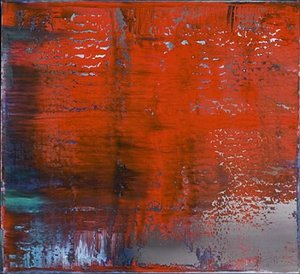
Moritz
Größe der Reproduktion
Gerhard Richter’s 2000 painting, “Moritz,” isn’t a portrait in the traditional sense. It’s an invitation to contemplate the elusive nature of memory and identity, rendered through Richter’s signature blend of photographic realism and abstract expressionism. The image depicts a young child, partially obscured by a deliberate haze of paint, seated within a high chair – a scene both familiar and profoundly unsettling. The blurred features, the soft focus, and the muted palette evoke a sense of detachment, as if we are observing a fleeting moment captured from a dream or a faded photograph. This isn’t an attempt to depict a specific child; rather, it's a distillation of childhood itself – its vulnerability, its inherent mystery, and its inevitable passage into the unknown.
Richter’s technique is central to the work’s power. He employs a layering process, building up thin washes of oil paint that are then repeatedly scraped, smudged, and reworked. This creates a surface texture that is both tactile and ethereal, mirroring the way memories can feel – simultaneously vivid and fragmented. The deliberate blurring isn't simply an aesthetic choice; it’s a key element in Richter’s exploration of representation itself. He questions the very act of seeing and recording, suggesting that any attempt to capture reality inevitably involves distortion and loss.
Understanding Gerhard Richter requires acknowledging his deeply personal and historically-charged artistic journey. Born in Dresden in 1932, Richter's childhood was profoundly shaped by the upheavals of post-war Germany – displacement, political uncertainty, and the lingering trauma of Nazi persecution. His father, a schoolteacher, navigated the complexities of life under authoritarian rule, while his mother fostered a love for literature and music within their family. This duality—a pragmatic acceptance of circumstance alongside a yearning for cultural expression—became a recurring theme in Richter’s work.
The late 1990s and early 2000s, the period encompassing “Moritz,” marked a shift in Richter's artistic focus. He increasingly explored photographic sources – not as direct copies, but as starting points for his own abstract compositions. This approach is evident in "Moritz," which can be seen as a meditation on the process of translation—the transformation of a visual image into an entirely new work of art. The photograph itself, likely a source for this piece, becomes merely a catalyst, prompting Richter to engage with the underlying themes and emotions rather than replicating the original scene.
The high chair itself is a potent symbol. It represents childhood, nourishment, and the transition from dependence to independence. However, in “Moritz,” this familiar image is imbued with ambiguity. The child's face is obscured, suggesting a loss of innocence or a detachment from experience. The bottle present in the background further reinforces this sense of vulnerability – a symbol of sustenance that may not be enough to satisfy the child’s needs.
The overall mood of the painting is melancholic and contemplative. It doesn't offer easy answers or resolutions; instead, it invites viewers to confront their own memories and anxieties about the passage of time. Richter’s masterful use of color and texture creates a visual experience that is both beautiful and unsettling, prompting us to consider the fragility of human existence and the enduring power of the past.
Most-Famous-Paintings offers meticulously crafted hand-painted reproductions of Gerhard Richter’s “Moritz,” allowing you to bring this iconic work into your home or office. Our skilled artists replicate Richter's unique technique with exceptional precision, capturing the subtle nuances of color, texture, and blurring that define the painting. Available in a range of sizes, our reproductions are printed on archival-quality canvas using vibrant pigments, ensuring long-lasting beauty and authenticity.
Whether you’re an art enthusiast, a collector, or simply seeking to add a touch of intellectual depth to your décor, “Moritz” is a compelling choice. It's more than just a painting; it’s a meditation on memory, identity, and the complexities of human experience – a timeless masterpiece brought to life through Most-Famous-Paintings’s dedication to artistic excellence.


1932 - , Deutschland

Entdecken Sie die bleibende Schönheit handgemalter Ölmalerei! Expertenrat zur Authentizität, Wertsteigerung & individuellen Kunstauswahl. Vertrauen Sie auf Qualität und Tradition.

Entdecken Sie handgemalte Reproduktionen von Meisterwerken! Most-Famous-Paintings bietet höchste Qualität, individuelle Portraits & einzigartige Kunstwerke. Ihr persönliches Andenken – geschaffen von erfahrenen Künstlern.

Verwandeln Sie Ihre Fotos in zeitlose Kunstwerke! Most-Famous-Paintings bietet handgemalte Gemälde von höchster Qualität – inspiriert von AI und traditioneller Handwerkskunst. Ihr persönliches Erbstück beginnt hier.
Handgemalte Ölmalerei von Most-Famous-Paintings – für anspruchsvolle Sammler. Exklusive Reproduktionen & personalisierte Kunstwerke mit höchster Qualität, individueller Anpassung und sicherer Auftragsmalerei. Investieren Sie in ein zeitloses Erbstück!

Entdecken Sie die Welt der Acrylmalerei! Von Techniken & Geschichte bis zu zeitgenössischen Trends – umfassende Informationen, Künstlerporträts und Tipps für Ihre eigene Kunst. Jetzt lesen!


Bleiben Sie über die neuesten Kunstnachrichten, exklusive Angebote und Dekorationsideen auf dem Laufenden.
Erzählen Sie uns von Ihrem Projekt und unsere Kunstexperten erstellen für Sie 3 personalisierte Kunstvorschläge.
Wir kuratieren 3 Optionen exklusiv für Sie – kostenlos!


 Teilen

 Weiterlesen







 Die Glasoption ist nur in Größen unter 110 cm verfügbar.