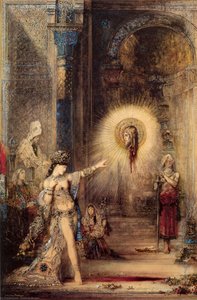
x


 Preview
 Druck bestellen Bild kaufen
 Versenden
 Details anzeigen
 Zu Favoriten hinzufügen
 Herunterladen
 Ähnliche Objekte
 Röntgenaufnahme
 Diashow anzeigen
 Öl auf LeinwandWandkunstSymbolist Painting
 1867Frühmittelalter
 27.0 x 33.0 cm
Handgemaltes Ölgemälde auf Leinwand in Ihrer Wunschgröße und mit Rahmen, auf Bestellung von unseren Künstlern angefertigt.





























Wählen Sie aus unseren vordefinierten Größen, die den ursprünglichen Proportionen des Kunstwerks entsprechen.

Sie können Ihre eigenen Maße eingeben, um einen bestimmten Rahmen oder Platz auszufüllen. Wenn die gewählte Größe nicht den Proportionen des Originalbildes entspricht, werden wir das Kunstwerk entweder beschneiden oder das Gemälde durch zusätzliche, handgemalte Elemente erweitern. Ein digitales Mockup wird Ihnen zur Genehmigung zugesandt, bevor die Produktion beginnt.
Bitte beachten Sie, dass die Bildschirmvorschau nicht die tatsächliche Beschneidung oder Erweiterung widerspiegelt. Nur das Mockup zeigt die endgültige Komposition exakt an.
Obwohl Sondermaße verfügbar sind, empfehlen wir, eine Größe aus der vordefinierten Liste zu wählen, um die ursprünglichen Proportionen beizubehalten.
Weltweiter Versand () in nur 3 bis 4 Wochen statt der üblichen 5 Wochen. (28 Juli). Keine Kompromisse bei der Qualität.


Die Chimäre
Größe der Reproduktion
Gustave Moreau's "Die Chimäre" – a name that itself evokes a sense of unsettling beauty and primal power – is more than just a painting; it’s an immersion into the richly layered world of Symbolism. Completed in 1867, this oil on canvas transports us to a realm where classical mythology intertwines with deeply personal emotion, reflecting Moreau's lifelong fascination with the subconscious and the spiritual. The work isn’t simply a depiction of a monstrous creature from Greek legend; it’s an exploration of fusion, transformation, and the inherent tension between opposing forces within the human psyche.
Moreau, born in Paris in 1826, rejected the prevailing trends of his time. He wasn't interested in faithfully representing reality as Impressionists did, nor was he driven by the historical narratives favored by Realists. Instead, he sought to access a deeper truth through symbolism – drawing inspiration from medieval tapestries, Byzantine mosaics, and the esoteric traditions of alchemy and astrology. “Die Chimäre” embodies this approach perfectly; it’s a carefully constructed allegory designed to resonate with viewers on an emotional and intellectual level.
The Chimera itself dominates the background, a terrifying yet strangely alluring hybrid beast – the head of a lion, the body of a goat, and the tail of a serpent. Moreau doesn’t shy away from the creature's monstrous nature; its form is rendered with meticulous detail, highlighting its grotesque features. However, he also imbues it with a sense of majesty, suggesting that even in this terrifying embodiment of chaos, there exists a certain power and allure.
Moreau’s masterful use of oil paint is central to the painting's impact. He employs rich, saturated colors – deep reds, vibrant blues, and shimmering golds – creating a visual feast that enhances the symbolic weight of each element. The textures are equally compelling; the smooth sheen of the horse’s flanks contrasts with the rougher surfaces of the Chimera’s scales and the flowing drapery of the figures.
The Chimera, as a mythological creature, represents the fusion of disparate elements – a potent symbol of transformation, creation, and destruction. It embodies the idea that beauty can arise from chaos, and that seemingly incompatible forces can be combined to produce something entirely new. The woman and man on horseback could represent humanity’s striving for unity and transcendence, while the Chimera itself symbolizes the challenges and dangers inherent in this pursuit.
"Die Chimäre" stands as a cornerstone of Moreau's oeuvre and a pivotal work within the Symbolist movement. His dedication to exploring the depths of human emotion and the power of myth continues to resonate with audiences today. Reproductions, such as those offered by Most-Famous-Paintings.com, provide an accessible way to experience the beauty and complexity of this extraordinary painting. A high-quality reproduction allows you to bring this evocative image into your home or office, serving as a constant reminder of the enduring power of art to transport us beyond the confines of reality.
The original painting resides in the Fogg Art Museum at Harvard University (Cambridge, United States). Consider exploring images and further information about this remarkable piece through reputable online resources dedicated to art history and museum collections.

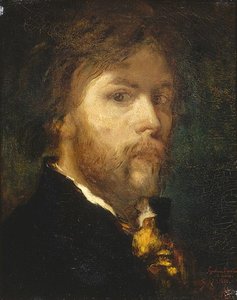
1826 - 1898 , Frankreich
Entdecken Sie die 25 ikonischsten Gemälde von Gustav Klimt! Tauchen Sie ein in die Welt der Wiener Secession, des Jugendstils und der goldenen Phase. Hochwertige Reproduktionen & Inspiration für Ihr Zuhause auf Most-Famous-Paintings.com.

Explore the rich history & enduring techniques of oil painting with Most-Famous-Paintings. Discover masterpieces, learn about art collecting, and find authentic handmade reproductions crafted by skilled artists.

Entdecken Sie die 25 Meisterwerke von Claude Monet! Tauchen Sie ein in die Welt des Impressionismus, erleben Sie Seerosen, Sonnenaufgänge & Kathedralen. Hochwertige Reproduktionen für Ihr Zuhause – exklusiv auf Most-Famous-Paintings.com.
Entdecken Sie das faszinierende Werk Gustave Moreaus, des wichtigsten Vertreters des Symbolismus! Analysen, Biografien und Einblicke in seine mythologischen Gemälde. Jetzt lesen!

Explore the rich history & techniques of oil painting – from Renaissance masters to Impressionism. Discover pigments, layering methods, and why this timeless medium endures. Expert insights for artists & art enthusiasts.


Bleiben Sie über die neuesten Kunstnachrichten, exklusive Angebote und Dekorationsideen auf dem Laufenden.
Erzählen Sie uns von Ihrem Projekt und unsere Kunstexperten erstellen für Sie 3 personalisierte Kunstvorschläge.
Wir kuratieren 3 Optionen exklusiv für Sie – kostenlos!


 Teilen

 Weiterlesen







 Die Glasoption ist nur in Größen unter 110 cm verfügbar.