x


 Gemälde kaufen Bild kaufen
 Versenden
 Details anzeigen
 Zu Favoriten hinzufügen
 Herunterladen
 Ähnliche Objekte
 Röntgenaufnahme
 Diashow anzeigen
 Acrylic On CanvasWallArtRealism
 186519th Century
 65.0 x 90.0 cm
 National Gallery of Canada
Giclée- oder Leinwanddruck in Museumsqualität mit schneller Produktion und flexiblen Veredelungsoptionen.





























Wählen Sie aus unseren vordefinierten Größen, die den ursprünglichen Proportionen des Kunstwerks entsprechen.

Sie können Ihre eigenen Maße eingeben, um ein bestimmtes Format oder einen speziellen Platz einzupassen. Wenn das von Ihnen gewählte Format nicht den Proportionen des Originalbildes entspricht, werden wir das Kunstwerk entweder beschneiden oder das Bild mit einem gespiegelten oder einfarbigen Rand erweitern. Ein digitaler Entwurf wird Ihnen zur Genehmigung zugesandt, bevor die Produktion beginnt.
Bitte beachten Sie, dass die Vorschau auf dem Bildschirm nicht den tatsächlichen Zuschnitt oder die Erweiterung widerspiegelt. Nur der Entwurf zeigt die endgültige Komposition präzise an.
Obwohl Sondermaße verfügbar sind, empfehlen wir die Auswahl eines Maßes aus der vordefinierten Liste, um die ursprünglichen Proportionen zu bewahren.
Weltweiter Versand () innerhalb von 2 Wochen statt der üblichen 4/5 Wochen. (22 Juli)


The Third-class Carriage
Größe der Reproduktion
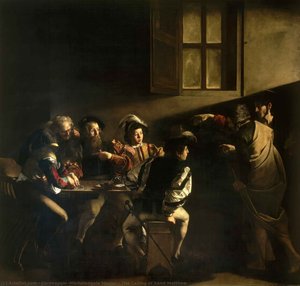
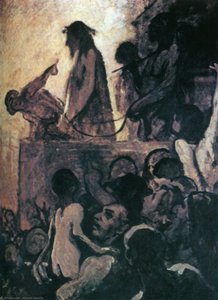
Honoré Daumier's 1865 painting, “The Third-Class Carriage,” is more than a simple depiction of a train journey; it’s a poignant snapshot of mid-19th century French society, rendered with the artist’s characteristic blend of realism and social commentary. Measuring 65 x 90 cm, this black and white composition immediately draws the viewer into the cramped confines of a third-class railway car, capturing a moment of everyday life that speaks volumes about class divisions and the burgeoning urbanization of France during the Second Empire.
Daumier’s style is immediately recognizable through his meticulous draftsmanship and a deliberate avoidance of idealized beauty. He was deeply influenced by artists like Rubens, particularly in his use of dramatic lighting (chiaroscuro) to sculpt forms and create mood. In “The Third-Class Carriage,” this influence is evident in the strong contrasts between light and shadow, which highlight the textures of the benches, luggage, and clothing. The artist’s technique relies on precise lines and detailed observation, reflecting his commitment to capturing reality with unflinching honesty. His work was often characterized by a rough, almost sketch-like quality, contributing to its raw emotional impact.
Painted in 1865, “The Third-Class Carriage” reflects the significant social and political changes occurring in France during this period. The rapid growth of Paris and other industrial centers led to a massive influx of rural populations seeking work and opportunity – often finding themselves crammed into overcrowded, poorly maintained train cars like the one depicted here. Daumier’s work aligns with the broader trend of Realist art, which sought to depict everyday life without romanticizing or idealizing it. The painting subtly critiques the social inequalities inherent in this transition, offering a glimpse into the lives of those marginalized by industrialization and urbanization.
Beyond its documentary value, “The Third-Class Carriage” possesses a powerful symbolic resonance. The presence of a woman holding a baby amidst the bustling crowd evokes themes of family, vulnerability, and the challenges faced by working-class families. The scattered luggage represents not just possessions but also dreams, aspirations, and the burdens carried on journeys – both literal and metaphorical. The overall mood is one of quiet observation, inviting viewers to contemplate the lives of these anonymous individuals and consider their place within a rapidly changing society. This artwork’s enduring appeal lies in its ability to capture a fleeting moment of human experience with remarkable sensitivity and artistic skill.


1808 - 1879 , Frankreich

Entdecken Sie die 25 berühmtesten Kunstwerke des Metropolitan Museum of Art, New York! Von Van Gogh bis Monet – erleben Sie Geschichten hinter Meisterwerken. Hochwertige Reproduktionen & Inspiration für Ihr Zuhause auf Most-Famous-Paintings.com.

Entdecken Sie die 25 ikonischsten Kunstwerke des MoMA New York! Von Van Goghs Sternennacht bis Warhols Campbell Soup Dosen – erleben Sie moderne Meisterwerke. Hochwertige Kunstreproduktionen & Inspiration für Ihr Zuhause auf Most-Famous-Paintings.com.

Entdecken Sie die 25 schönsten Gemälde von Dante Gabriel Rossetti! Tauchen Sie ein in die Welt der Präraffeliten, symbolistischer Kunst & viktorianischer Romantik. Hochwertige Reproduktionen für Ihr Zuhause – jetzt bei Most-Famous-Paintings.com!

Entdecken Sie die 25 ikonischsten Kunstwerke des Detroit Institute of Arts! Von Van Gogh bis Monet – erleben Sie Geschichten, Techniken & Farben. Hochwertige Kunstdrucke und Reproduktionen für Ihr Zuhause auf Most-Famous-Paintings.com.
Entdecken Sie die 25 ikonischsten Meisterwerke der National Gallery Washington! Von Cézanne bis Picasso – erfahren Sie die Geschichten hinter berühmten Gemälden, Kunststilen & Farbpaletten. Hochwertige Kunstdrucke online bei Most-Famous-Paintings.com.


Bleiben Sie über die neuesten Kunstnachrichten, exklusive Angebote und Dekorationsideen auf dem Laufenden.
Erzählen Sie uns von Ihrem Projekt und unsere Kunstexperten erstellen für Sie 3 personalisierte Kunstvorschläge.
Wir kuratieren 3 Optionen exklusiv für Sie – kostenlos!


 Teilen

 Weiterlesen







 Die Glasoption ist nur in Größen unter 110 cm verfügbar.