x


 Gemälde kaufen Bild kaufen
 Versenden
 Details anzeigen
 Zu Favoriten hinzufügen
 Herunterladen
 Ähnliche Objekte
 Röntgenaufnahme
 Diashow anzeigen
Giclée- oder Leinwanddruck in Museumsqualität mit schneller Produktion und flexiblen Veredelungsoptionen.





























Wählen Sie aus unseren vordefinierten Größen, die den ursprünglichen Proportionen des Kunstwerks entsprechen.

Sie können Ihre eigenen Maße eingeben, um ein bestimmtes Format oder einen speziellen Platz einzupassen. Wenn das von Ihnen gewählte Format nicht den Proportionen des Originalbildes entspricht, werden wir das Kunstwerk entweder beschneiden oder das Bild mit einem gespiegelten oder einfarbigen Rand erweitern. Ein digitaler Entwurf wird Ihnen zur Genehmigung zugesandt, bevor die Produktion beginnt.
Bitte beachten Sie, dass die Vorschau auf dem Bildschirm nicht den tatsächlichen Zuschnitt oder die Erweiterung widerspiegelt. Nur der Entwurf zeigt die endgültige Komposition präzise an.
Obwohl Sondermaße verfügbar sind, empfehlen wir die Auswahl eines Maßes aus der vordefinierten Liste, um die ursprünglichen Proportionen zu bewahren.
Weltweiter Versand () innerhalb von 2 Wochen statt der üblichen 4/5 Wochen. (20 Juli)


East Bergholt
Größe der Reproduktion
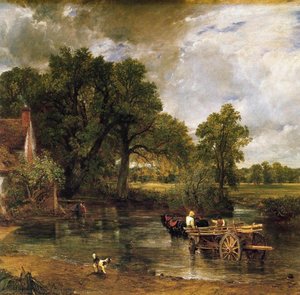
John Constable’s “East Bergholt” – painted in 1813 – is more than just a depiction of a rural English landscape; it's a profound meditation on light, atmosphere, and the very essence of place. Born in East Bergholt itself, Constable possessed an unparalleled ability to capture the fleeting moods of his beloved Suffolk countryside. This painting isn’t merely a record of a scene; it’s a distillation of experience, imbued with the artist’s deeply felt connection to the land – a connection forged within the familiar rhythms of his family's corn trade and mills along the River Stour.
The composition immediately draws the eye into a gently rolling field, dominated by a hazy sky that suggests both promise and melancholy. Constable masterfully employs a technique he termed “direct painting,” eschewing meticulous detail in favor of capturing the immediate impression of light and color. This is evident in the loose brushstrokes, particularly noticeable in the depiction of the clouds – they aren’t sharply defined but rather rendered as luminous masses, shifting subtly with an almost palpable sense of movement. The use of complementary colors—the cool blues and greens of the field juxtaposed against the warm yellows and oranges of the sky—creates a dynamic tension that is characteristic of Constable's style.
Constable’s genius lay in his ability to translate atmospheric conditions onto canvas. “East Bergholt” exemplifies this perfectly. The painting isn’t simply ‘cloudy’; it *feels* cloudy – a damp, slightly oppressive atmosphere that invites contemplation and introspection. This is achieved through a masterful manipulation of light and shadow, creating an illusion of depth and volume. Notice how the distant trees are rendered in muted tones, almost dissolving into the haze, while those closer to the foreground retain greater detail and vibrancy. The artist’s careful observation of nature's subtle shifts—the way sunlight filters through clouds, the play of shadows on foliage—is what elevates this work beyond a simple landscape painting.
The inclusion of figures – several individuals scattered across the field – adds a layer of human presence to the scene. They are not dramatically posed or centrally focused; rather, they appear as part of the landscape itself, subtly interacting with the natural world. This reinforces Constable’s broader theme: the harmonious relationship between humanity and nature. The solitary horse grazing peacefully suggests a timelessness, a connection to the ancient rhythms of rural life.
Painted in 1813, “East Bergholt” reflects the Romantic sensibility that was gaining momentum at the time. The emphasis on subjective experience, the fascination with nature’s power and beauty, and the exploration of human emotions – these were all hallmarks of the Romantic movement. Constable's work stands as a pivotal moment in English landscape painting, moving away from the idealized classical landscapes favored by earlier generations and embracing a more honest and emotionally resonant portrayal of the British countryside.
Furthermore, the painting’s setting—East Bergholt, Constable’s birthplace—holds symbolic weight. It represents not just a physical location but also the artist's roots, his identity, and his deep-seated love for his homeland. The painting can be seen as an act of preservation – a visual testament to the beauty and tranquility of a rapidly changing England.
Most-Famous-Paintings offers exquisite, hand-painted reproductions of “East Bergholt,” meticulously crafted to capture the essence of Constable’s original masterpiece. Each reproduction is created using traditional techniques and archival quality materials, ensuring that it will retain its beauty and vibrancy for generations to come. Whether you are an art collector, a design enthusiast seeking inspiration, or simply someone who appreciates the timeless allure of English landscape painting, a Most-Famous-Paintings reproduction of “East Bergholt” provides a stunning addition to any home or office. Experience the evocative power of Constable’s vision – brought to life with unparalleled detail and authenticity.

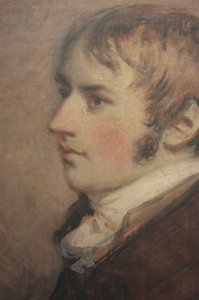
1776 - 1837 , Vereinigtes Königreich
Entdecken Sie die 25 Meisterwerke von John Constable! Erleben Sie englische Landschaftsmalerei vom Hay Wain bis zur Stour Valley. Hochwertige Reproduktionen & Kunst für Ihr Zuhause auf Most-Famous-Paintings.com.

Entdecken Sie die 25 Meisterwerke von John Singer Sargent! Tauchen Sie ein in die Welt der Porträtmalerei, des Impressionismus & der Belle Époque. Hochwertige Kunstdrucke & Reproduktionen für Ihr Zuhause – jetzt auf Most-Famous-Paintings.com!

Entdecken Sie die 10 Meisterwerke der Romantischen Landschaftsmalerei! Von Caspar David Friedrich bis Turner – erleben Sie die Kunst, Emotion & Natur. Hochwertige Reproduktionen auf Most-Famous-Paintings.com
Entdecken Sie die 10 schönsten Landschaftsbilder der Kunstgeschichte! Von Monet bis Van Gogh – erfahren Sie die Geschichten hinter Meisterwerken & finden Sie Inspiration für Ihr Zuhause. Hochwertige Kunstdrucke auf Most-Famous-Paintings.com.
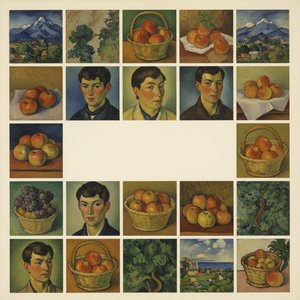
Entdecken Sie die 25 Meisterwerke von Paul Cézanne! Tauchen Sie ein in die Welt des Impressionismus und Postimpressionismus. Erfahren Sie mehr über seine Stillleben, Landschaften & berühmten Gemälde – jetzt hochwertige Kunstdrucke auf Most-Famous-Paintings.com.


Bleiben Sie über die neuesten Kunstnachrichten, exklusive Angebote und Dekorationsideen auf dem Laufenden.
Erzählen Sie uns von Ihrem Projekt und unsere Kunstexperten erstellen für Sie 3 personalisierte Kunstvorschläge.
Wir kuratieren 3 Optionen exklusiv für Sie – kostenlos!


 Teilen


 Weiterlesen







 Die Glasoption ist nur in Größen unter 110 cm verfügbar.