x

 Acryl auf LeinwandWandkunstHigh Renaissance
 1503
1503 17.0 x 24.0 cm
Handgemaltes Ölgemälde auf Leinwand in Ihrer Wunschgröße und mit Rahmen, auf Bestellung von unseren Künstlern angefertigt. ( Druck bestellen Bild kaufen)





























Wählen Sie aus unseren vordefinierten Formaten, die den ursprünglichen Proportionen des Kunstwerks entsprechen.

Sie können Ihre eigenen Maße eingeben, um einen bestimmten Rahmen oder Platz auszufüllen. Wenn die gewählte Größe nicht den Proportionen des Originalbildes entspricht, werden wir das Kunstwerk entweder beschneiden oder das Gemälde durch zusätzliche, handgemalte Elemente erweitern. Ein digitales Mockup wird Ihnen zur Genehmigung zugesandt, bevor die Produktion beginnt.
Bitte beachten Sie, dass die Bildschirmvorschau nicht die tatsächliche Beschneidung oder Erweiterung widerspiegelt. Nur das Mockup zeigt die endgültige Komposition exakt an.
Obwohl Sondermaße verfügbar sind, empfehlen wir, eine Größe aus der vordefinierten Liste zu wählen, um die ursprünglichen Proportionen beizubehalten.
Weltweiter Versand () in nur 3 bis 4 Wochen statt der üblichen 5 Wochen. (18 August). Keine Kompromisse bei der Qualität.


Galloping Rider and other figures
Format der Reproduktion
Leonardo da Vinci’s “Galloping Rider and other figures,” painted circa 1503 in Florence, isn't merely a depiction of a horse and rider; it’s a meticulously crafted study brimming with psychological depth, technical mastery, and the very essence of High Renaissance ideals. This captivating work, now housed within the collection of Most-Famous-Paintings, offers a rare glimpse into Leonardo’s artistic process – a dynamic sketch that reveals his fascination with movement, anatomy, and the subtle interplay of light and shadow. The painting itself is relatively small, measuring just 17 x 24 centimeters (approximately 6 ¾ x 9 inches), yet it explodes with energy and narrative complexity.
The central figure, a man astride a magnificent horse, dominates the composition, his posture conveying both power and poised grace. He’s not a triumphant warrior in full armor, but rather a gentleman of action, suggesting a refined nobility. Around him swirl other figures – a soldier, a dog, and what appears to be a young boy – creating a dynamic tableau that hints at a larger scene unfolding beyond the immediate frame. The background is deliberately vague, rendered with broad strokes of chalk, emphasizing the foreground subjects and drawing the viewer’s eye directly into the heart of the action.
Leonardo's genius lies not just in his ability to capture a likeness but in his profound understanding of human anatomy and movement. The rider’s musculature is rendered with astonishing accuracy, evident in the subtle curves of his body as he guides the horse forward. The horse itself is equally impressive, its powerful legs and flowing mane meticulously observed and translated onto the chalk surface. Notice how Leonardo uses overlapping lines to create a sense of depth and volume – a technique that anticipates later developments in perspective drawing.
The painting’s execution showcases Leonardo's innovative approach to chalk drawing. Unlike traditional oil paints, chalk offered a remarkable degree of immediacy and spontaneity. Leonardo favored this medium for its ability to capture fleeting moments and experiment with loose, expressive lines. The texture of the chalk itself contributes significantly to the work’s visual impact, creating a sense of surface interest and tactile quality. It's a testament to his willingness to push boundaries and explore new artistic possibilities.
“Galloping Rider” is more than just a study in movement; it’s imbued with symbolic meaning reflective of the Renaissance fascination with classical antiquity and humanist ideals. The rider's posture, reminiscent of Roman equestrian statues, evokes notions of leadership, courage, and civic virtue. The presence of the dog could symbolize loyalty and companionship, while the young boy might represent innocence or a future generation.
Furthermore, the painting embodies the Renaissance spirit of *uomo universale* – the ideal of the “universal man” who excelled in multiple disciplines. Leonardo himself exemplified this concept, seamlessly blending art, science, engineering, and anatomy in his work. “Galloping Rider” is a microcosm of that intellectual curiosity, demonstrating his meticulous observation of the natural world and his desire to understand its underlying principles.
Reproductions of “Galloping Rider and other figures” by Most-Famous-Paintings capture the essence of Leonardo’s original sketch with stunning fidelity. Whether you're an art enthusiast, a collector seeking to enrich your collection, or an interior designer looking for a captivating piece to elevate your space, this artwork offers a unique opportunity to own a fragment of Renaissance history. The dynamic composition and evocative symbolism make it a timeless addition to any home or gallery – a testament to the enduring genius of Leonardo da Vinci.

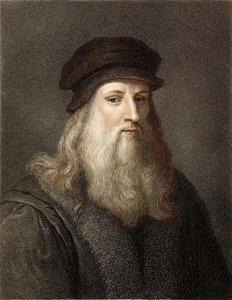
Leonardo di ser Piero da Vinci (geboren am 15. April 1452 – gestorben am 2. Mai 1519) wurde unerwünscht in der Nähe von Vinci, in der Republik Florenz, geboren. Seine frühe Ausbildung umfasste Lesen, Schreiben und Rechnen, obwohl eine formale Lateinschule später erfolgte. Mit vierzehn Jahren begann er eine Lehre bei Andrea del Verrocchio, einem führenden florentinischen Künstler. Diese intensive Ausbildung ließ ihn in die Malerei, Bildhauerei und technische Künste eintauchen – legte den Grundstein für sein vielseitiges Genie.
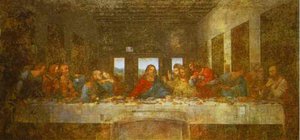
Im Jahr 1482 trat Leonardo dem Dienst von Ludovico Sforza, Herzog von Mailand, bei. Er war nicht nur Künstler; er diente als Ingenieur, Architekt und Bildhauer am Hof. In dieser Zeit entwarf er Militärbefestigungen, aufwendige Bühnenbilder und Skulpturen (viele unvollendet). Eine monumentale Beauftragung zu dieser Zeit war Die letzten Tage des Judas I., ein Fresko, das in der Refektorium des Klosters Santa Maria delle Grazie gemalt wurde – ein Werk, das die westliche Kunst nachhaltig beeinflussen sollte.
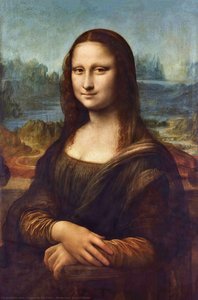
Nach der französischen Invasion Mailands im Jahr 1499 kehrte Leonardo während eines Höhepunktes der künstlerischen Entwicklung nach Florenz zurück. Obwohl er weniger Werke produzierte als zuvor, waren ihre Auswirkungen enorm. In dieser Zeit begann die Arbeit an Mona Lisa (La Gioconda), dem berühmtesten Gemälde weltweit, und seine Techniken wurden weiter verfeinert.
Leonas späte Jahre waren von Reisen zwischen Florenz, Mailand und Rom geprägt, wo er für seine Expertise begehrt war, aber oft Projekte unvollständig ließ. Im Jahr 1516 nahm er die Einladung von König Franz I. an, um in der Nähe von Amboise in Frankreich im Château du Clos Lucé zu leben und zu arbeiten. Er starb dort im Jahr 1519 und hinterließ ein großes Vermächtnis aus künstlerlicher und wissenschaftlicher Forschung.
Leonas Einfluss auf die Kunstgeschichte ist unermesslich. Seine Gemälde werden für ihren Realismus, ihre psychologische Tiefe und ihre innovativen Techniken gefeiert. Er erhob den Status von Künstlern von geschickten Handwerkern zu intellektuellen Figuren. Über seine künstlerischen Leistungen hinaus haben seine wissenschaftlichen Untersuchungen und Erfindungen viele moderne Entdeckungen vorweggenommen. Er bleibt ein Symbol menschlicher Neugier, Kreativität und der Suche nach Wissen – eine wahre Verkörperung des Geistes der Renaissance. Sein Vermächtnis inspiriert bis heute Ehrfurcht und Faszination, festigt seinen Platz als eine der bemerkenswertesten Figuren der Geschichte.
1452 - 1519 , Italien

Explore the profound genius of the Renaissance Trinity. Delve into a comparative study of Leonardo da Vinci, Michelangelo, and Raphael, uncovering their unique contributions to art history, technique, and the enduring legacy of Italian High Renaissance mastery.


Bleiben Sie über die neuesten Kunstnachrichten, exklusive Angebote und Dekorationsideen auf dem Laufenden.
Erzählen Sie uns von Ihrem Projekt, und unsere Kunstexperten erstellen für Sie drei personalisierte Kunstvorschläge.
Wir kuratieren 3 Optionen exklusiv für Sie – kostenlos!


 Vorschau anzeigen
 Versenden
 Teilen
 Details anzeigen

 Herunterladen
 Ähnliche Objekte
 Röntgenaufnahme
 Diashow
 Weiterlesen







 Die Glasoption ist nur für Größen unter 110 cm verfügbar.