


x


Handgemaltes Ölgemälde auf Leinwand in Ihrer Wunschgröße und mit Rahmen, auf Bestellung von unseren Künstlern angefertigt. ( Switch to Print Switch to Image)





























Wählen Sie aus unseren vordefinierten Größen, die den ursprünglichen Proportionen des Kunstwerks entsprechen.

Sie können Ihre eigenen Maße eingeben, um einen bestimmten Rahmen oder Platz auszufüllen. Wenn die gewählte Größe nicht den Proportionen des Originalbildes entspricht, werden wir das Kunstwerk entweder beschneiden oder das Gemälde durch zusätzliche, handgemalte Elemente erweitern. Ein digitales Mockup wird Ihnen zur Genehmigung zugesandt, bevor die Produktion beginnt.
Bitte beachten Sie, dass die Bildschirmvorschau nicht die tatsächliche Beschneidung oder Erweiterung widerspiegelt. Nur das Mockup zeigt die endgültige Komposition exakt an.
Obwohl Sondermaße verfügbar sind, empfehlen wir, eine Größe aus der vordefinierten Liste zu wählen, um die ursprünglichen Proportionen beizubehalten.
Weltweiter Versand () in nur 3 bis 4 Wochen statt der üblichen 5 Wochen. (30 Juli). Keine Kompromisse bei der Qualität.


Untitled 26
Größe der Reproduktion
Mark Rothko’s “Untitled 26,” painted in 1960, stands as a poignant testament to the artist's lifelong preoccupation with themes of loss and spiritual yearning. Born Markus Yakovlevich Rothkowitz in Dvinsk, Latvia, in 1903, Rothko experienced firsthand the trauma of familial displacement – his father’s emigration from Latvia following the Russian Revolution and the subsequent death of Jacob Rothkowitz shortly after arriving in Portland.
The painting itself embodies Rothko's signature style: monumental rectangular blocks of color—primarily shades of orange and yellow—that bleed into one another, creating an immersive experience for the viewer. This technique, honed over decades of experimentation, eschews traditional representation, opting instead for a visual language that prioritizes emotion and intuition. Rothko meticulously applied thin layers of pigment to canvas, allowing the colors to merge organically, capturing not just hues but also subtle gradations of luminosity and texture.
Historically situated within the broader context of Abstract Expressionism—a movement characterized by spontaneity and emotional intensity—Rothko’s work emerged during a period of profound intellectual and spiritual questioning. Influenced by Zen Buddhism and existential philosophy, Rothko sought to convey universal truths about human experience – confronting mortality, grappling with suffering, and striving for transcendence.
The symbolism embedded within “Untitled 26” is deliberately ambiguous yet powerfully suggestive. The dominant orange hue evokes warmth, vitality, and perhaps even remembrance—a visual echo of the familial bonds fractured by emigration. Simultaneously, it represents the fiery crucible of grief, mirroring the artist’s own internal struggle to reconcile loss with hope.
The subtle blending of colors contributes significantly to the painting's emotional impact. Rather than depicting a specific scene or object, Rothko invites contemplation—encouraging viewers to immerse themselves in the luminous expanse and allow their subconscious mind to interpret its underlying message. The resulting sensation is one of profound serenity mingled with melancholy – an acknowledgment of life’s inevitable sorrows alongside an unwavering belief in the possibility of spiritual illumination.
“Untitled 26” continues to resonate with audiences today, serving as a timeless meditation on the human condition. Its enduring appeal lies in its ability to bypass rational thought altogether, tapping into primal emotions and fostering a visceral connection between artist and viewer—a reminder that art’s greatest power resides not in depicting reality but in conveying profound truths about our inner lives.

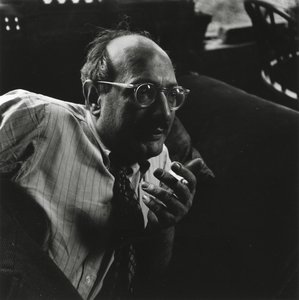
1903 - 1970 , Lettland
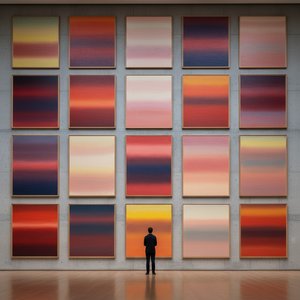
Entdecken Sie die 25 Meisterwerke von Mark Rothko! Tauchen Sie ein in die Welt der abstrakten Kunst, des Expressionismus und der Farbfeldmalerei. Hochwertige Kunstdrucke & Reproduktionen auf Most-Famous-Paintings.com – für Ihre Wohnräume.

Entdecken Sie die 10 Meisterwerke des Abstrakten Expressionismus! Von Jackson Pollock bis Mark Rothko – erfahren Sie die Geschichten hinter ikonischen Gemälde und finden Sie hochwertige Reproduktionen für Ihr Zuhause. Jetzt bei entdecken!

Entdecken Sie die tiefgründige Welt von Mark Rothko und dem Abstrakten Expressionismus. Expertenanalyse der Farbfeldmalerei, ihre emotionale Tiefe & bleibenden Einfluss. Jetzt lesen!
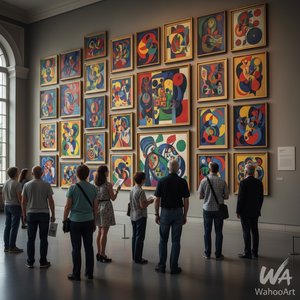
Entdecken Sie die 25 bedeutendsten Gemälde von Wassily Kandinsky! Tauchen Sie ein in die Welt der abstrakten Kunst, des Expressionismus und der Farbkomposition. Hochwertige Kunstdrucke & Inspiration für Ihr Zuhause auf Most-Famous-Paintings.com.
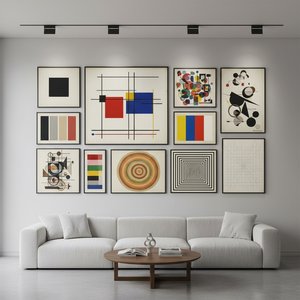
Entdecken Sie die 10 Meisterwerke der geometrischen Abstraktion! Von Kandinsky bis Mondrian – erleben Sie die Geschichte, Farben & Formen dieser revolutionären Kunstrichtung. Hochwertige Kunstreproduktionen auf Most-Famous-Paintings.com


Bleiben Sie über die neuesten Kunstnachrichten, exklusive Angebote und Dekorationsideen auf dem Laufenden.
Erzählen Sie uns von Ihrem Projekt und unsere Kunstexperten erstellen für Sie 3 personalisierte Kunstvorschläge.
Wir kuratieren 3 Optionen exklusiv für Sie – kostenlos!


 Preview
 Versenden
 Teilen
 Details anzeigen

 Herunterladen
 Ähnliche Objekte
 Röntgenaufnahme
 Diashow anzeigen
 Weiterlesen







 Die Glasoption ist nur in Größen unter 110 cm verfügbar.


