x


 Gemälde kaufen Bild kaufen
 Versenden
 Details anzeigen
 Zu Favoriten hinzufügen
 Herunterladen
 Ähnliche Objekte
 Röntgenaufnahme
 Diashow anzeigen
 Acrylic On CanvasWallArtSurrealist Movement
 1913Modern
 80.0 x 54.0 cm
Giclée- oder Leinwanddruck in Museumsqualität mit schneller Produktion und flexiblen Veredelungsoptionen.





























Wählen Sie aus unseren vordefinierten Größen, die den ursprünglichen Proportionen des Kunstwerks entsprechen.

Sie können Ihre eigenen Maße eingeben, um ein bestimmtes Format oder einen speziellen Platz einzupassen. Wenn das von Ihnen gewählte Format nicht den Proportionen des Originalbildes entspricht, werden wir das Kunstwerk entweder beschneiden oder das Bild mit einem gespiegelten oder einfarbigen Rand erweitern. Ein digitaler Entwurf wird Ihnen zur Genehmigung zugesandt, bevor die Produktion beginnt.
Bitte beachten Sie, dass die Vorschau auf dem Bildschirm nicht den tatsächlichen Zuschnitt oder die Erweiterung widerspiegelt. Nur der Entwurf zeigt die endgültige Komposition präzise an.
Obwohl Sondermaße verfügbar sind, empfehlen wir die Auswahl eines Maßes aus der vordefinierten Liste, um die ursprünglichen Proportionen zu bewahren.
Weltweiter Versand () innerhalb von 2 Wochen statt der üblichen 4/5 Wochen. (22 Juli)


Immortality
Größe der Reproduktion
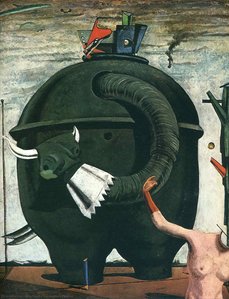
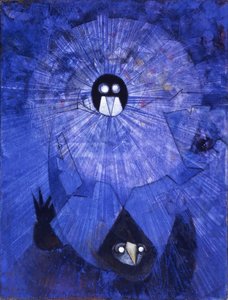
Max Ernst’s “Immortality,” painted in 1913, is not merely a depiction of a scene; it’s an invitation to contemplate the precarious nature of existence and the unsettling allure of oblivion. This surrealist masterpiece, rendered at a compact 80 x 54 cm, immediately commands attention with its stark composition – a group of figures perched precariously on a cliff edge, gazing down upon a miniature town below. The painting’s power resides in its ambiguity; it refuses easy interpretation, prompting the viewer to confront questions about mortality, memory, and the human condition.
Born in Brühl, Germany, in 1891, Max Ernst was a pivotal figure at the genesis of surrealist art. His formative years were marked by an intense intellectual curiosity, fueled by studies in philosophy, psychology, and literature – disciplines that profoundly shaped his artistic approach. Unlike many of his contemporaries who sought to replicate reality, Ernst deliberately distorted it, employing techniques like frottage (rubbing textures) and decalcomania (spreading paint on a surface) to tap into the subconscious mind. “Immortality” exemplifies this process; the seemingly random arrangement of figures and objects suggests an intuitive exploration rather than a calculated design.
Ernst’s masterful use of color—muted earth tones punctuated by flashes of grey and blue—contributes to the painting's melancholic mood. The brushwork is loose and expressive, conveying a sense of movement and unease. The overall effect is one of profound psychological depth, inviting viewers to engage with their own anxieties about mortality and the search for meaning in a chaotic world. “Immortality” remains a powerfully evocative work, demonstrating Ernst’s ability to translate complex philosophical ideas into a visually arresting and emotionally resonant image. This hand-painted reproduction captures not just the visual elements of the original but also its inherent sense of mystery and timeless contemplation.


1891 - 1976 , Deutschland
Entdecken Sie die 25 bedeutendsten Kunstwerke von Max Ernst! Tauchen Sie ein in die Welt des Surrealismus, Dada und abstrakter Malerei. Hochwertige Kunstreproduktionen & Inspiration für Ihr Zuhause bei Most-Famous-Paintings.com.

Entdecken Sie die 25 berühmtesten Kunstwerke des Metropolitan Museum of Art, New York! Von Van Gogh bis Monet – erleben Sie Geschichten hinter Meisterwerken. Hochwertige Reproduktionen & Inspiration für Ihr Zuhause auf Most-Famous-Paintings.com.

Entdecken Sie die 25 ikonischsten Kunstwerke des MoMA New York! Von Van Goghs Sternennacht bis Warhols Campbell Soup Dosen – erleben Sie moderne Meisterwerke. Hochwertige Kunstreproduktionen & Inspiration für Ihr Zuhause auf Most-Famous-Paintings.com.

Entdecken Sie die 25 schönsten Gemälde von Dante Gabriel Rossetti! Tauchen Sie ein in die Welt der Präraffeliten, symbolistischer Kunst & viktorianischer Romantik. Hochwertige Reproduktionen für Ihr Zuhause – jetzt bei Most-Famous-Paintings.com!

Entdecken Sie die 25 bedeutendsten Kunstwerke von Georges Braque – vom Kubismus bis zum Fauvismus. Erfahren Sie die Geschichten hinter den Meisterwerken und finden Sie hochwertige Reproduktionen für Ihr Zuhause auf Most-Famous-Paintings.com.


Bleiben Sie über die neuesten Kunstnachrichten, exklusive Angebote und Dekorationsideen auf dem Laufenden.
Erzählen Sie uns von Ihrem Projekt und unsere Kunstexperten erstellen für Sie 3 personalisierte Kunstvorschläge.
Wir kuratieren 3 Optionen exklusiv für Sie – kostenlos!


 Teilen

 Weiterlesen







 Die Glasoption ist nur in Größen unter 110 cm verfügbar.