x


Handgemaltes Ölgemälde auf Leinwand in Ihrer Wunschgröße und mit Rahmen, auf Bestellung von unseren Künstlern angefertigt. ( Switch to Print Switch to Image)





























Wählen Sie aus unseren vordefinierten Größen, die den ursprünglichen Proportionen des Kunstwerks entsprechen.

Sie können Ihre eigenen Maße eingeben, um einen bestimmten Rahmen oder Platz auszufüllen. Wenn die gewählte Größe nicht den Proportionen des Originalbildes entspricht, werden wir das Kunstwerk entweder beschneiden oder das Gemälde durch zusätzliche, handgemalte Elemente erweitern. Ein digitales Mockup wird Ihnen zur Genehmigung zugesandt, bevor die Produktion beginnt.
Bitte beachten Sie, dass die Bildschirmvorschau nicht die tatsächliche Beschneidung oder Erweiterung widerspiegelt. Nur das Mockup zeigt die endgültige Komposition exakt an.
Obwohl Sondermaße verfügbar sind, empfehlen wir, eine Größe aus der vordefinierten Liste zu wählen, um die ursprünglichen Proportionen beizubehalten.
Weltweiter Versand () in nur 3 bis 4 Wochen statt der üblichen 5 Wochen. (30 Juli). Keine Kompromisse bei der Qualität.


Para III
Größe der Reproduktion
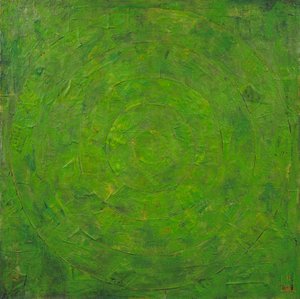
Morris Louis (1912–1962), an American Color Field painter, revolutionized abstract art in the mid-century with his groundbreaking approach to pigment application. His monumental canvases like “Para III,” created in 1959, exemplify this distinctive style—a deliberate rejection of traditional representation and a fervent embrace of pure color as expressive language.
“Para III” immediately captivates viewers with its overwhelming vibrancy. Dominating the canvas is a tapestry of crimson, scarlet, and magenta hues that bleed outwards from vertical bands of pigment, creating an illusion of flowing light and movement. The artist’s meticulous technique—the pioneering use of Magna paint—allowed for unprecedented control over color dispersion and layering, resulting in a surface texture that resembles solidified wax.
Louis's method involved pouring Magna onto unstretched canvas, allowing the pigment to spread organically across the surface. This process eschewed brushes entirely, prioritizing spontaneity and responding directly to the interplay of light and atmosphere. The resulting “silkscreen” effect is not merely accidental; it’s a calculated decision designed to convey an emotional state—a profound contemplation of nature and a yearning for transcendence.
Influenced by artists like Ralph Albert Blakelock and William James Glackens, Louis sought to capture the essence of feeling rather than depicting visual details. Blakelock's tonalist landscapes – particularly “Moonlight” – instilled in Louis a fascination with capturing subtle gradations of color and conveying mood through atmospheric perspective. Similarly, Glackens’ still lifes—such as “Still Life with Roses & Fruit”—demonstrated the power of color to evoke emotion and stimulate contemplation.
“Para III” resonates deeply with viewers due to its ability to bypass rational thought and tap into primal instincts. The bold colors pulsate with energy, mirroring the dynamism of the natural world—specifically, the forest setting depicted in Blakelock’s work. It's a piece that invites introspection and encourages contemplation on themes of beauty, solitude, and spiritual awakening.
Furthermore, Louis’s exploration of Magna paint represents a significant advancement in pigment technology. This acrylic emulsion, developed specifically for him by Leo Newman, offered superior adhesion and color stability compared to conventional oil paints, allowing for greater artistic freedom and expanding the possibilities of Color Field painting.


1912 - 1962 , Vereinigte Staaten von Amerika
Entdecken Sie die 25 Meisterwerke von Kazimir Malevich! Tauchen Sie ein in die Welt des Suprematismus, abstrakter Kunst & geometrischer Formen. Hochwertige Kunstdrucke und Reproduktionen auf Most-Famous-Paintings.com – für Ihr Zuhause.

Explore the captivating world of Beatrice Parsons, a pioneering British abstract expressionist. Discover her journey from garden watercolors to evocative color field paintings and learn about her place within art history.

Explore the profound spiritual resonance of Color Field Painting with insights into Rothko, Newman & Still. Discover the techniques & legacy of this influential abstract art movement.
Entdecken Sie die 25 Meisterwerke von Mark Rothko! Tauchen Sie ein in die Welt der abstrakten Kunst, des Expressionismus und der Farbfeldmalerei. Hochwertige Kunstdrucke & Reproduktionen auf Most-Famous-Paintings.com – für Ihre Wohnräume.
Entdecken Sie die 25 bedeutendsten Gemälde von Wassily Kandinsky! Tauchen Sie ein in die Welt der abstrakten Kunst, des Expressionismus und der Farbkomposition. Hochwertige Kunstdrucke & Inspiration für Ihr Zuhause auf Most-Famous-Paintings.com.


Bleiben Sie über die neuesten Kunstnachrichten, exklusive Angebote und Dekorationsideen auf dem Laufenden.
Erzählen Sie uns von Ihrem Projekt und unsere Kunstexperten erstellen für Sie 3 personalisierte Kunstvorschläge.
Wir kuratieren 3 Optionen exklusiv für Sie – kostenlos!


 Preview
 Versenden
 Teilen
 Details anzeigen

 Herunterladen
 Ähnliche Objekte
 Röntgenaufnahme
 Diashow anzeigen


 Weiterlesen







 Die Glasoption ist nur in Größen unter 110 cm verfügbar.