x

Handgemaltes Ölgemälde auf Leinwand in Ihrer Wunschgröße und mit Rahmen, auf Bestellung von unseren Künstlern angefertigt. ( Zum Druck bestellen Zum Bild wechseln)





























Wählen Sie aus unseren vordefinierten Formaten, die den ursprünglichen Proportionen des Kunstwerks entsprechen.

Sie können Ihre eigenen Maße eingeben, um einen bestimmten Rahmen oder Platz auszufüllen. Wenn die gewählte Größe nicht den Proportionen des Originalbildes entspricht, werden wir das Kunstwerk entweder beschneiden oder das Gemälde durch zusätzliche, handgemalte Elemente erweitern. Ein digitales Mockup wird Ihnen zur Genehmigung zugesandt, bevor die Produktion beginnt.
Bitte beachten Sie, dass die Bildschirmvorschau nicht die tatsächliche Beschneidung oder Erweiterung widerspiegelt. Nur das Mockup zeigt die endgültige Komposition exakt an.
Obwohl Sondermaße verfügbar sind, empfehlen wir, eine Größe aus der vordefinierten Liste zu wählen, um die ursprünglichen Proportionen beizubehalten.
Weltweiter Versand () in nur 3 bis 4 Wochen statt der üblichen 5 Wochen. (6 August). Keine Kompromisse bei der Qualität.


Im Wald 1
Format der Reproduktion
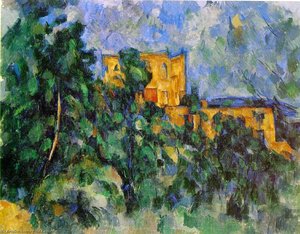
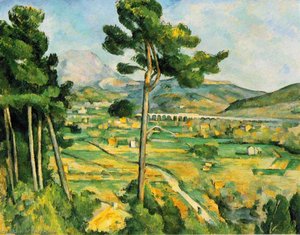
Paul Cézanne's "In the Woods" (c. 1900) isn't merely a depiction of a forest; it’s an invitation, a carefully constructed portal into the artist’s intensely personal and revolutionary vision of reality. This oil painting, residing within the private collections of discerning art enthusiasts, stands as a pivotal work bridging the gap between the fleeting impressions of Impressionism and the nascent geometric explorations of Cubism. It's a piece that demands contemplation, rewarding those willing to surrender to its subtly complex structure and profound emotional resonance.
Cézanne’s approach diverges dramatically from the prevalent landscape traditions of his time. Rather than striving for photographic accuracy or idealized beauty, he focused on distilling nature down to its essential forms – the fundamental building blocks of trees, rocks, and light. The scene itself is deceptively simple: a dense woodland bathed in dappled sunlight. Yet, within this apparent tranquility lies an extraordinary dynamism. The trees aren’t rendered as individual entities but rather as interlocking planes of color and shape, each element contributing to a larger, unified composition. Notice how the vertical thrust of the trunks dominates the canvas, creating a sense of stability and grounding, while the horizontal lines of the undergrowth introduce movement and rhythm.
Cézanne’s technique is characterized by a masterful manipulation of brushwork – not to create smooth transitions or blended colors, but rather to build up layers of fragmented strokes. These individual marks, often applied with thick impasto, retain their distinctness, creating a palpable sense of texture and volume. This deliberate fragmentation isn't haphazard; it’s a conscious effort to break down the observed world into its constituent parts, allowing the artist to reconstruct it according to his own internal logic. The colors themselves are not mixed on the palette but applied directly to the canvas in their rawest form – vibrant greens, deep browns, and subtle blues – creating an intense visual energy.
The painting’s composition is deliberately ambiguous. There's no clear focal point, no single element that commands immediate attention. Instead, the eye wanders through the scene, drawn by the interplay of light and shadow, the rhythmic repetition of shapes, and the subtle shifts in color. This lack of a definitive center contributes to the painting’s sense of openness and invitation, encouraging viewers to become active participants in the creative process.
"In the Woods" is profoundly significant as a precursor to Cubism. Cézanne's exploration of multiple perspectives within a single image – showing both the frontal and side views of objects simultaneously – paved the way for Picasso and Braque’s groundbreaking approach. He wasn’t simply painting what he *saw*; he was grappling with how to represent three-dimensional reality on a two-dimensional surface, anticipating the radical shifts in artistic representation that would characterize the 20th century.
Beyond its formal innovations, "In the Woods" also carries a powerful emotional resonance. The painting evokes a sense of solitude and contemplation, inviting viewers to lose themselves within the depths of the forest. It’s a reminder of the beauty and mystery that can be found in the natural world – a world that Cézanne sought to capture not just visually but also intellectually and emotionally.
Most-Famous-Paintings offers meticulously crafted, hand-painted reproductions of “In the Woods,” allowing you to bring this iconic masterpiece into your home or office. Each reproduction is created by skilled artists using traditional oil painting techniques, faithfully capturing the nuances of color, texture, and brushwork that define Cézanne’s unique style. Discover the transformative power of Post-Impressionism – explore our collection today: https://Most-Famous-Paintings.com


1839 - 1906 , Frankreich
Entdecken Sie die 25 Meisterwerke von Paul Cézanne! Tauchen Sie ein in die Welt des Impressionismus und Postimpressionismus. Erfahren Sie mehr über seine Stillleben, Landschaften & berühmten Gemälde – jetzt hochwertige Kunstdrucke auf Most-Famous-Paintings.com.

Entdecken Sie die 25 Meisterwerke von Paul Klee! Tauchen Sie ein in seine abstrakte Welt, voller Expressionismus und Bauhaus-Einflüsse. Hochwertige Kunst für Ihr Zuhause – jetzt bei Most-Famous-Paintings entdecken!

Entdecken Sie die 10 Meisterwerke des Impressionismus! Von Monet bis Renoir – erleben Sie die Geschichte, Technik und zeitlose Schönheit ikonischer Landschaftsbilder. Hochwertige Kunstdrucke auf Most-Famous-Paintings.com. Jetzt entdecken!

Entdecken Sie die emotionale Tiefe des Postimpressionismus! Analysieren Sie Cézanne, van Gogh, Gauguin & Seurat. Expertenwissen über Kunstgeschichte und Einfluss auf die Moderne.

Entdecken Sie die Top 10 Meisterwerke des Impressionismus! Von Monet bis Renoir – erfahren Sie die Geschichten hinter berühmten Gemälden, Techniken & Farben. Hochwertige Kunstdrucke auf Most-Famous-Paintings.com.


Bleiben Sie über die neuesten Kunstnachrichten, exklusive Angebote und Dekorationsideen auf dem Laufenden.
Erzählen Sie uns von Ihrem Projekt, und unsere Kunstexperten erstellen für Sie drei personalisierte Kunstvorschläge.
Wir kuratieren 3 Optionen exklusiv für Sie – kostenlos!


 In echtem Maßstab anzeigen
 Versenden
 Teilen
 Details anzeigen

 Herunterladen
 Ähnliche Objekte
 Röntgenaufnahme
 Diashow starten

 Mehr anzeigen







 Die Glasoption ist nur in Größen unter 110 cm verfügbar.