x


 Preview
 Druck bestellen Bild kaufen
 Versenden
 Details anzeigen
 Zu Favoriten hinzufügen
 Herunterladen
 Ähnliche Objekte
 Röntgenaufnahme
 Diashow anzeigen
Handgemaltes Ölgemälde auf Leinwand in Ihrer Wunschgröße und mit Rahmen, auf Bestellung von unseren Künstlern angefertigt.





























Wählen Sie aus unseren vordefinierten Größen, die den ursprünglichen Proportionen des Kunstwerks entsprechen.

Sie können Ihre eigenen Maße eingeben, um einen bestimmten Rahmen oder Platz auszufüllen. Wenn die gewählte Größe nicht den Proportionen des Originalbildes entspricht, werden wir das Kunstwerk entweder beschneiden oder das Gemälde durch zusätzliche, handgemalte Elemente erweitern. Ein digitales Mockup wird Ihnen zur Genehmigung zugesandt, bevor die Produktion beginnt.
Bitte beachten Sie, dass die Bildschirmvorschau nicht die tatsächliche Beschneidung oder Erweiterung widerspiegelt. Nur das Mockup zeigt die endgültige Komposition exakt an.
Obwohl Sondermaße verfügbar sind, empfehlen wir, eine Größe aus der vordefinierten Liste zu wählen, um die ursprünglichen Proportionen beizubehalten.
Weltweiter Versand () in nur 3 bis 4 Wochen statt der üblichen 5 Wochen. (23 Juli). Keine Kompromisse bei der Qualität.


Saint sebastian
Größe der Reproduktion
Sandro Botticelli's “Saint Sebastian,” painted around 1474, is not merely a depiction of a martyred figure; it’s an exquisitely rendered meditation on suffering, faith, and the enduring power of the human spirit. This iconic work, housed within the Gemäldegalerie in Berlin, transcends its religious subject matter to become a timeless exploration of vulnerability and resilience—a testament to Botticelli's mastery of classical form and his profound understanding of human emotion. The painting immediately draws the eye with its strikingly nude figure, standing serenely before a monumental blue circle, an element that has fueled much scholarly debate regarding its precise meaning – perhaps representing the heavens or a symbolic boundary.
Botticelli’s approach to the subject matter diverges significantly from earlier depictions of Sebastian. While previous portrayals often emphasized the brutality of his ordeal—the arrows piercing his flesh, the agonizing expressions of pain—Botticelli presents a remarkably composed and dignified image. The saint's face is devoid of anguish; instead, he gazes outwards with an almost unnerving composure, suggesting a profound acceptance of his fate and a connection to something beyond earthly suffering. This deliberate restraint invites contemplation rather than immediate emotional response, prompting the viewer to consider the deeper spiritual implications of Sebastian’s sacrifice.
Botticelli's artistic style in “Saint Sebastian” is a fascinating blend of influences—a harmonious marriage between the elegance of late Gothic tradition and the burgeoning innovations of the Early Renaissance. The figure itself embodies classical ideals of beauty, with its balanced proportions, graceful pose (a subtle contrapposto), and idealized musculature. However, Botticelli doesn’t simply replicate classical forms; he imbues them with a distinctly Italian sensibility. Notice the delicate rendering of skin tones, the meticulous attention to detail in the folds of his loincloth, and the subtly expressive quality of his hands—all hallmarks of Botticelli's unique artistic vision.
Technically, the painting is executed in oil on wood panel, a medium that allowed Botticelli to achieve remarkable luminosity and depth. The use of color is restrained yet sophisticated, with the dominant blue of the surrounding circle creating a dramatic contrast against the pale flesh tones of Sebastian. The artist’s brushwork is remarkably smooth and refined, contributing to the overall sense of serenity and composure. It's a testament to his skill that he manages to convey such intense emotion through subtle gestures and carefully considered details.
Beyond its formal beauty, “Saint Sebastian” is rich in symbolic meaning. The arrows themselves are often interpreted as representing the wounds of sin and suffering—a reminder of humanity’s fallen state. However, Sebastian's unwavering gaze suggests a transcendence of earthly pain, pointing towards salvation and divine grace. The blue circle surrounding him can be seen as a symbol of heaven or the celestial realm, emphasizing the saint’s ultimate destination. The presence of two figures in the background—one on either side—adds another layer of complexity to the composition, perhaps representing witnesses to Sebastian's sacrifice or symbolizing the broader community of believers.
Interestingly, Botticelli’s depiction of Sebastian aligns with a shift in artistic representation during this period. While earlier portrayals focused heavily on the physical suffering of the saint, Botticelli emphasizes his spiritual fortitude and inner peace. This reflects a growing interest in exploring themes of faith, virtue, and the afterlife within Renaissance art—a move away from purely narrative depictions towards more introspective and symbolic representations.
Most-Famous-Paintings offers meticulously crafted hand-painted reproductions of Botticelli’s “Saint Sebastian,” allowing you to bring this extraordinary artwork into your home or office. Our skilled artists replicate the painting's exquisite detail, luminous colors, and nuanced emotional depth with unparalleled accuracy. Whether you are an art enthusiast, a collector, or simply seeking a stunning piece of décor, our reproductions provide a faithful representation of Botticelli’s masterpiece—a timeless symbol of faith, resilience, and the enduring beauty of the human spirit.

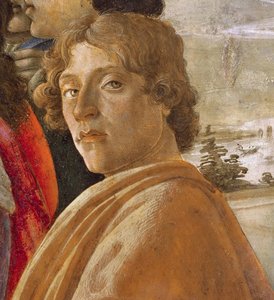
1445 - 1510 , Italien

Explore the Italian Renaissance! Discover humanist ideals, iconic masterpieces by Leonardo, Michelangelo & Raphael, and lasting artistic innovations. A comprehensive guide for art enthusiasts.

Entdecken Sie die 10 prägendsten Meisterwerke der Hochrenaissance! Erfahren Sie die Geschichten von Leonardo da Vinci, Michelangelo & Raffael. Finden Sie Ihre perfekte Kunst für Zuhause bei – Museumqualität und exklusive Reproduktionen online entdecken.

Transform your cherished photos into timeless oil paintings with Most-Famous-Paintings's expert artists. Museum-quality reproductions & custom portraits, crafted to last a lifetime. Discover the art of personal legacy.

Entdecken Sie die 10 legendärsten Öl auf Leinwand Meisterwerke! Von Van Gogh bis Monet – erfahren Sie die Geschichten hinter ikonischen Gemälden und lassen Sie sich von Kunstgeschichte inspirieren. Hochwertige Reproduktionen für Ihr Zuhause finden Sie auf .

Entdecken Sie die 25 berühmtesten Meisterwerke der Uffizien, Florenz! Von Botticelli bis Leonardo da Vinci – Kunstgeschichte erleben. Hochwertige Reproduktionen & Inspiration für Ihr Zuhause auf Most-Famous-Paintings.com.


Bleiben Sie über die neuesten Kunstnachrichten, exklusive Angebote und Dekorationsideen auf dem Laufenden.
Erzählen Sie uns von Ihrem Projekt und unsere Kunstexperten erstellen für Sie 3 personalisierte Kunstvorschläge.
Wir kuratieren 3 Optionen exklusiv für Sie – kostenlos!


 Teilen


 Weiterlesen







 Die Glasoption ist nur in Größen unter 110 cm verfügbar.