x


 Druck bestellen Bild kaufen
 Versenden
 Details anzeigen
 Zu Favoriten hinzufügen
 Herunterladen
 Ähnliche Objekte
 Röntgenaufnahme
 Diashow anzeigen
Handgemaltes Ölgemälde auf Leinwand in Ihrer Wunschgröße und mit Rahmen, auf Bestellung von unseren Künstlern angefertigt.





























Wählen Sie aus unseren vordefinierten Größen, die den ursprünglichen Proportionen des Kunstwerks entsprechen.

Sie können Ihre eigenen Maße eingeben, um einen bestimmten Rahmen oder Platz auszufüllen. Wenn die gewählte Größe nicht den Proportionen des Originalbildes entspricht, werden wir das Kunstwerk entweder beschneiden oder das Gemälde durch zusätzliche, handgemalte Elemente erweitern. Ein digitales Mockup wird Ihnen zur Genehmigung zugesandt, bevor die Produktion beginnt.
Bitte beachten Sie, dass die Bildschirmvorschau nicht die tatsächliche Beschneidung oder Erweiterung widerspiegelt. Nur das Mockup zeigt die endgültige Komposition exakt an.
Obwohl Sondermaße verfügbar sind, empfehlen wir, eine Größe aus der vordefinierten Liste zu wählen, um die ursprünglichen Proportionen beizubehalten.
Weltweiter Versand () in nur 3 bis 4 Wochen statt der üblichen 5 Wochen. (22 Juli). Keine Kompromisse bei der Qualität.


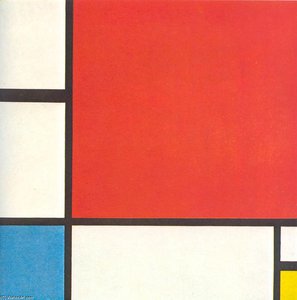
Simultaneous Counter Composition.
Größe der Reproduktion
To stand before Theo van Doesburg’s Simultaneous Counter Composition is not merely to observe paint on canvas; it is to step into a meticulously constructed intellectual space where color and form engage in a vibrant, calculated dialogue. This piece, dating from 1930, stands as a powerful testament to the revolutionary spirit of De Stijl, the movement that sought to purify art down to its most essential geometric truths. Van Doesburg, an architect of abstraction, believed that true reality could be found not in the messy chaos of visible nature, but in the underlying harmony of pure lines and primary colors. The painting immediately envelops the viewer in a field of structured energy, inviting the eye to wander across its carefully balanced quadrants.
The composition itself is breathtaking in its deliberate organization. Divided into distinct yet interconnected sections—left, center, and right—the canvas pulses with a controlled chromatic symphony. We see the bold interplay of red, yellow, blue, black, and white, colors that carry immense symbolic weight within modernist thought. These hues are not simply placed side-by-side; they interact, their adjacency creating optical vibrations. The varying sizes and shapes of the squares suggest a dynamic tension, as if opposing forces—structure versus fluidity, chaos versus order—are locked in a perfect, silent negotiation. It is an exercise in visual equilibrium, where every seemingly arbitrary block contributes to the whole.
Understanding this work requires acknowledging its historical cradle: the fervor of Neoplasticism. Van Doesburg was instrumental in guiding art away from mere representation and toward a universal language built on abstraction. This painting embodies that quest for universal harmony, echoing the philosophical underpinnings of the early 20th century desire to rebuild culture after periods of immense upheaval. The rigid geometry is not a limitation, but rather an assertion of underlying cosmic order—a belief that even in the most abstract arrangement, there exists profound, discernible beauty and balance.
For the collector or designer seeking to infuse a space with intellectual depth and vibrant energy, Simultaneous Counter Composition offers unparalleled impact. Its bold, graphic nature means it functions as both a striking piece of art and a powerful architectural accent. Reproducing this work allows one to bring the disciplined passion of early modernism into contemporary living. Imagine its clean lines juxtaposed against soft furnishings or rich wood tones; the painting acts as a brilliant focal point, demanding contemplation while simultaneously providing visual rest through its inherent balance.
The emotional impact of this piece is one of exhilarating clarity. It feels both rigorously intellectual and deeply soulful. The technique, characterized by flat planes of color meeting at sharp, decisive edges, celebrates the purity of the painted surface. When considering a reproduction, note how the vibrancy of these primary colors—the way they seem to vibrate against each other—is crucial. Owning this piece is owning a conversation between structure and spirit, a vibrant reminder that even in apparent complexity, perfect harmony can be found.


1883 - 1931 , Niederlande
Entdecken Sie die 25 Meisterwerke von Francisco Goya! Tauchen Sie ein in die düstere Romantik spanischer Malerei, Porträts & Historienbilder. Hochwertige Kunstdrucke auf Most-Famous-Paintings.com – für Kunstliebhaber und stilvolles Wohnen.
Entdecken Sie die 25 bedeutendsten Gemälde von Wassily Kandinsky! Tauchen Sie ein in die Welt der abstrakten Kunst, des Expressionismus und der Farbkomposition. Hochwertige Kunstdrucke & Inspiration für Ihr Zuhause auf Most-Famous-Paintings.com.
Entdecken Sie die 25 ikonischsten Kunstwerke des MoMA New York! Von Van Goghs Sternennacht bis Warhols Campbell Soup Dosen – erleben Sie moderne Meisterwerke. Hochwertige Kunstreproduktionen & Inspiration für Ihr Zuhause auf Most-Famous-Paintings.com.
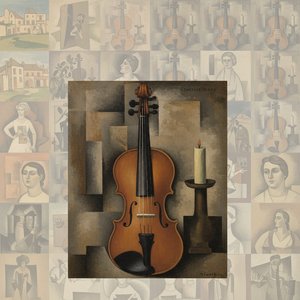
Entdecken Sie die 25 bedeutendsten Kunstwerke von Georges Braque – vom Kubismus bis zum Fauvismus. Erfahren Sie die Geschichten hinter den Meisterwerken und finden Sie hochwertige Reproduktionen für Ihr Zuhause auf Most-Famous-Paintings.com.
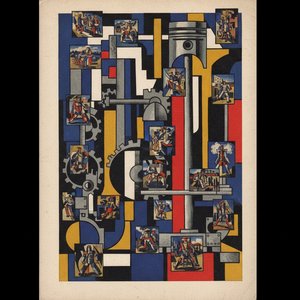
Entdecken Sie die 25 Meisterwerke von Fernand Léger! Tauchen Sie ein in die Welt des Kubismus, Tubismus & der Avantgarde. Hochwertige Kunstreproduktionen für Ihr Zuhause – jetzt auf Most-Famous-Paintings.com!


Bleiben Sie über die neuesten Kunstnachrichten, exklusive Angebote und Dekorationsideen auf dem Laufenden.
Erzählen Sie uns von Ihrem Projekt und unsere Kunstexperten erstellen für Sie 3 personalisierte Kunstvorschläge.
Wir kuratieren 3 Optionen exklusiv für Sie – kostenlos!


 Teilen


 Weiterlesen







 Die Glasoption ist nur in Größen unter 110 cm verfügbar.