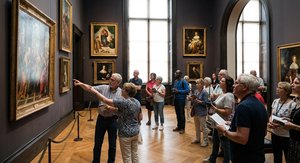
A Tapestry of Time: Unveiling the Hamburger Kunsthalle
Nestled within the vibrant heart of Hamburg, a city steeped in maritime history and artistic innovation, lies the Hamburger Kunsthalle – more than just a museum, it’s an immersive journey through seven centuries of European art. Founded in 1850 from the collections of the Hamburg Kunstverein, this institution has evolved into one of Germany's most significant cultural landmarks, a place where the echoes of medieval devotion resonate alongside the provocative dialogues of contemporary installations. Stepping through its doors is akin to tracing a lineage of creativity, a conversation between eras and styles meticulously curated within a structure that itself tells a compelling story – three distinct buildings, each a testament to a pivotal moment in artistic and architectural history.
The Kunsthalle’s unique identity stems from its remarkable architectural arrangement. Constructed between 1863 and 1869 by the talented architects Georg Theodor Schirrmacher and Hermann von der Hude, the original red-brick building stands as a proud embodiment of 19th-century civic pride. Its robust materiality immediately speaks to the treasures held within, promising an encounter with masterpieces. This foundational structure was later dramatically enhanced in 1921 by Fritz Schumacher’s magnificent Kuppelsaal – a soaring dome designed to inspire awe and serve as a grand exhibition space, a bold declaration of modernist ambition. Finally, Oswald Mathias Ungers’ strikingly modern Galerie der Gegenwart, completed in 1997, cemented the museum's commitment to showcasing art of our time with its geometric design and innovative spatial arrangements, creating a dynamic interplay between past and present. Each building isn’t merely a room; it’s a stage for artistic expression, contributing to an overall experience that underscores the Kunsthalle’s dedication to preserving artistic heritage while embracing contemporary perspectives.
-
The Old Masters Gallery:
This gallery immediately captivates with its luminously rendered canvases by masters such as Rembrandt van Rijn, Peter Paul Rubens, and Jacob Isaacksz van Ruisdael – artists who defined the Golden Age of painting. These works are not merely depictions; they’re imbued with a profound humanity, capturing fleeting moments of emotion and revealing an unparalleled understanding of light and shadow.
-
Romanticism Revisited:
A particular highlight is the gallery's exploration of German Romanticism, exemplified by Caspar David Friedrich’s haunting landscapes – notably *Nebelschwaden* (famously stolen in 1994 and later recovered), which evokes a sense of sublime solitude and spiritual yearning.
-
Impressionist Visions:
Moving forward through time, the 19th-Century Art Gallery reveals a contrasting vision of modernity through the works of French Impressionists like Claude Monet and Édouard Manet, showcasing their innovative techniques and capturing the ephemeral beauty of light and atmosphere.
-
Early Prints:
The gallery also houses an impressive collection of early German prints, including works by Albrecht Dürer and Lucas Cranach the Younger, offering insights into the development of printmaking as a significant art form.
-
The Galerie der Gegenwart:
This gallery offers a powerful glimpse into contemporary art. Here, you’ll encounter pivotal movements represented by artists such as Pablo Picasso, Max Ernst, and Paul Klee – figures who shattered conventions and paved the way for new forms of expression.
-
Exploring Contemporary Themes:
The collection demonstrates an evolution in artistic thought, reflecting social shifts and challenging established norms. Beyond individual masterpieces, this gallery highlights thematic exhibitions that explore pressing issues facing society today, from environmental concerns to the complexities of identity and globalization.
-
Spatial Innovation:
The space itself is designed to encourage contemplation and dialogue, fostering a deeper understanding of the artists’ intentions and the broader cultural context of their work.
A Legacy Forged Through Visionary Leadership:
Alfred Lichtwark, who served as director from 1869 to 1914, instilled a remarkable commitment to fostering local talent alongside international masters, establishing a tradition of artistic patronage that continues today. His belief in accessibility and inclusivity was revolutionary for his time. Gustav Pauli, succeeding Lichtwark during the interwar period, oversaw the completion of the Kuppelsaal extension, further expanding the museum’s capacity and influence. Throughout its history, the Kunsthalle has navigated periods of upheaval – from wartime challenges to the dramatic 1994 art theft – yet it consistently emerged stronger, reaffirming its role as a vital cultural hub. The addition of the Galerie der Gegenwart in 1997 signaled a renewed dedication to contemporary art and solidified the museum’s position at the forefront of artistic innovation.
-
Smartify Digital Guide:
The Kunsthalle’s Smartify digital guide enhances visitor experience by providing detailed information about artworks directly on your smartphone – a testament to its commitment to accessibility and engagement.
-
Ongoing Engagement:
Furthermore, the museum's dedication extends beyond mere display; it strives to create meaningful connections for visitors of all backgrounds, ensuring that it remains a vibrant cultural force for generations to come.
Beyond Canvas: Exhibitions and Engagement
Recent shows have explored fascinating intersections, such as the dialogue between Surrealism and German Romanticism, revealing unexpected parallels between seemingly disparate movements. The Kunsthalle’s curators meticulously select artworks that stimulate intellectual curiosity and provoke emotional resonance. They aim to inspire visitors to reconsider familiar perspectives and discover new connections between art history and contemporary culture.
-
Notable Exhibitions:
Recent exhibitions have tackled ambitious subjects, including the influence of mythology on artistic expression and the role of photography in shaping visual narratives.
-
Educational Programs:
The Kunsthalle offers comprehensive educational programs for children and adults alike, fostering appreciation for art and promoting critical thinking skills.
-
Community Partnerships:
Collaborations with local organizations enrich the museum’s outreach efforts and contribute to a broader dialogue about cultural heritage.
Additional Research:
The Kunsthalle's collection is enriched by masterpieces from diverse artistic traditions, reflecting the global scope of art history. Its curators prioritize scholarly rigor and strive to present artworks in context—illuminating their historical significance and exploring their aesthetic qualities. The museum’s commitment to preserving cultural heritage extends beyond its permanent holdings; it actively supports research projects and fosters dialogue between artists and scholars worldwide.
Hamburg Kunsthalle - Wikipedia:
The Kunsthalle's architectural design embodies the spirit of innovation—a harmonious blend of historic grandeur and modern functionality. Its three buildings stand as symbols of artistic evolution, demonstrating how art institutions adapt to changing cultural landscapes. Visitors can immerse themselves in a rich tapestry of artistic experiences—from monumental paintings to intimate sculptures—creating unforgettable memories.
Hamburg Kunsthalle:
Located in the heart of Hamburg’s Altstadt district, the Kunsthalle is easily accessible by public transport and surrounded by charming cafes and shops. Its central location makes it a popular destination for tourists and residents alike—a place where art enthusiasts can discover inspiration and broaden their understanding of human creativity. The museum's commitment to visitor comfort ensures that everyone can enjoy its treasures—regardless of age or background.