x

Χειροποίητη oil painting σε καμβά στο δικό σας μέγεθος και πλαίσιο, κατά παραγγελία από τους καλλιτέχνες μας. ( Αγορά εκτύπωσης Αγορά ψηφιακής εικόνας)
Επιλέξτε από τις προκαθορισμένες διαστάσεις μας που διατηρούν τις αρχικές αναλογίες του έργου τέχνης.

Μπορείτε να ορίσετε δικές σας διαστάσεις ώστε το έργο να ταιριάζει σε ένα συγκεκριμένο πλαίσιο ή χώρο. Εάν το επιλεγμένο μέγεθος δεν συμπίπτει με τις αναλογίες της αρχικής εικόνας, θα περικοψούμε το έργο ή θα επεκτείνουμε τη ζωγραφιά με πρόσθετα χειρόγραφα στοιχεία. Ένα ψηφιακό προσχέδιο θα σας αποσταλεί για έγκριση πριν την έναρξη της παραγωγής.
Παρακαλούμε σημειώστε ότι η προεπισκόπηση στην οθόνη δεν αντικατοπτρίζει την πραγματική περικοπή ή επέκταση. Μόνο το προσχέδιο θα δείξει με ακρίβεια την τελική σύνθεση.
Παρόλο που είναι διαθέσιμα προσαρμοσμένα μεγέθη, συνιστούμε να επιλέξετε μια διάσταση από τη λίστα των προκαθορισμένων μεγεθών για τη διατήρηση των αρχικών αναλογιών.
Παγκόσμια Αποστολή () σε 3-4 εβδομάδες αντί για τις συνήθεις 5 εβδομάδες. (18 Αύγουστος). Χωρίς συμβιβασμούς στην ποιότητα.


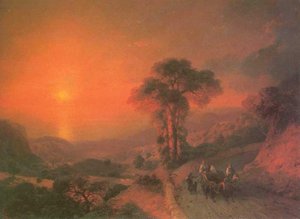
Spring evening
Διαστάσεις Αναπαραγωγής

Born in the cultural heart of Dresden in 1803, Adrian Ludwig Richter emerged as a defining voice of the German Romantic movement. His journey into the world of fine art was one of inherited passion and rigorous discipline, shaped profoundly by his father, Carl August Richter, a master engraver. This early immersion in the meticulous world of printmaking provided Adrian with a foundational eye for detail and an unparalleled command over tonal subtlety. As he transitioned from the precision of etching to the expansive possibilities of oil on canvas, Richter developed a style that bridged the gap between the technical accuracy of the Biedermeier period and the emotive, sweeping grandeur of Romanticism.
Richter’s artistic evolution was deeply intertwined with the landscapes of his homeland. His training at the Dresden Art Academy allowed him to absorb the influences of contemporaries such as Johann Christian Dahl, fostering a deep reverence for the natural world. He did not merely seek to document scenery; he sought to capture its spirit. Whether rendering the rugged, mist-shrouded peaks of the Riesengebirge mountains or the tranquil, sun-dappled valleys of Saxony, his work possesses a luminous quality that breathes life into the canvas. His brushwork often employed a delicate balance of realism and atmosphere, creating scenes that felt both tangibly present and dreamlike in their perfection.
The brilliance of Richter’s oeuvre lies in his ability to weave narrative elements into the very fabric of the landscape. His paintings often serve as windows into a serene, idealized era, where human presence is harmoniously integrated with nature. This is evident in works such as "Crossing the Elbe at Aussig," where the drama of a journey is captured through the evocative interplay of light and water, or in his more tranquil compositions like "The Well in the Wood at Ariccia." In these pieces, the viewer is invited to linger within a moment of profound stillness, experiencing the atmospheric detail and the quiet majesty of the rural landscape.
Beyond the sweeping vistas, Richter was also a master of the intimate and the pastoral. His ability to depict seasonal shifts—as seen in the delicate, balanced beauty of "Spring near Ariccia"—showcases his technical prowess in using muted tones and soft impasto to evoke the warmth of new growth. This talent for capturing the ephemeral qualities of light and season made him a celebrated illustrator of fairy tales and folk legends, as he could imbue even the smallest woodland scene with a sense of enchantment and historical weight.
The enduring significance of Adrian Ludwig Richter resides in his role as a chronicler of the German spirit during a transformative century. His work stands as a testament to the Biedermeier era's appreciation for domesticity, nature, and order, while simultaneously embracing the Romantic fascination with the sublime. Through his prolific output of drawings, etchings, and paintings, he helped define a visual language for the Saxon landscape that continues to resonate with collectors and art historians today.
His achievements can be summarized through several key artistic contributions:

1803 - 1884 , Germany


Μείνετε ενημερωμένοι για τις τελευταίες ειδήσεις σχετικά με την τέχνη, αποκλειστικές προσφορές και ιδέες διακόσμησης.
Πείτε μας περισσότερα για το έργο σας και οι ειδικοί μας στην τέχνη θα σας προσφέρουν 3 εξατομικευμένες προτάσεις έργων τέχνης.
Αφήστε μας να επιμεληθούμε 3 επιλογές αποκλειστικά για εσάς – Δωρεάν!


 Δείτε σε πραγματικό χώρο
 Αποστολή
 Κοινοποίηση
 Λεπτομέρειες

 Λήψη
Λήψη
 Παρόμοια αντικείμενα συλλογής
 Ακτινογραφία
 Παρουσίαση
 Διαβάστε περισσότερα




































 Η επιλογή με γυαλί είναι διαθέσιμη μόνο για μεγέθη κάτω από 110 εκ.