Πουλήστε την τέχνη σας
Λίστα επιθυμιών Καλάθι Αγορών Cart
x
Αγορά εκτύπωσης Αγορά εκτύπωσηςΑγορά χειροποίητου πίνακα Αγορά χειροποίητου πίνακα ΑποστολήΑποστολή
ΛεπτομέρειεςΛεπτομέρειες Προσθήκη στα αγαπημένα Προσθήκη στα αγαπημένα ΛήψηΛήψη Παρόμοια αντικείμενα συλλογήςΠαρόμοια αντικείμενα συλλογής ΠαρουσίασηΠαρουσίαση

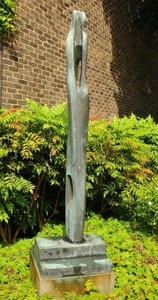
Curved Forms (Pavan)

Curved Forms (Pavan) by Barbara Hepworth is a 1956 sculpture created using metallized plaster on aluminum armature. Inspired by the Pavan dance, it reflects Hepworth's dedication to capturing 'the spiritual inner life' of art through its flowing forms and balanced composition.

Εξερευνήστε τις σύγχρονες γλυπτικές της Μπάρμπαρα Χέπγουορθ (1903-1975). Πρώιμη πρωτοπορία στην αφηρημένη τέχνη, η Χέπγουορθ ήταν μια από τις λίγες κοπέλες καλλιτέχνιδες που πέτυχαν διεθνή αναγνώριση.

Αγοράστε μια ψηφιακή εικόνα υψηλής ανάλυσης και βελτιωμένης ποιότητας, πολύ ανώτερης από την προεπισκόπηση στο διαδίκτυο.

Κάθε αρχείο προετοιμάζεται σχολαστικά από τους εξειδικευμένους συνεργάτες μας, με τη χρήση προηγμένων εργαλείων και χειροκίνητου ρετουσαρίσματος υψηλής ακρίβειας. Εξασφαλίζουμε ότι κάθε εικόνα προσφέρει εξαιρετική ευκρίνεια, απόλυτη πιστότητα στο χρώμα και λεπτομερή ανάδραση των λεπτομερειών.

Το τελικό αρχείο παραδίδεται μέσω email εντός 72 ωρών, βελτιστοποιημένο για άμεση χρήση σε επαγγελματικά, εκδοτικά και έντυπα περιβάλλοντα. Πρόκειται για την ίδια ποιότητα που εμπιστεύονται κορυφαία studios σχεδιασμού, εκδότες και γκαλερί.

Ψηφιακή εικόνα

Κατεβάστε ένα αρχείο υψηλής ανάλυσης για προσωπική χρήση, εκτύπωση και δημιουργικά έργα. (Αγορά εκτύπωσης Αγορά εκτύπωσηςΑγορά χειροποίητου πίνακα Αγορά χειροποίητου πίνακα)

Συνολικό Κόστος

$ 24,90

Περιλαμβάνεται σε κάθε παραγγελία ψηφιακής εικόνας

Επαγγελματική Ψηφιακή Παράδοση με Εγγύηση

Όταν επιλέγετε το Most-Famous-Paintings.com, δεν αποκτάτε απλώς μια εικόνα – λαμβάνετε ένα επαγγελματικά αναβαθμισμένο ψηφιακό έργο τέχνης, δημιουργημένο με ακρίβεια και με εγγύηση ικανοποίησης. Δείτε όλα όσα περιλαμβάνονται στην παραγγελία σας, αυτόματα:

shipping_icon
Άμεση αποστολή μέσω email

Το ψηφιακό σας αρχείο εικόνας υψηλής ανάλυσης θα σας σταλεί μέσω email εντός 72 ωρών από την παραγγελία σας — έτοιμο για άμεση χρήση.

canvas_icon
Ψηφιακό Αρχείο με Τεχνητή Νοημοσύνη

Το έργο σας βελτιστοποιείται επαγγελματικά με τη χρήση προηγμένων εργαλείων Τεχνητής Νοημοσύνης και χειροκίνητης επεξεργασίας, εξασφαλίζοντας μέγιστη λεπτομέρεια, ευκρίνεια και ακρίβεια χρωμάτων.

insurance_icon
Δωρεάν επανεκδόσεις مدى ζωής

Απώλησες ή διαγράψατε κατά λάθος το αρχείο σας; Μην ανησυχείτε — θα σας το ξαναστείλομε οποιαδήποτε στιγμή, δωρεάν.

tax_icon
Χωρίς Τελωνειακούς Φόρους - Ποτέ

Απολαύστε αμέσως τα έργα τέχνης σας χωρίς δασμούς, φόρους ή έξοδα αποστολής - οι ψηφιακές λήψεις είναι πάντα αφορεশিপτεία.

color_icon
Εγγύηση Ακριβούς Χρωματισμού

Εξασφαλίζουμε ότι η ψηφιακή σας εικόνα αποτυπώνει τα αυθεντικά χρώματα όσο το δυνατόν πιστότερα, χρησιμοποιώντας επαγγελματικά εργαλεία και διαχείριση χρωμάτων.

return_icon
Εγγύηση Ικανοποίησης 60 Ημερών

Εάν δεν είστε ικανοποιημένοι με την ψηφιακή σας εικόνα, θα την αναθεωρήσουμε ή θα σας επιστρέψουμε το 100% της αξίας της εντός 60 ημερών - χωρίς κανένα ερώτημα.

guarantee_icon
100% Εγγύηση Επιστροφής Χρήματος

Δεν είστε ικανοποιημένοι; Λάβετε πλήρη επιστροφή των χρημάτων σας εντός 60 ημερολογιακών ημερών από τη λήψη του ψηφιακού σας αρχείου — χωρίς κανένα ερώτημα.

discount_icon
Εκπτώσεις για μαζικές παραγγελίες

Αγοράστε 3 εικόνες, κάντε εξοικονόμηση 10% - Αγοράστε 5, κάντε εξοικονόμηση 15% - Αγοράστε 10+, κάντε εξοικονόμηση 20%. Ιδανικό για δημιουργικά έργα, γκαλερί και agencies.

Γρήγορα στοιχεία

  • Artistic style: Abstraction
  • Title: Curved Forms (Pavan)
  • Location: The Hepworth Wakefield
  • Year: 1956
  • Medium: Metallized plaster & metal armature
  • Notable elements or techniques: Carving of hardened plaster surface
  • Subject or theme: Organic forms

ΚВИΖ Τέχνης

Για κάθε ερώτηση υπάρχει μόνο μία σωστή απάντηση.

Ερώτηση 1:
What is the sculpture Curved Forms (Pavan) primarily known for?
Ερώτηση 2:
Barbara Hepworth is recognized as a pioneer in which artistic movement?
Ερώτηση 3:
What material was used to create Curved Forms (Pavan)?
Ερώτηση 4:
According to the description, Hepworth described her sculptural method as...
Ερώτηση 5:
Where can Curved Forms (Pavan) be viewed?

Περιγραφή Συλλεκτικού Αντικειμένου

Barbara Hepworth: Exploring Flowing Forms and Spiritual Resonance

Barbara Hepworth (1903–1975) stands as one of the most influential figures in British sculpture of the mid-20th century, a pioneer who championed abstraction and sought to capture the essence of organic forms—particularly those found in nature. Her oeuvre is characterized by monumental sculptures crafted from materials like bronze, stone, and alabaster, yet “Curved Forms (Pavan),” created in 1956, exemplifies her distinctive approach: metallized plaster cast on aluminum armature.

Inspired by the graceful Pavan dance—a stately court dance of Elizabethan England—Hepworth’s sculpture transcends mere imitation. Instead, it embodies her profound fascination with movement and transformation. As Hepworth herself eloquently described, she aimed to “capture ‘the spiritual inner life’ of art,” striving not just for visual representation but for conveying a sense of dynamism and interconnectedness.

Technique and Material Innovation

Hepworth's method was revolutionary for its time. Rejecting the traditional modeling techniques favored by many sculptors, she opted for a process that prioritized resistance—the interaction between sculptor and material. She constructed an aluminum armature – a skeletal framework – providing structural support while allowing her to manipulate the plaster surface with precision.

  • Metallized Plaster: Hepworth coated the armature in metallized plaster, a technique she developed herself. This involved applying a thin layer of metal pigment onto the plaster before casting it, resulting in a pale gray hue that subtly reflects light.
  • Aluminum Armature: The aluminum armature was chosen for its rigidity and ability to maintain shape during the casting process.
  • Carving Technique: Hepworth meticulously carved into the hardened plaster surface using chisels and hammers, painstakingly shaping the ovoid forms until they achieved their final sculptural form.

Symbolism and Aesthetic Vision

"Curved Forms (Pavan)" isn't merely a beautiful object; it’s laden with symbolic significance. The three interconnected ovoids represent Hepworth’s belief in the fundamental unity of existence—the idea that all things are interdependent and constantly evolving. Their flowing curves mirror the movement of water or wind, symbolizing fluidity and adaptability.

Hepworth's aesthetic vision was rooted in a deep appreciation for natural forms and a desire to express their underlying principles. She sought to distill the essence of organic shapes into simplified geometric forms, creating sculptures that evoke contemplation and invite viewers to consider the relationship between form and space.

Legacy and Recognition

"Curved Forms (Pavan)" resides in The Hepworth Wakefield’s collection, a testament to Hepworth's enduring influence on modern sculpture. Its placement alongside other works by Hepworth underscores her commitment to exploring themes of spirituality and materiality—a legacy that continues to inspire artists and collectors alike.

The sculpture’s distinctive monochromatic surface – achieved through careful polishing – enhances its visual impact, emphasizing the texture and contours of the form while creating a serene atmosphere. As Hepworth herself noted, “Curved Forms (Pavan), Version II” embodies "the spiritual inner life" of art—a profound statement that encapsulates her artistic philosophy.


Βιογραφικό Καλλιτέχνη

Early Life and Artistic Influences

Barbara Hepworth (1903–1975) was born Jocelyn Barbara Hepworth on January 10, 1903, in Wakefield, Yorkshire—the eldest child of Herbert and Gertrude Johnson Hepworth. Her father, a civil engineer for the West Riding County Council, instilled in her a fascination with geometric forms and spatial relationships from an early age. Growing up in rural Yorkshire profoundly shaped her artistic sensibilities, fostering a deep connection to the landscape and its rhythms. Hepworth’s formative years were marked by exposure to influential figures and ideas. Her father's profession exposed her to precision and engineering principles—concepts that would later inform her sculptural explorations. Equally significant was her friendship with Henry Moore, whom she met at Leeds School of Art in 1920. Together they embarked on a shared artistic journey, recognizing the power of abstraction as a means of conveying emotion and exploring fundamental questions about form and materiality. The influence of Surrealism—particularly its emphasis on dreamlike imagery and subconscious exploration—became palpable during her time studying at the Royal College of Art in London (1921–24), where she honed her skills alongside fellow artists like Moore and Nicholson.

Career Development: From Abstraction to Monumental Sculpture

Hepworth’s artistic trajectory began with a commitment to direct carving—a technique championed by Skeaping that prioritized working directly on the material, bypassing preliminary sketches or models. This approach allowed her to respond intuitively to the inherent qualities of stone and wood, capturing their textures and contours in ways that defied conventional representation. Her early sculptures—characterized by simplified geometric shapes—reflected the prevailing modernist aesthetic of the period, aligning with the broader movement’s rejection of academic conventions. The collaboration with Ben Nicholson proved pivotal in shaping Hepworth's artistic vision. Their shared exploration of abstraction extended beyond mere stylistic considerations; it encompassed a deeper engagement with philosophical ideas about perception and experience. As Hepworth herself eloquently expressed, “All my early memories are of forms and shapes and textures. Moving through and over the West Riding landscape with my father in his car, the hills were sculptures; the roads defined the forms.” This profound connection to the natural world—expressed through her art—became a recurring motif throughout her oeuvre.

Notable Works and Exhibitions

Hepworth’s artistic reputation soared during the Second World War when she relocated to St Ives, Cornwall, alongside Nicholson. The tranquility of the Cornish coast provided inspiration for her sculptures, which increasingly incorporated elements of organic form—particularly strings and wires—to create dynamic tensions between mass and space. Her monumental sculpture *Winged Figure* (1961–3), commissioned by John Lewis for their Oxford Street flagship store, stands as a testament to her ambition and technical prowess. It exemplifies Hepworth’s masterful manipulation of material—aluminum—to achieve an ethereal lightness that defies its considerable size. Her sculptures were showcased in prestigious international exhibitions, cementing her status as one of the foremost artists of her generation. The Hepworth Wakefield houses a comprehensive collection of Hepworth's works, offering visitors a unique opportunity to immerse themselves in her artistic legacy. Furthermore, her lithographs—produced during her later years—demonstrate her continued exploration of printmaking techniques and her unwavering dedication to conveying profound emotional resonance through visual imagery.

Legacy and Recognition

Barbara Hepworth’s influence extends far beyond the realm of sculpture itself. Her pioneering approach to abstraction challenged prevailing artistic conventions, paving the way for subsequent generations of artists to embrace experimental forms and techniques. She was awarded the Dame Commander Order of the British Empire in 1958—a recognition of her contribution to British art and culture—and continued to produce groundbreaking works until her untimely death in a fire at her studio in Hampstead in 1975. Hepworth’s sculptures remain revered for their elegance, simplicity, and ability to evoke contemplation—serving as enduring symbols of modernist artistic innovation and humanist sensitivity.
Μπάρμπαρα Χέπγουορθ

Μπάρμπαρα Χέπγουορθ

1903 - 1975 , Ηνωμένο Βασίλειο

Γρήγορα στοιχεία

  • Artistic Movement Or Style: Μοντερνισμός
  • Artists Or Movements Influenced By This Artist: ['Αβστρακτική Τέχνη']
  • Artists Who Influenced This Artist: ['Χένρι Μουρ']
  • Date Of Birth: 10 Ιανουαρίου 1903
  • Full Name: Jocelyn Barbara Hepworth
  • Nationality: Αγγλική
  • Notable Artworks:
    • Περικυκλωμένη Σχήμα Ι
    • Δύο Σχήματα
  • Place Of Birth: Wakefield, Αγγλία