


x

Εκτύπωση giclée ή σε καμβά ποιότητας μουσείου με γρήγορη παραγωγή και ευέλικτες επιλογές φινιρίσματος. ( Αγορά χειροποίητου πίνακα Αγορά ψηφιακής εικόνας)
Επιλέξτε από τις προκαθορισμένες διαστάσεις μας που διατηρούν τις αρχικές αναλογίες του έργου τέχνης.

Μπορείτε να εισαγάγετε δικές σας διαστάσεις ώστε να ταιριάξουν με ένα συγκεκριμένο πλαίσιο ή χώρο. Εάν το επιλεγμένο μέγεθος δεν συμπίπτει με τις αναλογίες της πρωτότυπης εικόνας, θα κόψουμε το έργο τέχνης ή θα επεκτείνουμε την εικόνα με καθρεφτισμένη ή μονόχρωμη ατέλεια. Θα σας αποσταλεί ένα ψηφιακό mockup για έγκρισή σας πριν από την έναρξη της παραγωγής.
Παρακαλούμε σημειώστε ότι η προεπισκόπηση στην οθόνη δεν αντικατοπτρίζει την πραγματική κοπή ή επέκταση. Μόνο το mockup θα δείξει με ακρίβεια την τελική σύνθεση.
Παρόλο που είναι διαθέσιμες προσαρμοσμένες διαστάσεις, προτείνουμε την επιλογή μιας διάστασης από τη προκαθορισμένη λίστα για τη διατήρηση των αρχικών αναλογιών.
Παγκόσμια Αποστολή () σε 2 εβδομάδες αντί για τις συνήθεις 4/5 εβδομάδες. (16 Αύγουστος)


Totem
Διαστάσεις Αναπαραγωγής
Barbara Hepworth (1903–1975) stands as one of the most influential figures in British modernist sculpture, a pioneer who bravely navigated the shifting sands of artistic expression during the tumultuous years following World War I. Her work transcends mere representation; it delves into fundamental questions about materiality, space, and the human condition—themes powerfully embodied in “Totem,” created between 1960 and 1962.
The sculpture itself is a striking example of Hepworth’s signature style: abstract biomorphism. Crafted from alabaster – a translucent white stone prized for its purity and luminosity – Totem eschews recognizable forms, opting instead for undulating curves that mimic the contours of natural elements like seashells or stones. These shapes aren't simply decorative; they are meticulously designed to interact with light and shadow, creating an illusion of depth and movement within the seemingly static form.
Hepworth’s approach to sculpture was deeply rooted in subtractive carving—a painstaking process of removing material from a larger block of alabaster. This technique demanded immense patience and precision, allowing Hepworth to coax out the desired form with subtle manipulations of chisel and mallet. The resulting surface is remarkably smooth and polished, reflecting light in diffused patterns that underscore the sculpture’s inherent materiality.
Furthermore, Hepworth's studio was equipped with a sophisticated lighting system designed to minimize glare and maximize tonal variation—a deliberate effort to capture the essence of the stone itself. This meticulous attention to detail speaks volumes about her commitment to conveying not just visual form but also the tactile qualities of the material.
"Totem" isn't merely an aesthetically pleasing object; it’s imbued with symbolic significance. The sculpture’s flowing curves evoke a sense of serenity and balance, mirroring Hepworth’s belief in the power of art to communicate profound ideas about existence. The circular openings piercing the alabaster body can be interpreted as portals—windows into another realm—suggesting an openness to contemplation and a connection to something beyond the visible world.
Ultimately, Hepworth sought to create works that resonated emotionally with viewers, inviting them to engage in a dialogue with form and space. “Totem” achieves this ambition beautifully, prompting reflection on themes of continuity, transformation, and the enduring beauty of natural forms—a testament to Hepworth’s visionary artistic legacy.
Hepworth's work emerged during the height of British Modernism, a movement characterized by experimentation with new materials and techniques and a rejection of traditional representational conventions. Influenced by Surrealist ideas and championed by artists like Ben Nicholson and Paul Nash, Hepworth’s pursuit of abstraction reflected a broader cultural shift toward prioritizing intuition and emotion over rational thought.
Her contribution to the Unit One Art Movement solidified her position as a leading voice in British art, demonstrating that artistic innovation could flourish alongside intellectual rigor. “Totem” stands as an enduring symbol of this era’s commitment to exploring the expressive potential of form and materiality—a masterpiece that continues to inspire artists and collectors alike.


1903 - 1975 , Ηνωμένο Βασίλειο
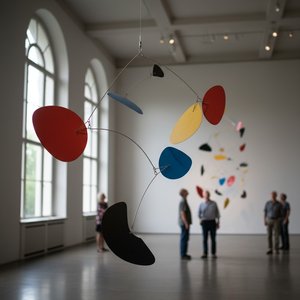
Explore the revolutionary world of Alexander Calder's kinetic sculptures & mobiles. Discover insights for collectors, acquisition advice, and the enduring legacy of this modern master. Expert analysis & art valuation.

Εξερευνήστε την τέχνη της αφαίρεσης στον διακοσμητικό σχεδιασμό! Συμβουλές από ειδικούς για ξενοδοχεία & κατοικίες. Δημιουργήστε κομψούς, λειτουργικούς χώρους με μαύρο, λευκό & γκρι.

Explore the profound world of Barbara Hepworth's sculpture. Discover her artistic evolution, iconic forms, and lasting influence on modern art. A guide for collectors & enthusiasts.

Explore Orphism, the vibrant abstract art movement pioneered by Robert & Sonia Delaunay. Discover its unique color theory, lasting influence on modern art, and how to bring this 'symphony of color' into your home with Most-Famous-Paintings.

Ανακαλύψτε πώς να συνδυάσετε αρμονικά τη σύγχρονη τέχνη με την κλασική αρχιτεκτονική. Εμπνευστείτε από συμβουλές ειδικών και δημιουργήστε έναν διαχρονικό χώρο γεμάτο κομψότητα και προσωπικότητα.


Μείνετε ενημερωμένοι για τις τελευταίες ειδήσεις σχετικά με την τέχνη, αποκλειστικές προσφορές και ιδέες διακόσμησης.
Πείτε μας περισσότερα για το έργο σας και οι ειδικοί μας στην τέχνη θα σας προσφέρουν 3 εξατομικευμένες προτάσεις έργων τέχνης.
Αφήστε μας να επιμεληθούμε 3 επιλογές αποκλειστικά για εσάς – Δωρεάν!


 Αποστολή
 Κοινοποίηση
 Λεπτομέρειες

 Λήψη
Λήψη
 Παρόμοια αντικείμενα συλλογής
 Παρουσίαση


 Διαβάστε περισσότερα




































 Η επιλογή με γυαλί είναι διαθέσιμη μόνο για μεγέθη κάτω από 110 εκ.


