


x


 Preview
 Αγοράστε την αναπαραγωγή Αγορά ψηφιακής εικόνας
 Αποστολή
 Λεπτομέρειες
 Προσθήκη στα αγαπημένα
 Λήψη
Λήψη
 Παρόμοια έργα
 Ακτινογραφία
 Παρουσίαση
 Acrylic On CanvasWallArtAbstract Expressionism
 1971
1971 202.0 x 165.0 cm
 Μητροπολιτικό Μουσείο Τέχνης
Εκτύπωση giclée ή σε καμβά ποιότητας μουσείου με γρήγορη παραγωγή και ευέλικτες επιλογές φινιρίσματος.





























Επιλέξτε από τις προκαθορισμένες διαστάσεις μας που διατηρούν τις αρχικές αναλογίες του έργου τέχνης.

Μπορείτε να εισαγάγετε δικές σας διαστάσεις ώστε να ταιριάξουν με ένα συγκεκριμένο πλαίσιο ή χώρο. Εάν το επιλεγμένο μέγεθος δεν συμπίπτει με τις αναλογίες της πρωτότυπης εικόνας, θα κόψουμε το έργο τέχνης ή θα επεκτείνουμε την εικόνα με καθρεφτισμένη ή μονόχρωμη ατέλεια. Θα σας αποσταλεί ένα ψηφιακό mockup για έγκρισή σας πριν από την έναρξη της παραγωγής.
Παρακαλούμε σημειώστε ότι η προεπισκόπηση στην οθόνη δεν αντικατοπτρίζει την πραγματική κοπή ή επέκταση. Μόνο το mockup θα δείξει με ακρίβεια την τελική σύνθεση.
Παρόλο που είναι διαθέσιμες προσαρμοσμένες διαστάσεις, προτείνουμε την επιλογή μιας διάστασης από τη προκαθορισμένη λίστα για τη διατήρηση των αρχικών αναλογιών.
Παγκόσμια Αποστολή () σε 2 εβδομάδες αντί για τις συνήθεις 4/5 εβδομάδες. (25 Ιούλιος)


Untitled
Διαστάσεις Αναπαραγωγής
Clyfford Still’s 1971 painting, “Untitled,” isn’t a landscape to be observed or a figure to be deciphered. Instead, it’s an experience—a visceral plunge into the heart of abstract expressionism, rendered with a deliberate roughness and a profound sense of urgency. The work immediately commands attention through its dominant verticality; these stark lines, painted in deep black against a bruised crimson backdrop, create a powerful division within the canvas, suggesting both containment and explosive release. This isn’t an attempt to mimic nature or represent recognizable forms; rather, Still utilizes color and line as primary languages of feeling, conveying a complex emotional state through their interaction.

What initially appears as a simple color field painting reveals itself to be remarkably tactile upon closer inspection. Still’s technique is deliberately unrefined, eschewing the smooth, blended surfaces favored by some of his contemporaries. Thick, visible brushstrokes—evidence of application with palette knives or similar tools—build up layers of paint that possess an almost sculptural quality. The edges aren't neatly finished; instead, they exhibit signs of wear and tear – peeling paint, a deliberate rejection of the pristine aesthetic. This roughness isn’t accidental; it speaks to the artist’s process, his engagement with the materiality of the canvas itself, and perhaps even a reflection of the emotional turmoil he sought to express. The varying thickness of the paint—thicker in the central lines, thinner around the edges—creates subtle shifts in tone and texture, adding depth and dynamism to the composition.
Clyfford Still emerged as a pivotal figure within Abstract Expressionism, yet his approach was markedly distinct. Unlike the gestural energy of Jackson Pollock or the meditative color fields of Mark Rothko, Still’s work is characterized by its stark geometry and raw emotional intensity. Born in 1904 amidst the vast landscapes of North Dakota, his early life instilled a deep connection to the natural world – a connection that subtly informs the painting's underlying tension. His shift towards non-figurative abstraction occurred earlier than many of his peers, forging a path toward a new visual language rooted in personal experience and emotional expression. The 1971 “Untitled” exemplifies this approach, moving beyond mere color to explore the very essence of form and feeling. It’s important to note that Still deliberately distanced himself from the commercial art world later in his career, prioritizing artistic integrity over market appeal – a stance reflected in the painting's unpolished surface and uncompromising emotional directness.
While devoid of explicit imagery, “Untitled” is profoundly evocative. The stark vertical lines can be interpreted as barriers—divisions between states of being, perhaps—while the crimson background suggests both passion and danger. The green areas, applied more thinly, might represent moments of respite or vulnerability within this turbulent landscape. Still’s work resists easy interpretation; it invites viewers to project their own emotions and experiences onto its surface. It's a painting that demands engagement, prompting reflection on themes of isolation, struggle, and the fundamental nature of human experience. The deliberate lack of resolution—the unfinished edges, the raw texture—suggests an ongoing process, a perpetual state of becoming rather than a fixed representation.

1904 - 1980 , Ηνωμένες Πολιτείες της Αμερικής
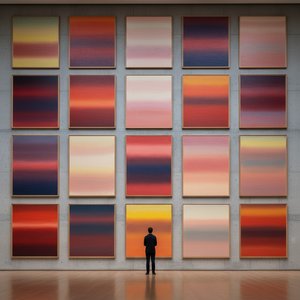
Ανακαλύψτε τα 25 κορυφαία έργα τέχνης του Mark Rothko! Εξερευνήστε την ιστορία, τη φιλοσοφία & τα χρώματα των πιο εμβληματικών αφηρημένων πινάκων. Υψηλής ποιότητας αναπαραγωγές & ιδέες διακόσμησης στο Most-Famous-Paintings.com.

Explore the groundbreaking abstract expressionism of Morris Louis, a pioneer of Color Field painting. Discover his innovative techniques, influential series & lasting legacy in post-war American art. Learn more at Most-Famous-Paintings.

Explore the life & work of Jacob Kainen, a pivotal figure in American Abstract Expressionism and Color Field painting. Discover his journey from Social Realism to vibrant abstraction and lasting influence on 20th-century art.

Ανακαλύψτε τα 10 αριστουργήματα ακρυλικού σε καμβά που επαναπροσδιόρισαν την τέχνη! Ιμπρεσιονισμός, αφηρημένη έκφραση & κορυφαίοι ζωγράφοι όπως ο Pollock και ο Rothko. Βρείτε πίνακες για κάθε χώρο στο Most-Famous-Paintings.gr – υψηλής ποιότητας αναπαραγωγές & έμπνευση διακόσμησης.

Ανακαλύψτε τους 10 πιο διάσημους πίνακες με κυρίαρχο το ασπρόμαυρο! Ιστορίες τέχνης, τεχνικές ζωγραφικής & η διαχρονική αξία των αριστουργημάτων. Βρείτε αναπαραγωγές υψηλής ποιότητας στο Most-Famous-Paintings.com.


Μείνετε ενημερωμένοι για τις τελευταίες ειδήσεις σχετικά με την τέχνη, αποκλειστικές προσφορές και ιδέες διακόσμησης.
Πείτε μας περισσότερα για το έργο σας και οι ειδικοί μας στην τέχνη θα σας προσφέρουν 3 εξατομικευμένες προτάσεις έργων τέχνης.
Αφήστε μας να επιμεληθούμε 3 επιλογές αποκλειστικά για εσάς – Δωρεάν!


 Κοινοποίηση

 Περισσότερα λεπτομέρεια







 Η επιλογή με γυαλί είναι διαθέσιμη μόνο για μεγέθη κάτω από 110 εκ.


