x

Εκτύπωση giclée ή σε καμβά ποιότητας μουσείου με γρήγορη παραγωγή και ευέλικτες επιλογές φινιρίσματος. ( Αγορά χειροποίητου πίνακα Αγορά ψηφιακής εικόνας)





























Επιλέξτε από τις προκαθορισμένες διαστάσεις μας που διατηρούν τις αρχικές αναλογίες του έργου τέχνης.

Μπορείτε να εισαγάγετε δικές σας διαστάσεις ώστε να ταιριάξουν με ένα συγκεκριμένο πλαίσιο ή χώρο. Εάν το επιλεγμένο μέγεθος δεν συμπίπτει με τις αναλογίες της πρωτότυπης εικόνας, θα κόψουμε το έργο τέχνης ή θα επεκτείνουμε την εικόνα με καθρεφτισμένη ή μονόχρωμη ατέλεια. Θα σας αποσταλεί ένα ψηφιακό mockup για έγκρισή σας πριν από την έναρξη της παραγωγής.
Παρακαλούμε σημειώστε ότι η προεπισκόπηση στην οθόνη δεν αντικατοπτρίζει την πραγματική κοπή ή επέκταση. Μόνο το mockup θα δείξει με ακρίβεια την τελική σύνθεση.
Παρόλο που είναι διαθέσιμες προσαρμοσμένες διαστάσεις, προτείνουμε την επιλογή μιας διάστασης από τη προκαθορισμένη λίστα για τη διατήρηση των αρχικών αναλογιών.
Παγκόσμια Αποστολή () σε 2 εβδομάδες αντί για τις συνήθεις 4/5 εβδομάδες. (18 Αύγουστος)


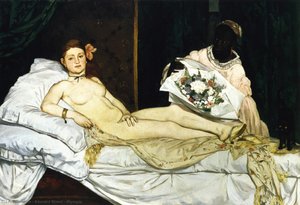
Olympia
Διαστάσεις Αναπαραγωγής
Édouard Manet's Olympia (1863) isn't merely a painting; it’s an audacious declaration, a seismic shift in the landscape of 19th-century art. Initially met with outrage and derision by Parisian society, this seemingly simple depiction of a nude woman has become one of the most iconic and endlessly debated works in Western art history. The canvas immediately confronts the viewer with a stark realism, devoid of the idealized beauty favored by academic painters of the time. Olympia, a courtesan, lies on her bed, attended by her black servant, Laure, who presents her with flowers – an act laden with complex social and economic implications. Manet deliberately avoids romanticizing the scene; there’s no idyllic pastoral setting, no mythological narrative to soften the blow of Olympia's nakedness. Instead, he offers a brutally honest portrayal of modern life, one that challenged the prevailing artistic conventions and sparked a furious debate about taste, morality, and representation.
Beyond the immediate depiction of a nude woman, Olympia is saturated with symbolic meaning. The inclusion of Laure, a black servant, was particularly controversial. It challenged the racial stereotypes prevalent in French society at the time and implicitly addressed issues of colonialism and slavery. The flowers presented by Laure are not a gesture of romantic affection but rather a transaction – a payment for services rendered. The gaze of Olympia, direct and unflinching, confronts the viewer with an uncomfortable awareness of her power and agency. The inclusion of the clock in the background subtly references time and mortality, adding another layer to the painting’s complex narrative.
Olympia debuted at the 1863 Salon, Paris's most prestigious art exhibition. The reaction was immediate and overwhelmingly negative. Critics condemned Manet for his unflinching realism, his lack of classical training, and his perceived vulgarity. They accused him of copying Delacroix’s *Saturn* and of depicting a prostitute in a manner that was both shocking and morally reprehensible. However, despite the initial outrage, Olympia ultimately played a crucial role in paving the way for Impressionism and other modern art movements. Manet's refusal to conform to academic standards forced the art world to confront new possibilities in representation and subject matter. His work demonstrated that beauty could be found not just in idealized forms but also in the complexities of everyday life, forever changing the course of art history.


1832 - 1883 , Γαλλία
Ανακαλύψτε τα 25 κορυφαία έργα τέχνης του Édouard Manet! Εξερευνήστε την ιστορία, το στυλ και τις τεχνικές των πιο εμβληματικών ιμπρεσιονιστικών πινάκων. Βρείτε αναπαραγωγές υψηλής ποιότητας για να εμπνεύσετε τον χώρο σας στο Most-Famous-Paintings.com.

Explore the life & art of Édouard Manet, a pivotal figure bridging Realism and Impressionism. Discover his revolutionary techniques, controversial masterpieces like 'Olympia,' and lasting impact on modern art history.
Ανακαλύψτε τους 10 κορυφαίους πίνακες ιμπρεσιονισμού από Μονέ, Ρενουάρ & Ντεγκά. Ιστορίες τέχνης, τεχνικές και έμπνευση διακόσμησης. Βρείτε αναπαραγωγές υψηλής ποιότητας στο !

Ανακαλύψτε τα 10 κορυφαία έργα ιμπρεσιονισμού! Μονέ, Ρενουάρ & άλλοι ζωγράφοι αποτυπωμένοι σε πίνακες που εμπνέουν. Βρείτε αναπαραγωγές υψηλής ποιότητας για να διακοσμήσετε τον χώρο σας. Εξερευνήστε την πλήρη συλλογή στο Most-Famous-Paintings.gr

Journey through Impressionistic Realism with 10 iconic masterpieces by Monet, Renoir & Van Gogh. Explore art history, techniques & find museum-quality reproductions for your home at Most-Famous-Paintings.com. Discover all masterpieces online!


Μείνετε ενημερωμένοι για τις τελευταίες ειδήσεις σχετικά με την τέχνη, αποκλειστικές προσφορές και ιδέες διακόσμησης.
Πείτε μας περισσότερα για το έργο σας και οι ειδικοί μας στην τέχνη θα σας προσφέρουν 3 εξατομικευμένες προτάσεις έργων τέχνης.
Αφήστε μας να επιμεληθούμε 3 επιλογές αποκλειστικά για εσάς – Δωρεάν!


 Δείτε σε πραγματικό χώρο
 Αποστολή
 Κοινοποίηση
 Λεπτομέρειες

 Λήψη
Λήψη
 Παρόμοια αντικείμενα συλλογής
 Ακτινογραφία
 Παρουσίαση

 Διαβάστε περισσότερα







 Η επιλογή με γυαλί είναι διαθέσιμη μόνο για μεγέθη κάτω από 110 εκ.