


x

Χειροποίητη α óleo σε καμβά στο δικό σας μέγεθος και πλαίσιο, κατά παραγγελία από τους καλλιτέχνες μας. ( Μετάβαση στην Εκτύπωση Μετάβαση σε Εικόνα)





























Επιλέξτε από τις προκαθορισμένες διαστάσεις μας που διατηρούν τις αρχικές αναλογίες του έργου τέχνης.

Μπορείτε να εισάγετε δικές σας διαστάσεις για να ταιριάξετε το έργο με ένα συγκεκριμένο πλαίσιο ή χώρο. Εάν το επιλεγμένο μέγεθος δεν συμπίπτει με τις αναλογίες της αρχικής εικόνας, θα περικοψούμε το έργο τέχνης ή θα επεκτείνουμε τη ζωγραφιά με πρόσθετα χειρόγραφα στοιχεία. Ένα ψηφιακό προσχέδιο θα σας σταλεί για έγκριση πριν την έναρξη της παραγωγής.
Παρακαλούμε σημειώστε ότι η προεπισκόπηση στην οθόνη δεν αντικατοπτρίζει την πραγματική περικοπή ή επέκταση. Μόνο το προσχέδιο θα δείξει με ακρίβεια την τελική σύνθεση.
Παρόλο που είναι διαθέσιμα προσαρμοσμένα μεγέθη, συνιστούμε να επιλέξετε μια διάσταση από τη λίστα των προκαθορισμένων μεγεθών για τη διατήρηση των αρχικών αναλογιών.
Παγκόσμια Αποστολή () σε 3/4 εβδομάδες αντί για τις συνήθεις 5 εβδομάδες. (5 Αύγουστος). Χωρίς συμβιβασμούς στην ποιότητα.


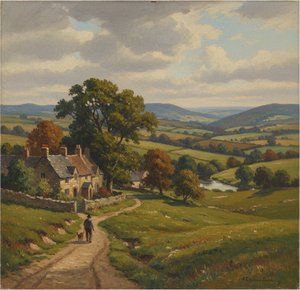
The Old Gate
Διαστάσεις Αναπαραγωγής

Edward William Stott remains a captivating figure in the tapestry of British art, a painter whose work breathes with the quiet, melancholic beauty of the late Victorian era. Born in 1855 amidst the industrial grit of Rochdale, Lancashire, Stott’s artistic sensibilities were far removed from the soot and iron of his birthplace. Instead, he sought a profound connection with the natural world, eventually finding his spiritual and creative home in the rolling, tranquil landscapes of rural Sussex. His journey was one of constant refinement, moving from the structured academic environments of Manchester and Paris to the spontaneous, light-drenched fields of the English countryside.
Stott’s early education provided him with a formidable technical foundation. His studies at the Manchester Academy of Fine Art and his subsequent immersion in the prestigious École Nationale Supérieure des Beaux-Arts in Paris placed him at the heart of a transformative period in art history. Under the guidance of masters such as Carolus-Duran and Cabanel, he mastered the nuances of form and light. However, it was the influence of the Barbizon School and the rustic Naturalism of Jules Bastien-Lepage that truly ignited his passion. He learned to marry the rigorous discipline of French academic training with a deep, emotive reverence for the English landscape tradition, echoing the poetic sensibilities of John Linnell and Samuel Palmer.
What distinguishes a Stott masterpiece is not merely the subject matter, but the palpable atmosphere that envelops every scene. He possessed an uncanny ability to capture the "fading light"—those fleeting, liminal moments of twilight when the world transitions from the clarity of day to the mystery of dusk. This preference for low-light settings allowed him to experiment with tonal variations and subtle color shifts, imbuing his canvases with a sense of profound contemplation and even a touch of nostalgia. His work often feels as though it is caught in a breath, suspended between the physical reality of the landscape and an internal, emotional response to it.
His technical repertoire was remarkably diverse, allowing him to express different facets of his vision through various media:
Despite achieving significant critical and commercial success during his lifetime—marked by his election as an Associate of the Royal Academy in 1906 and his role as a founding member of the New English Art Club—Stott’s reputation suffered a decline following the Great War. As the art world pivoted toward more radical, fragmented movements, his devotion to Naturalism and the quiet dignity of rural life began to be viewed as unfashionable. Much of his oeuvre fell into obscurity, overshadowed by the rapid evolution of modernism.
Yet, in recent years, a renewed appreciation for Stott has begun to emerge. Collectors and historians are rediscovering the profound emotional depth and technical brilliance that define his work. He is no longer seen merely as a Victorian painter of landscapes, but as a master of atmosphere who captured the very soul of a vanishing way of life. His legacy lives on in the evocative textures of The Fold and the poignant realism of Lambing Time, reminding us that there is immense power in the quiet, the rural, and the twilight.

1859 - 1918 , United Kingdom

Explore the serene landscapes of John Fulleylove (1845-1908), a celebrated English artist. Discover his charming watercolours & oils, evocative travel illustrations, and lasting legacy. Learn about his life, exhibitions, and artistic style.

Explore the captivating world of 19th-century landscape painting! Discover renowned artists like Friedrich & Monet, key movements, and find the perfect artwork to bring nature's serenity into your home. Expert insights at Most-Famous-Paintings.

Explore the captivating landscapes of David Cox the Elder, a pivotal figure in British Romanticism. Discover his masterful watercolour techniques, enduring legacy & find timeless art for your home at Most-Famous-Paintings.
Explore the captivating landscapes & portraits of Brian Hatton (1887-1916), a promising British artist lost too soon. Discover his unique style, Herefordshire roots, and lasting legacy in early 20th-century art.

Μεταμορφώστε τις αγαπημένες σας φωτογραφίες σε μοναδικά έργα τέχνης! Χειροποίητες προσωπογραφίες σε λάδι από έμπειρους καλλιτέχνες. Υψηλή ποιότητα, εξατομικευμένη προσέγγιση & αξέχαστα δώρα.


Μείνετε ενημερωμένοι για τις τελευταίες ειδήσεις σχετικά με την τέχνη, αποκλειστικές προσφορές και ιδέες διακόσμησης.
Πείτε μας περισσότερα για το έργο σας και οι ειδικοί μας στην τέχνη θα σας προσφέρουν 3 εξατομικευμένες προτάσεις έργων τέχνης.
Αφήστε μας να επιμεληθούμε 3 επιλογές αποκλειστικά για εσάς – Δωρεάν!


 Προεπισκόπηση
 Αποστολή
 Κοινοποίηση
 Λεπτομέρειες

 Λήψη
Λήψη
 Παρόμοια έργα
 Ακτινογραφία
 Παρουσίαση
 Περισσότερα λεπτομέρεια







 Η επιλογή με γυαλί είναι διαθέσιμη μόνο για μεγέθη κάτω από 110 εκ.


