x

Χειροποίητη oil painting σε καμβά στο δικό σας μέγεθος και πλαίσιο, κατά παραγγελία από τους καλλιτέχνες μας. ( Αγορά εκτύπωσης Αγορά ψηφιακής εικόνας)





























Επιλέξτε από τις προκαθορισμένες διαστάσεις μας που διατηρούν τις αρχικές αναλογίες του έργου τέχνης.

Μπορείτε να ορίσετε δικές σας διαστάσεις ώστε το έργο να ταιριάζει σε ένα συγκεκριμένο πλαίσιο ή χώρο. Εάν το επιλεγμένο μέγεθος δεν συμπίπτει με τις αναλογίες της αρχικής εικόνας, θα περικοψούμε το έργο ή θα επεκτείνουμε τη ζωγραφιά με πρόσθετα χειρόγραφα στοιχεία. Ένα ψηφιακό προσχέδιο θα σας αποσταλεί για έγκριση πριν την έναρξη της παραγωγής.
Παρακαλούμε σημειώστε ότι η προεπισκόπηση στην οθόνη δεν αντικατοπτρίζει την πραγματική περικοπή ή επέκταση. Μόνο το προσχέδιο θα δείξει με ακρίβεια την τελική σύνθεση.
Παρόλο που είναι διαθέσιμα προσαρμοσμένα μεγέθη, συνιστούμε να επιλέξετε μια διάσταση από τη λίστα των προκαθορισμένων μεγεθών για τη διατήρηση των αρχικών αναλογιών.
Παγκόσμια Αποστολή () σε 3-4 εβδομάδες αντί για τις συνήθεις 5 εβδομάδες. (15 Αύγουστος). Χωρίς συμβιβασμούς στην ποιότητα.


Triple Self Portrait
Διαστάσεις Αναπαραγωγής
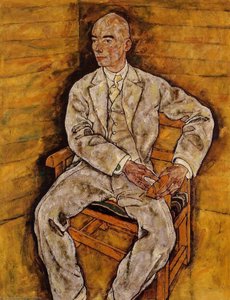
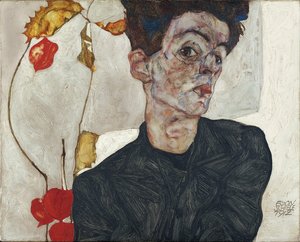
Egon Schiele’s “Triple Self Portrait,” painted in 1913, stands as a haunting testament to the anxieties simmering beneath the surface of Expressionist art. More than just a depiction of three figures seated before a chair—though these elements contribute significantly to its visual impact—the painting delves into profound psychological complexities and embodies Schiele’s signature preoccupation with mortality and vulnerability.
Schiele, born in Tulln an der Donau in 1890, experienced early trauma that profoundly shaped his artistic vision. His father's debilitating syphilis illness instilled within him a visceral awareness of disease and decay—themes that would permeate throughout his oeuvre. Raised primarily by his mother and later under the watchful eye of his uncle Leopold Czihaczek, Schiele’s upbringing fostered an independent spirit tempered by intellectual curiosity. Despite familial disapproval regarding his artistic pursuits – deemed frivolous compared to more practical ambitions – he relentlessly pursued drawing, honing his skill with unwavering dedication.
The painting itself is executed in watercolor on paper, a technique Schiele favored for its ability to convey subtle tonal variations and capture the immediacy of emotion. His distinctive style—characterized by angular lines, flattened perspectives, and unsettlingly realistic depictions of human anatomy—is instantly recognizable. The figures are rendered with meticulous detail, their faces pressed together in expressions of anguish and introspection. Notably, the inclusion of two chairs serves as a powerful visual metaphor for confinement and isolation; they represent not merely physical spaces but also psychological barriers hindering self-awareness.
Painted during a period marked by intellectual ferment and societal upheaval—the burgeoning avant-garde movement challenging traditional artistic conventions alongside the looming shadow of World War I— “Triple Self Portrait” reflects the pervasive atmosphere of unease and disillusionment prevalent in Europe at the time. Schiele’s unflinching gaze confronts viewers with uncomfortable truths about human existence, prompting contemplation on themes of suffering, fear, and the inescapable awareness of death.
“Triple Self Portrait” continues to resonate powerfully today as a masterpiece of psychological portraiture. Its haunting beauty lies not in idealized representation but in its courageous articulation of inner turmoil—a testament to Schiele’s enduring legacy as one of Expressionism's most influential figures and a poignant reminder of the artist’s profound engagement with the human condition.
1890 - 1918 , Αυστρία
Εξερευνήστε την ψυχολογία και την ιστορία της αυτοπροσωπογραφίας. Δημιουργήστε ένα μοναδικό πορτρέτο κατά παραγγελία με έμπειρους καλλιτέχνες. Υψηλή ποιότητα, εξατομικευμένη τέχνη για κάθε χώρο.

Explore the emotionally charged world of Egon Schiele (1890-1918). Discover his Expressionist masterpieces, psychological themes, and lasting impact on modern art. A comprehensive guide for collectors & enthusiasts.

Explore the fascinating evolution of portraiture from classical masterpieces to digital art! Discover symbolism, techniques & societal impact. Expert insights for collectors & enthusiasts at Most-Famous-Paintings.

Explore the groundbreaking work of Paula Modersohn-Becker, a pioneer of Expressionism. Discover her intimate self-portraits & poignant depictions of motherhood – shaping early 20th-century art with emotional depth and innovation.
Ανακαλύψτε τα 25 κορυφαία έργα τέχνης του Egon Schiele! Εξερευνήστε τη ζωή, το στυλ και την τεχνική του Αυστριακού εξπρεσιονιστή. Βρείτε πίνακες Schiele υψηλής ποιότητας για να εμπνεύσετε τον χώρο σας. Αναπαραγωγές τέχνης στο Most-Famous-Paintings.com.


Μείνετε ενημερωμένοι για τις τελευταίες ειδήσεις σχετικά με την τέχνη, αποκλειστικές προσφορές και ιδέες διακόσμησης.
Πείτε μας περισσότερα για το έργο σας και οι ειδικοί μας στην τέχνη θα σας προσφέρουν 3 εξατομικευμένες προτάσεις έργων τέχνης.
Αφήστε μας να επιμεληθούμε 3 επιλογές αποκλειστικά για εσάς – Δωρεάν!


 Δείτε σε πραγματικό χώρο
 Αποστολή
 Κοινοποίηση
 Λεπτομέρειες

 Λήψη
Λήψη
 Παρόμοια αντικείμενα συλλογής
 Ακτινογραφία
 Παρουσίαση

 Διαβάστε περισσότερα







 Η επιλογή με γυαλί είναι διαθέσιμη μόνο για μεγέθη κάτω από 110 εκ.