


x

 Acrylic On CanvasWallArtAbstract Expressionism
 1969Contemporary
 70.0 x 70.0 cm
Εκτύπωση giclée ή σε καμβά ποιότητας μουσείου με γρήγορη παραγωγή και ευέλικτες επιλογές φινιρίσματος. ( Αγορά χειροποίητου πίνακα Αγορά ψηφιακής εικόνας)





























Επιλέξτε από τις προκαθορισμένες διαστάσεις μας που διατηρούν τις αρχικές αναλογίες του έργου τέχνης.

Μπορείτε να εισαγάγετε δικές σας διαστάσεις ώστε να ταιριάξουν με ένα συγκεκριμένο πλαίσιο ή χώρο. Εάν το επιλεγμένο μέγεθος δεν συμπίπτει με τις αναλογίες της πρωτότυπης εικόνας, θα κόψουμε το έργο τέχνης ή θα επεκτείνουμε την εικόνα με καθρεφτισμένη ή μονόχρωμη ατέλεια. Θα σας αποσταλεί ένα ψηφιακό mockup για έγκρισή σας πριν από την έναρξη της παραγωγής.
Παρακαλούμε σημειώστε ότι η προεπισκόπηση στην οθόνη δεν αντικατοπτρίζει την πραγματική κοπή ή επέκταση. Μόνο το mockup θα δείξει με ακρίβεια την τελική σύνθεση.
Παρόλο που είναι διαθέσιμες προσαρμοσμένες διαστάσεις, προτείνουμε την επιλογή μιας διάστασης από τη προκαθορισμένη λίστα για τη διατήρηση των αρχικών αναλογιών.
Παγκόσμια Αποστολή () σε 2 εβδομάδες αντί για τις συνήθεις 4/5 εβδομάδες. (21 Αύγουστος)


Star Picture
Διαστάσεις Αναπαραγωγής
Gerhard Richter's ‘Star Picture,’ created in 1969, is not an invitation to gaze upon the cosmos with romantic wonder, but rather a profound meditation on perception, representation, and the very nature of painting itself. Emerging from a period defined by both technological advancement – the year humanity first walked on the moon – and lingering post-war anxieties, this work embodies Richter’s characteristic blurring of boundaries between abstraction and reality. It isn't a depiction *of* stars, but an exploration of how we see, remember, and translate images into the language of paint. The canvas, measuring 70 x 70 cm, feels surprisingly intimate despite its vast implied subject matter; it’s as if Richter has contained a universe within a manageable frame.
Richter's technique in ‘Star Picture’ is central to understanding its impact. He doesn’t meticulously plan or sketch, but rather embraces chance and gesture. Layers of oil paint are applied, scraped, and blurred, often utilizing a squeegee-like tool to create flattened areas and dynamic streaks. This process isn’t about achieving a precise representation; it's about revealing the inherent qualities of the medium itself – its texture, viscosity, and capacity for both control and accident. The limited palette—predominantly black, grey, and subtle gradations in between—further emphasizes this focus on materiality. These somber tones aren’t depressing, but rather create a sense of quiet contemplation, inviting the viewer to lose themselves within the painting's surface. The absence of distinct forms or focal points encourages a wandering eye, discovering new details with each viewing. It is an artwork that resists easy categorization, existing somewhere between abstract expressionism and photorealism – a hallmark of Richter’s diverse oeuvre.
Born in Dresden in 1932, Gerhard Richter's life was deeply shaped by the tumultuous history of 20th-century Germany. Growing up through war and division instilled a skepticism towards grand narratives and idealized representations. This distrust is palpable in ‘Star Picture.’ While seemingly abstract, the work can be seen as a response to the era’s fascination with space exploration, subtly questioning the utopian promises associated with technological progress. The blurred, indistinct stars might symbolize the elusiveness of truth or the limitations of human perception. Richter's artistic journey was also influenced by movements like Zero, which sought a fresh start after the devastation of war, embracing abstraction and experimentation as pathways to renewal. However, unlike the optimistic fervor of some Zero artists, Richter maintains a critical distance, refusing to offer easy answers or embrace simplistic ideologies.
‘Star Picture’ possesses an enduring quality that transcends its historical context. Its monochromatic palette and abstract composition make it remarkably versatile in contemporary interiors. The painting's subtle textures and dynamic energy can add depth and sophistication to a minimalist space, while its contemplative mood complements more traditional settings. A reproduction of this work isn’t merely a decorative element; it’s an invitation to engage with complex ideas about art, perception, and the human condition. It speaks to those who appreciate intellectual rigor alongside aesthetic beauty—a piece that rewards sustained contemplation and offers new discoveries with each encounter. The artwork's power lies in its ability to evoke emotion without relying on explicit imagery, making it a truly timeless addition to any collection.


1932 - , Γερμανία
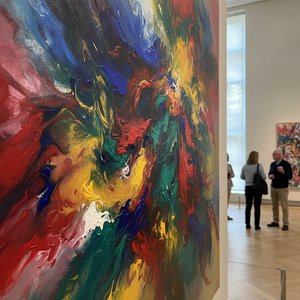
Explore the profound emotional depth of Lyrical Abstraction. Discover how masters like Raymond Parker used color and form to bridge Impressionism and Abstract Expressionism. Learn about this pivotal movement through our expert-led art history guide.

Explore the profound history and emotional depth of Abstract Expressionism. From Jackson Pollock to Mark Rothko, master the nuances of the New York School through our expert art history guide. Discover museum-quality hand-painted reproductions for your collection.

Explore the profound emotional depth of Color Field painting. Discover the history of mid-century abstraction, from Rothko to Newman, and learn how pure color transforms the viewer's experience through our expert art history guide.


Μείνετε ενημερωμένοι για τις τελευταίες ειδήσεις σχετικά με την τέχνη, αποκλειστικές προσφορές και ιδέες διακόσμησης.
Πείτε μας περισσότερα για το έργο σας και οι ειδικοί μας στην τέχνη θα σας προσφέρουν 3 εξατομικευμένες προτάσεις έργων τέχνης.
Αφήστε μας να επιμεληθούμε 3 επιλογές αποκλειστικά για εσάς – Δωρεάν!


 Δείτε σε πραγματικό χώρο
 Αποστολή
 Κοινοποίηση
 Λεπτομέρειες

 Λήψη
Λήψη
 Παρόμοια αντικείμενα συλλογής
 Ακτινογραφία
 Παρουσίαση
 Διαβάστε περισσότερα







 Η επιλογή με γυαλί είναι διαθέσιμη μόνο για μεγέθη κάτω από 110 εκ.


