x


 Preview
 Αγοράστε την αναπαραγωγή Αγορά ψηφιακής εικόνας
 Αποστολή
 Λεπτομέρειες
 Προσθήκη στα αγαπημένα
 Λήψη
Λήψη
 Παρόμοια έργα
 Ακτινογραφία
 Παρουσίαση
 Oil On CanvasWallArtSymbolist Movement
 1850
1850 41.0 x 32.0 cm
Εκτύπωση giclée ή σε καμβά ποιότητας μουσείου με γρήγορη παραγωγή και ευέλικτες επιλογές φινιρίσματος.





























Επιλέξτε από τις προκαθορισμένες διαστάσεις μας που διατηρούν τις αρχικές αναλογίες του έργου τέχνης.

Μπορείτε να εισαγάγετε δικές σας διαστάσεις ώστε να ταιριάξουν με ένα συγκεκριμένο πλαίσιο ή χώρο. Εάν το επιλεγμένο μέγεθος δεν συμπίπτει με τις αναλογίες της πρωτότυπης εικόνας, θα κόψουμε το έργο τέχνης ή θα επεκτείνουμε την εικόνα με καθρεφτισμένη ή μονόχρωμη ατέλεια. Θα σας αποσταλεί ένα ψηφιακό mockup για έγκρισή σας πριν από την έναρξη της παραγωγής.
Παρακαλούμε σημειώστε ότι η προεπισκόπηση στην οθόνη δεν αντικατοπτρίζει την πραγματική κοπή ή επέκταση. Μόνο το mockup θα δείξει με ακρίβεια την τελική σύνθεση.
Παρόλο που είναι διαθέσιμες προσαρμοσμένες διαστάσεις, προτείνουμε την επιλογή μιας διάστασης από τη προκαθορισμένη λίστα για τη διατήρηση των αρχικών αναλογιών.
Παγκόσμια Αποστολή () σε 2 εβδομάδες αντί για τις συνήθεις 4/5 εβδομάδες. (27 Ιούλιος)


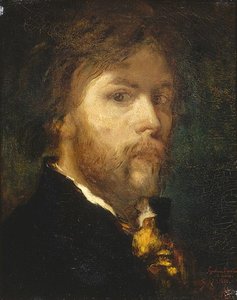
Self-Portrait
Διαστάσεις Αναπαραγωγής
Gustave Moreau's "Self-Portrait," painted in 1850, isn’t merely a depiction of an artist; it’s a profound meditation on the human condition, rendered with the meticulous detail and evocative symbolism that would come to define his enduring legacy. This oil on canvas, measuring a modest 41 x 32 cm, currently resides within the Musée National Gustave-Moreau in Paris—a fitting home for a work so deeply rooted in introspection and artistic exploration. Moreau, a pivotal figure bridging the Romanticism of his predecessors with the nascent Symbolist movement, invites us into a world where reality is filtered through layers of dream, myth, and personal feeling.
The painting immediately establishes an atmosphere of quiet intensity. Moreau himself appears framed within a richly textured interior, reminiscent of a dimly lit study or perhaps a scholar’s chamber. His long hair, cascading down his shoulders, and the carefully groomed beard suggest a deliberate cultivation of intellectualism and a connection to the past. The black suit, a formal garment signifying status and discipline, is unexpectedly offset by a vibrant yellow tie—a bold splash of color that hints at hidden passions and perhaps even a touch of rebellion against conventional norms. His direct gaze, unwavering and almost challenging, compels the viewer to confront not just an image, but a presence.
Moreau’s artistic approach was fundamentally rooted in symbolism—a deliberate rejection of the objective representation favored by earlier movements. He wasn't interested in simply *showing* something; he sought to *evoke* it through carefully chosen details and layered meanings. The setting itself is laden with symbolic weight. The architectural elements, though vaguely reminiscent of classical structures, possess an unsettling quality—they seem both familiar and subtly distorted, reflecting the artist’s own internal landscape. Moreau frequently drew inspiration from mythology, religion, and folklore, weaving these narratives into his work to explore universal themes of love, loss, beauty, and mortality.
The yellow tie, a recurring motif in Moreau's oeuvre, is particularly significant. It represents not just color but also illumination, knowledge, and even the divine—a subtle nod to the artist’s own pursuit of spiritual understanding through his art. The overall composition feels deliberately unbalanced, creating a sense of unease and inviting the viewer to actively engage with the painting’s enigmatic narrative.
Moreau's technique is characterized by its meticulous detail and rich color palette. He employed a glazing method—applying thin layers of paint that build up depth and luminosity over time—to create an almost velvety surface. This painstaking process reflects his commitment to capturing not just the appearance but also the *essence* of his subjects. Painted in 1850, this work represents a crucial moment in Moreau’s artistic development, as he was beginning to establish his unique style and explore the possibilities of Symbolist imagery.
The painting emerged during a period of significant social and intellectual upheaval—the mid-19th century. The rise of industrialization, coupled with growing anxieties about modernity, fueled a desire for escape into realms of imagination and spirituality. Moreau’s work perfectly captured this mood, offering a refuge from the harsh realities of the world through the beauty and mystery of his symbolic visions. He was a key figure in fostering an environment where art could be more than just representation; it could become a vehicle for exploring the deepest recesses of the human psyche.
Most-Famous-Paintings offers exquisite, hand-painted reproductions of Gustave Moreau's "Self-Portrait," allowing you to experience the depth and complexity of this iconic work in your own space. These meticulously crafted reproductions capture not only the visual details but also the emotional resonance of the original painting. Whether you’re an art collector, a design enthusiast, or simply someone seeking a piece that speaks to the soul, a Most-Famous-Paintings reproduction of Moreau's "Self-Portrait" is a timeless addition to any collection. Discover more and order your high-quality reproduction at Most-Famous-Paintings.com

1826 - 1898 , Γαλλία
Ανακαλύψτε τους 25 πιο εμβληματικούς πίνακες του Gustav Klimt! Εξερευνήστε την τέχνη Art Nouveau, τον συμβολισμό και τα χρυσά χρώματα που καθόρισαν το έργο του. Βρείτε αναπαραγωγές υψηλής ποιότητας για διακόσμηση σπιτιού στο Most-Famous-Paintings.com.

Ανακαλύψτε τους 25 θησαυρούς του Metropolitan Museum of Art! Ιμπρεσιονισμός, Βαν Γκογκ, Μονέ & άλλα αριστουργήματα. Έμπνευση για διακόσμηση σπιτιού με πίνακες υψηλής ποιότητας. Εξερευνήστε την πλήρη συλλογή στο Most-Famous-Paintings.com

Ανακαλύψτε τα 10 κορυφαία πορτρέτα στην ιστορία της τέχνης! Μάθετε για τους Λεονάρντο Ντα Βίντσι, Ρέμπραντ και άλλους μεγάλους ζωγράφους. Υψηλής ποιότητας αναπαραγωγές πινάκων & ιδέες διακόσμησης στο Most-Famous-Paintings.gr. Εξερευνήστε την πλήρη συλλογή online!

Ανακαλύψτε τους 25 θησαυρούς του Detroit Institute of Arts! Van Gogh, Monet, Rembrandt και άλλοι διάσημοι καλλιτέχνες. Ιστορίες τέχνης, τεχνικές & έμπνευση για το σπίτι σας. Βρείτε αναπαραγωγές υψηλής ποιότητας στο Most-Famous-Paintings.com.
Ανακαλύψτε τα 25 κορυφαία έργα τέχνης του James Abbott McNeill Whistler! Εξερευνήστε πίνακες, πορτρέτα & νυχτερινά τοπία που καθόρισαν τον Aestheticism. Υψηλής ποιότητας αναπαραγωγές στην Most-Famous-Paintings.gr. Δείτε τη συλλογή!


Μείνετε ενημερωμένοι για τις τελευταίες ειδήσεις σχετικά με την τέχνη, αποκλειστικές προσφορές και ιδέες διακόσμησης.
Πείτε μας περισσότερα για το έργο σας και οι ειδικοί μας στην τέχνη θα σας προσφέρουν 3 εξατομικευμένες προτάσεις έργων τέχνης.
Αφήστε μας να επιμεληθούμε 3 επιλογές αποκλειστικά για εσάς – Δωρεάν!


 Κοινοποίηση

 Περισσότερα λεπτομέρεια







 Η επιλογή με γυαλί είναι διαθέσιμη μόνο για μεγέθη κάτω από 110 εκ.