x

 Oil On CanvasWallArtSatirical Realism
 1858
1858 33.0 x 25.0 cm
 Μουσέ Ορσέ
Χειροποίητη oil painting σε καμβά στο δικό σας μέγεθος και πλαίσιο, κατά παραγγελία από τους καλλιτέχνες μας. ( Αγορά εκτύπωσης Αγορά ψηφιακής εικόνας)





























Επιλέξτε από τις προκαθορισμένες διαστάσεις μας που διατηρούν τις αρχικές αναλογίες του έργου τέχνης.

Μπορείτε να ορίσετε δικές σας διαστάσεις ώστε το έργο να ταιριάζει σε ένα συγκεκριμένο πλαίσιο ή χώρο. Εάν το επιλεγμένο μέγεθος δεν συμπίπτει με τις αναλογίες της αρχικής εικόνας, θα περικοψούμε το έργο ή θα επεκτείνουμε τη ζωγραφιά με πρόσθετα χειρόγραφα στοιχεία. Ένα ψηφιακό προσχέδιο θα σας αποσταλεί για έγκριση πριν την έναρξη της παραγωγής.
Παρακαλούμε σημειώστε ότι η προεπισκόπηση στην οθόνη δεν αντικατοπτρίζει την πραγματική περικοπή ή επέκταση. Μόνο το προσχέδιο θα δείξει με ακρίβεια την τελική σύνθεση.
Παρόλο που είναι διαθέσιμα προσαρμοσμένα μεγέθη, συνιστούμε να επιλέξετε μια διάσταση από τη λίστα των προκαθορισμένων μεγεθών για τη διατήρηση των αρχικών αναλογιών.
Παγκόσμια Αποστολή () σε 3-4 εβδομάδες αντί για τις συνήθεις 5 εβδομάδες. (19 Αύγουστος). Χωρίς συμβιβασμούς στην ποιότητα.


Scene from a Comedy
Διαστάσεις Αναπαραγωγής
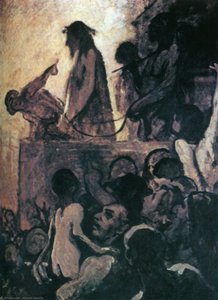
Honoré Daumier's "Scene from a Comedy," painted in 1858, isn’t merely a depiction of two figures; it’s a meticulously crafted snapshot of Parisian society and the biting social commentary that defined the artist’s career. Housed within the walls of the Musée d’Orsay, this oil on canvas offers a rare glimpse into Daumier's world – a world brimming with observation, critique, and an undeniable sense of humor laced with profound sadness. Measuring just 33 x 25 cm, its intimate scale belies the expansive social commentary it contains, inviting viewers to step closer and contemplate the subtle power dynamics at play.
The painting immediately draws the eye to the stark contrast between the two men. On the left stands an older gentleman, rendered in dark tones of coat and shirt, his face a study in sternness – a palpable embodiment of authority or perhaps simply ingrained habit. His posture is rigid, suggesting a lifetime spent upholding established norms. Juxtaposed against him is a younger figure, dressed more casually, tilted back with a relaxed amusement that hints at a different perspective, a willingness to question or even mock the older man’s demeanor. This immediate visual dichotomy establishes the core of Daumier's work: a deliberate exploration of conflicting viewpoints and the inherent tensions within social structures.
Daumier’s mastery lies not just in capturing faces, but in conveying emotion through gesture and body language. The realism of his approach is evident in the meticulous detail with which he renders the textures of fabric, the subtle lines etched on the older man's face, and the slight tilt of the younger figure’s head. The dark background, punctuated by hints of blue and gray, serves to amplify these details, creating a sense of depth and drawing the viewer’s attention directly to the figures. This strategic use of light and shadow is characteristic of Daumier's style – a deliberate choice to highlight the emotional core of his subjects.
Furthermore, note the lack of elaborate setting or narrative context. Daumier strips away extraneous details, focusing instead on the immediate interaction between these two individuals. This minimalist approach forces the viewer to actively engage with the painting, interpreting the unspoken tensions and considering the broader social implications of their encounter. It’s a testament to Daumier's skill that such profound commentary can be conveyed through such simple means.
"Scene from a Comedy" is deeply rooted in its historical context. Created during the mid-19th century, it reflects the social and political upheavals of France at that time – a period marked by rapid industrialization, growing class divisions, and increasing calls for reform. Daumier’s work served as a powerful critique of these changes, exposing the hypocrisy and injustices inherent in the established order. His frequent use of caricature and satire allowed him to reach a wide audience, challenging conventional wisdom and sparking debate about the direction of French society.
As explored in articles like “Honoré Daumier: Social Commentary & Artistic Innovation in 19th-Century France,” Daumier’s art wasn't simply humorous; it was a direct engagement with pressing social issues. His work, alongside pieces like "Ratapoil (rear view)" and "The Defender," became a voice for the marginalized and a challenge to the status quo. He used his artistic platform to expose corruption, criticize political figures, and advocate for greater social equality – a remarkably courageous stance for an artist of his time.
Most-Famous-Paintings offers meticulously crafted hand-painted reproductions of “Scene from a Comedy,” allowing art lovers to experience Daumier’s genius in stunning detail. Each reproduction is created by skilled artisans who painstakingly recreate the artist's techniques, capturing the nuances of his style and ensuring an authentic representation of this iconic work. Whether displayed in a private collection or incorporated into a larger interior design scheme, a Most-Famous-Paintings reproduction provides a beautiful and meaningful connection to one of art history’s most insightful social commentators.
To delve further into Daumier's life and work, we encourage you to explore the resources available on our website and through external links such as Wikipedia. Discover the rich tapestry of his artistic vision and appreciate the enduring legacy of a man who used art as a weapon against injustice – a legacy that continues to resonate with audiences today.


1808 - 1879 , Γαλλία

Explore the profound impact of 19th-century Realism. Discover how masters like Gustave Courbet rejected idealism to capture the raw truth of contemporary life through direct observation and social commentary in this expert art history guide.


Μείνετε ενημερωμένοι για τις τελευταίες ειδήσεις σχετικά με την τέχνη, αποκλειστικές προσφορές και ιδέες διακόσμησης.
Πείτε μας περισσότερα για το έργο σας και οι ειδικοί μας στην τέχνη θα σας προσφέρουν 3 εξατομικευμένες προτάσεις έργων τέχνης.
Αφήστε μας να επιμεληθούμε 3 επιλογές αποκλειστικά για εσάς – Δωρεάν!


 Δείτε σε πραγματικό χώρο
 Αποστολή
 Κοινοποίηση
 Λεπτομέρειες

 Λήψη
Λήψη
 Παρόμοια αντικείμενα συλλογής
 Ακτινογραφία
 Παρουσίαση
 Διαβάστε περισσότερα







 Η επιλογή με γυαλί είναι διαθέσιμη μόνο για μεγέθη κάτω από 110 εκ.