x

Χειροποίητη oil painting σε καμβά στο δικό σας μέγεθος και πλαίσιο, κατά παραγγελία από τους καλλιτέχνες μας. ( Αγορά εκτύπωσης Αγορά ψηφιακής εικόνας)





























Επιλέξτε από τις προκαθορισμένες διαστάσεις μας που διατηρούν τις αρχικές αναλογίες του έργου τέχνης.

Μπορείτε να ορίσετε δικές σας διαστάσεις ώστε το έργο να ταιριάζει σε ένα συγκεκριμένο πλαίσιο ή χώρο. Εάν το επιλεγμένο μέγεθος δεν συμπίπτει με τις αναλογίες της αρχικής εικόνας, θα περικοψούμε το έργο ή θα επεκτείνουμε τη ζωγραφιά με πρόσθετα χειρόγραφα στοιχεία. Ένα ψηφιακό προσχέδιο θα σας αποσταλεί για έγκριση πριν την έναρξη της παραγωγής.
Παρακαλούμε σημειώστε ότι η προεπισκόπηση στην οθόνη δεν αντικατοπτρίζει την πραγματική περικοπή ή επέκταση. Μόνο το προσχέδιο θα δείξει με ακρίβεια την τελική σύνθεση.
Παρόλο που είναι διαθέσιμα προσαρμοσμένα μεγέθη, συνιστούμε να επιλέξετε μια διάσταση από τη λίστα των προκαθορισμένων μεγεθών για τη διατήρηση των αρχικών αναλογιών.
Παγκόσμια Αποστολή () σε 3-4 εβδομάδες αντί για τις συνήθεις 5 εβδομάδες. (17 Αύγουστος). Χωρίς συμβιβασμούς στην ποιότητα.


The Prisoner
Διαστάσεις Αναπαραγωγής
Jacques-Louis David's "The Prisoner," a deceptively simple pencil drawing, is far more than a depiction of a reclining figure; it’s a profound meditation on human suffering, the weight of constraint, and the enduring power of vulnerability. Completed in Brussels during his self-imposed exile from revolutionary France (1816-1825), this work represents a pivotal moment in David's artistic evolution, shifting away from the grand historical narratives that defined his earlier career towards a more intimate and psychologically charged style. The drawing’s stark monochrome palette—a masterful exercise in tonal control—immediately establishes an atmosphere of somber contemplation, mirroring the subject’s evident distress.
The central figure, rendered with meticulous anatomical detail yet imbued with a palpable sense of weariness, is positioned within a carefully constructed space. A shelf above holds a bowl and a small plant – symbols often associated with sustenance and life, subtly juxtaposed against the figure's apparent lack of agency. The chain draped across his left wrist isn’t merely an accessory; it’s a potent emblem of oppression, a visual representation of the forces holding him captive—both physically and metaphorically. The composition itself is deliberately restrained, drawing the viewer’s eye to the figure’s slumped posture and the downward gaze that speaks volumes about resignation and quiet despair.
David's artistic journey is inextricably linked to the tumultuous events of the late 18th and early 19th centuries. Following the French Revolution, he found himself increasingly distanced from the opulent Rococo style that had defined his earlier work. He embraced Neoclassicism, a movement inspired by the art and ideals of ancient Greece and Rome, seeking to restore moral clarity and civic virtue after the revolutionary fervor. “The Prisoner,” therefore, can be viewed as a direct response to this shift—a conscious rejection of frivolous excess in favor of austere beauty and profound emotional depth.
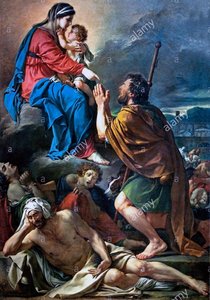
Interestingly, research reveals that this drawing belongs to a series of enigmatic sheets created during David’s exile. These works, often featuring close-up portraits of heads, were gifted to his friends, suggesting a personal and introspective dimension to the artist's creative process. The reference to David’s painting “The Intercession of Saint Roch” (1780) further illuminates this connection—a shared motif of suffering and sacrifice that resonates throughout the series. This earlier work, with its dramatic use of light and shadow, foreshadows the emotional intensity found in "The Prisoner," demonstrating a consistent exploration of human vulnerability.
Beyond its immediate visual impact, “The Prisoner” is rich in symbolic meaning. The chain itself has been interpreted as representing not just physical imprisonment but also the constraints imposed by societal expectations, political ideologies, or perhaps even personal demons. The bowl and plant, while offering a hint of hope, are overshadowed by the figure’s profound sadness—suggesting that even sustenance cannot fully alleviate the burden of suffering. The overall effect is one of quiet desperation, inviting viewers to contemplate the nature of freedom, confinement, and the enduring human capacity for resilience.
David’s technical skill is evident in every meticulously rendered line and subtle gradation of tone. The drawing showcases his mastery of dry pencil technique—a deliberate choice that lends a tactile quality to the image, emphasizing the texture of skin, fabric, and stone. The use of cross-hatching and stippling creates a remarkable sense of depth and volume, bringing the figure to life with an almost haunting realism. “The Prisoner” stands as a testament to David’s artistic genius—a poignant reminder of the power of art to capture not only outward appearances but also the deepest recesses of the human soul. Reproductions of this iconic work offer a unique opportunity to experience its profound emotional impact and appreciate the enduring legacy of one of history's greatest artists.


1748 - 1800 , Γαλλία

Explore the profound mastery of graphite pencil art. From the historical alchemy of carbon to advanced chiaroscuro techniques, learn to navigate grades and shadows like a master. Discover the precision and depth that define the world's most iconic drawings.

Explore the profound history of drawing techniques, from Dürer's precision to the alchemy of graphite. Discover how masters use line, weight, and contour to capture the human spirit in this expert guide to art history and technical mastery.

Explore the profound elegance of Neoclassicism. Discover how Enlightenment ideals, the discovery of Pompeii, and masters like Jacques-Louis David revived the glory of Greek and Roman antiquity through art defined by order, reason, and timeless beauty.


Μείνετε ενημερωμένοι για τις τελευταίες ειδήσεις σχετικά με την τέχνη, αποκλειστικές προσφορές και ιδέες διακόσμησης.
Πείτε μας περισσότερα για το έργο σας και οι ειδικοί μας στην τέχνη θα σας προσφέρουν 3 εξατομικευμένες προτάσεις έργων τέχνης.
Αφήστε μας να επιμεληθούμε 3 επιλογές αποκλειστικά για εσάς – Δωρεάν!


 Δείτε σε πραγματικό χώρο
 Αποστολή
 Κοινοποίηση
 Λεπτομέρειες

 Λήψη
Λήψη
 Παρόμοια αντικείμενα συλλογής
 Ακτινογραφία
 Παρουσίαση
 Διαβάστε περισσότερα







 Η επιλογή με γυαλί είναι διαθέσιμη μόνο για μεγέθη κάτω από 110 εκ.