x

Εκτύπωση giclée ή σε καμβά ποιότητας μουσείου με γρήγορη παραγωγή και ευέλικτες επιλογές φινιρίσματος. ( Αγορά χειροποίητου πίνακα Αγορά ψηφιακής εικόνας)





























Επιλέξτε από τις προκαθορισμένες διαστάσεις μας που διατηρούν τις αρχικές αναλογίες του έργου τέχνης.

Μπορείτε να εισαγάγετε δικές σας διαστάσεις ώστε να ταιριάξουν με ένα συγκεκριμένο πλαίσιο ή χώρο. Εάν το επιλεγμένο μέγεθος δεν συμπίπτει με τις αναλογίες της πρωτότυπης εικόνας, θα κόψουμε το έργο τέχνης ή θα επεκτείνουμε την εικόνα με καθρεφτισμένη ή μονόχρωμη ατέλεια. Θα σας αποσταλεί ένα ψηφιακό mockup για έγκρισή σας πριν από την έναρξη της παραγωγής.
Παρακαλούμε σημειώστε ότι η προεπισκόπηση στην οθόνη δεν αντικατοπτρίζει την πραγματική κοπή ή επέκταση. Μόνο το mockup θα δείξει με ακρίβεια την τελική σύνθεση.
Παρόλο που είναι διαθέσιμες προσαρμοσμένες διαστάσεις, προτείνουμε την επιλογή μιας διάστασης από τη προκαθορισμένη λίστα για τη διατήρηση των αρχικών αναλογιών.
Παγκόσμια Αποστολή () σε 2 εβδομάδες αντί για τις συνήθεις 4/5 εβδομάδες. (18 Αύγουστος)


Charger
Διαστάσεις Αναπαραγωγής

In the vibrant, transformative landscape of nineteenth-century French decorative arts, few names resonate with as much technical brilliance and aesthetic daring as Joseph Théodore Deck. Born in 1823 in the picturesque town of Guebwiller, Alsace, Deck’s journey was one of profound metamorphosis—from a young apprentice navigating the hardships of early loss to a master craftsman who would redefine the very boundaries of ceramic expression. His life was not merely a pursuit of craft, but an obsessive quest to breathe life into clay, turning utilitarian earthenware into luminous, ethereal objects of desire that bridged the gap between Eastern tradition and Western innovation.
The foundations of his mastery were laid in the fires of apprenticeship. Following the untimely death of his parents, a young Deck was thrust into the world of ceramics, learning the intricate secrets of glazing and enamel decoration under the guidance of Victor-to-Joseph Hugelin, a stove builder in Strasbourg. This early exposure to the rugged, functional art of tilework for cast iron stoves provided him with a structural understanding of heat and mineral interaction. As he traveled through the great ceramic hubs of Central Europe—visiting Budapest, Prague, Berlin, and Vienna—he absorbed the diverse vocabularies of master ceramicists, a nomadic education that would later allow him to synthesize a truly international style.
When Deck arrived in Paris, he entered a cultural epicenter hungry for the exotic. The mid-nineteenth century was defined by Japonisme, a feverish fascination with the aesthetics of Japan following its opening to global trade. While many artists merely mimicked Japanese motifs, Deck possessed the rare ability to internalize their soul. He embraced the principles of asymmetry, the delicate balance of negative space, and the subtle gradations of color that characterized Japanese masterpieces. Yet, his vision was not limited to the East; he was equally captivated by the intricate patterns of Islamic art.
His studies at the Musée de Cluny allowed him to immerse himself in the splendor of Iznik ceramics from the Ottoman Empire. He became enamored with the vibrant blues and floral motifs of Turkish pottery, yet, in a stroke of true genius, he refused to be a mere copyist. Instead, he adapted these ancient inspirations, creating his own symmetrical reinterpretations that felt both timeless and modern. This fusion of Japanese restraint and Persian opulence gave rise to what many collectors now recognize as the quintessential "Deck style"—a breathtaking dialogue between different worlds rendered in porcelain and earthenware.
What truly set Deck apart from his contemporaries was his role as a scientific pioneer within the studio. He did not just paint on clay; he manipulated light itself through complex chemical processes. His most celebrated achievement was the development of cuera seca, a sophisticated multi-layered glazing technique that allowed for extraordinary textural depth and a shimmering, translucent finish. Through this method, he could achieve colors that seemed to glow from within the ceramic body, creating surfaces that possessed a liquid, almost holographic quality.
One of his most legendary breakthroughs was the discovery of le bleu de Deck in 1859—an electric, vibrant majolica blue glaze that became a hallmark of his workshop. This innovation, alongside his mastery of underglaze and enamel polychrome decoration, allowed him to produce works that were as much about the chemistry of light as they were about form. His workshop, established in 1856 as Faïences d’Art Théodore Deck, became a laboratory of beauty where he could experiment with the boundaries of what glaze could achieve, influencing major English potteries like Minton and leaving an indelible mark on the history of European art pottery.
The historical significance of Joseph Théodore Deck lies in his ability to "de-industrialize" the potter's art. In an era where mass production was beginning to dominate, Deck championed a return to the artisanal, treating each piece as a singular canvas for painterly expression. His work stands as a bridge between the rigid traditions of the past and the fluid, experimental spirit of the modern age. Today, his pieces are cherished in the world's most prestigious institutions, including the British Museum and the Metropolitan Museum of Art, serving as enduring testaments to a man who saw the infinite possibilities hidden within a simple mound of earth.

1823 - 1891 , France

Explore the rich history of floral painting! Discover symbolism, techniques & masterpieces from Van Huysum to O'Keeffe. Expert insights for art lovers & collectors at Most-Famous-Paintings.

Discover how Victorian botanical art is transforming modern spaces. Explore high-impact floral aesthetics, from Marianne North's tropical drama to bold, hand-painted reproductions that bring vintage scientific beauty into contemporary urban design.

Explore the captivating art of William Stewart MacGeorge, a key figure of the Kirkcudbright School. Discover his fusion of Scottish tradition with Aesthetic and Japonisme influences. Learn about his portraits & landscapes.

Explore the groundbreaking work of John La Farge, a pioneer of American colorism and stained glass. Discover his captivating Japonisme-inspired murals & lasting legacy in 19th-century art. Expert insights for collectors.
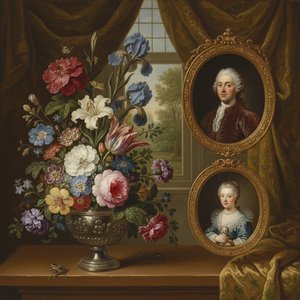
Discover the exquisite detail of Jan van Kessel the Elder's Baroque floral still lifes & captivating miniatures. Explore his artistic legacy, scientific precision, and lasting influence on 17th-century Flemish painting.


Μείνετε ενημερωμένοι για τις τελευταίες ειδήσεις σχετικά με την τέχνη, αποκλειστικές προσφορές και ιδέες διακόσμησης.
Πείτε μας περισσότερα για το έργο σας και οι ειδικοί μας στην τέχνη θα σας προσφέρουν 3 εξατομικευμένες προτάσεις έργων τέχνης.
Αφήστε μας να επιμεληθούμε 3 επιλογές αποκλειστικά για εσάς – Δωρεάν!


 Δείτε σε πραγματικό χώρο
 Αποστολή
 Κοινοποίηση
 Λεπτομέρειες

 Λήψη
Λήψη
 Παρόμοια αντικείμενα συλλογής
 Ακτινογραφία
 Παρουσίαση

 Διαβάστε περισσότερα







 Η επιλογή με γυαλί είναι διαθέσιμη μόνο για μεγέθη κάτω από 110 εκ.