x

Εκτύπωση giclée ή σε καμβά ποιότητας μουσείου με γρήγορη παραγωγή και ευέλικτες επιλογές φινιρίσματος. ( Αγορά χειροποίητου πίνακα Αγορά ψηφιακής εικόνας)
Επιλέξτε από τις προκαθορισμένες διαστάσεις μας που διατηρούν τις αρχικές αναλογίες του έργου τέχνης.

Μπορείτε να εισαγάγετε δικές σας διαστάσεις ώστε να ταιριάξουν με ένα συγκεκριμένο πλαίσιο ή χώρο. Εάν το επιλεγμένο μέγεθος δεν συμπίπτει με τις αναλογίες της πρωτότυπης εικόνας, θα κόψουμε το έργο τέχνης ή θα επεκτείνουμε την εικόνα με καθρεφτισμένη ή μονόχρωμη ατέλεια. Θα σας αποσταλεί ένα ψηφιακό mockup για έγκρισή σας πριν από την έναρξη της παραγωγής.
Παρακαλούμε σημειώστε ότι η προεπισκόπηση στην οθόνη δεν αντικατοπτρίζει την πραγματική κοπή ή επέκταση. Μόνο το mockup θα δείξει με ακρίβεια την τελική σύνθεση.
Παρόλο που είναι διαθέσιμες προσαρμοσμένες διαστάσεις, προτείνουμε την επιλογή μιας διάστασης από τη προκαθορισμένη λίστα για τη διατήρηση των αρχικών αναλογιών.
Παγκόσμια Αποστολή () σε 2 εβδομάδες αντί για τις συνήθεις 4/5 εβδομάδες. (20 Αύγουστος)


Revealed
Διαστάσεις Αναπαραγωγής

In the quiet, deliberate arrangements of Kishio Suga, one finds a profound meditation on the very essence of existence. Born in 1944 in Morioka, Japan, Suga emerged as a pivotal figure in the transformative landscape of post-war Japanese art. His practice is not merely about the creation of objects, but rather about orchestrating an encounter between the viewer, the material, and the void. As a central protagonist of the Mono-ha movement, which rose to prominence in the late 1960s and 1970s, Suga’s work serves as a bridge between the tangible world of raw matter and the intangible realm of spatial perception.
The philosophy underpinning his work is deeply rooted in the concept of "not-making." Unlike traditional sculptors who seek to impose their will upon clay or stone to create representational forms, Suga approaches his medium with a sense of radical humility. He engages with the interdependency of elements, allowing materials to speak through their inherent properties. His practice involves a delicate choreography of natural and industrial substances—stone, steel plates, glass, wood, wire, and water—arranged in states that feel both ephemeral and eternally grounded. Through this method, he invites us to witness the tension and harmony that exist when disparate forces meet within a shared space.
To understand Kishio Suga is to understand the seismic shift brought about by the Mono-ha (School of Things) movement. During a period of intense social and political upheaval in Japan, Suga and his contemporaries sought to strip away the layers of Western-centric abstraction and sculptural ego. Instead, they turned their gaze toward the "thingness" of the world. In Suga’s installations, there is no hierarchy between a heavy slab of granite and a delicate strand of cotton; each element is granted equal importance, contributing to a larger, site-specific dialogue.
His mastery lies in his ability to manipulate the perceptual boundaries of a room. By placing a steel plate atop a wooden block or allowing light to interact with glass and oil, he creates a sense of "site-specificity" that transcends mere placement. The work is never finished until it is integrated into its environment; the surrounding air, the floor, and even the viewer's movement become essential components of the piece. This approach challenges the traditional notion of art as a portable commodity, instead presenting it as an experiential event that exists in a delicate balance with its surroundings.
Throughout his long and distinguished career, Suga has continued to refine this language of minimal intervention. His achievements are marked by a consistent ability to evoke deep emotional responses through seemingly simple gestures. He does not demand attention through spectacle; rather, he commands it through a quiet, undeniable presence. His work remains a cornerstone of contemporary installation art, influencing generations of artists who seek to explore the boundaries between the physical and the metaphysical.
The historical significance of Kishio Suga resides in his contribution to a new way of seeing. He has taught us that:

1944 - , Japan
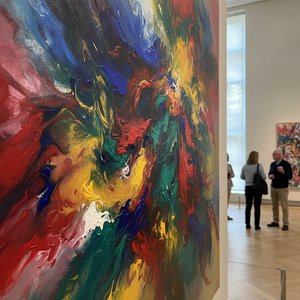
Explore the profound emotional depth of Lyrical Abstraction. Discover how masters like Raymond Parker used color and form to bridge Impressionism and Abstract Expressionism. Learn about this pivotal movement through our expert-led art history guide.

Explore the profound emotional depth of Color Field painting. Discover the history of mid-century abstraction, from Rothko to Newman, and learn how pure color transforms the viewer's experience through our expert art history guide.


Μείνετε ενημερωμένοι για τις τελευταίες ειδήσεις σχετικά με την τέχνη, αποκλειστικές προσφορές και ιδέες διακόσμησης.
Πείτε μας περισσότερα για το έργο σας και οι ειδικοί μας στην τέχνη θα σας προσφέρουν 3 εξατομικευμένες προτάσεις έργων τέχνης.
Αφήστε μας να επιμεληθούμε 3 επιλογές αποκλειστικά για εσάς – Δωρεάν!


 Δείτε σε πραγματικό χώρο
 Αποστολή
 Κοινοποίηση
 Λεπτομέρειες

 Λήψη
Λήψη
 Παρόμοια αντικείμενα συλλογής
 Ακτινογραφία
 Παρουσίαση

 Διαβάστε περισσότερα




































 Η επιλογή με γυαλί είναι διαθέσιμη μόνο για μεγέθη κάτω από 110 εκ.