x

 Oil On CanvasWallArtEarly Netherlandish Painting
 1508
1508 73.0 x 53.0 cm
 Kunstmuseum Basel
Εκτύπωση giclée ή σε καμβά ποιότητας μουσείου με γρήγορη παραγωγή και ευέλικτες επιλογές φινιρίσματος. ( Αγορά χειροποίητου πίνακα Αγορά ψηφιακής εικόνας)





























Επιλέξτε από τις προκαθορισμένες διαστάσεις μας που διατηρούν τις αρχικές αναλογίες του έργου τέχνης.

Μπορείτε να εισαγάγετε δικές σας διαστάσεις ώστε να ταιριάξουν με ένα συγκεκριμένο πλαίσιο ή χώρο. Εάν το επιλεγμένο μέγεθος δεν συμπίπτει με τις αναλογίες της πρωτότυπης εικόνας, θα κόψουμε το έργο τέχνης ή θα επεκτείνουμε την εικόνα με καθρεφτισμένη ή μονόχρωμη ατέλεια. Θα σας αποσταλεί ένα ψηφιακό mockup για έγκρισή σας πριν από την έναρξη της παραγωγής.
Παρακαλούμε σημειώστε ότι η προεπισκόπηση στην οθόνη δεν αντικατοπτρίζει την πραγματική κοπή ή επέκταση. Μόνο το mockup θα δείξει με ακρίβεια την τελική σύνθεση.
Παρόλο που είναι διαθέσιμες προσαρμοσμένες διαστάσεις, προτείνουμε την επιλογή μιας διάστασης από τη προκαθορισμένη λίστα για τη διατήρηση των αρχικών αναλογιών.
Παγκόσμια Αποστολή () σε 2 εβδομάδες αντί για τις συνήθεις 4/5 εβδομάδες. (20 Αύγουστος)


Calvary
Διαστάσεις Αναπαραγωγής
Matthias Grünewald's “Calvary,” painted in 1508, isn’t merely a depiction of the crucifixion; it’s a visceral plunge into the heart of human suffering and spiritual torment. Born in Würzburg around 1470, Grünewald stood as a pivotal figure bridging the late medieval artistic traditions of Northern Europe with the nascent fervor of the Renaissance. Unlike his Italian counterparts who embraced humanist ideals, Grünewald remained deeply rooted in the emotional intensity and meticulous observation characteristic of his region, creating an artwork profoundly shaped by religious devotion rather than secular concerns. This painting, now housed at the Kunstmuseum Basel, is a testament to this unique approach – a raw, unflinching portrayal of Christ’s sacrifice that continues to resonate with viewers centuries later.
The composition itself immediately commands attention. Grünewald employs a pyramidal structure, anchoring the scene around the central figure of Christ on the cross. His body, rendered with an almost brutal realism, is contorted in agony, muscles straining under the weight of his torment. The figures surrounding him – Mary weeping, John the Evangelist recoiling in horror, and onlookers expressing disbelief – are not idealized representations but rather embodiments of human emotion: grief, despair, and confusion. The tight arrangement within the frame creates a claustrophobic atmosphere, intensifying the sense of tragedy and drawing the viewer directly into the scene’s unbearable weight.
Grünewald's masterful technique is immediately apparent in the painting’s rich textures and dramatic use of color. He eschewed the smooth, polished surfaces favored by some Renaissance artists, opting instead for a deliberately rough and uneven application of oil paint. This creates a tactile quality, inviting viewers to almost feel the grit beneath their fingertips. The palette is dominated by muted browns, ochres, and deep reds – colors that evoke both the earthiness of the landscape and the blood spilled on Christ’s body. Highlights of white accentuate Christ's flesh, drawing attention to his suffering while simultaneously emphasizing the stark contrast between life and death.
The artist’s layering technique is particularly noteworthy. Grünewald built up form through multiple thin layers of paint, creating a sense of depth and volume that belies the painting’s relatively small scale. The use of linear perspective, though somewhat flattened compared to later Renaissance works, effectively guides the viewer's eye towards Christ at the apex of the composition. The careful rendering of drapery – the heavy folds of Christ’s tunic and the flowing garments of the onlookers – adds another layer of visual complexity, demonstrating Grünewald’s exceptional skill in capturing the nuances of fabric.
“Calvary” is laden with symbolic meaning. The stark landscape, devoid of any comforting details, represents the desolate reality of Christ's abandonment. The instruments of torture – the nails, the beam, the rope – are not merely props but potent symbols of human cruelty and divine suffering. The expressions on the faces of the onlookers range from sorrow to disbelief, reflecting the profound theological implications of Christ’s sacrifice: a rejection of worldly power and an affirmation of faith in the face of unimaginable pain.
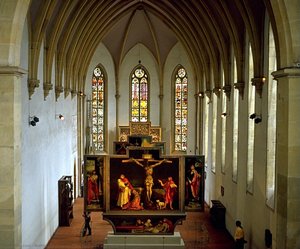
Furthermore, the painting's placement within the Isenheim Altarpiece—a larger work featuring multiple scenes from the life of Christ—contributes to its overall significance. “Calvary” serves as a pivotal moment within this complex narrative, embodying both the physical agony and the spiritual redemption offered by Christ’s death. The altarpiece as a whole was designed to be viewed in different configurations, offering viewers a multifaceted experience of faith and suffering.
Matthias Grünewald's “Calvary” stands as a landmark achievement in Northern Renaissance art. His willingness to embrace emotional intensity and unflinching realism set him apart from his contemporaries, forging a unique artistic voice that continues to captivate viewers today. The painting’s enduring power lies not only in its technical brilliance but also in its profound exploration of human suffering and spiritual longing. It is a work that demands contemplation, inviting us to confront the uncomfortable truths about mortality, faith, and the nature of sacrifice – a timeless masterpiece that transcends its historical context.

Ο Matthias Grünewald, γεννημένος ως Mathis Gothart Neithardt γύρω στα 1470-1475 στη Βύργερς της Γερμανίας, υπήρξε μια κομβική προσωπικότητα της Γερμανικής Αναγέννησης. Παρά το γεγονός ότι έζησε σε μια εποχή που επηρεαζόταν ολοένα και περισσότερο από τα ιδεα toasted της Ιταλικής Αναγέννησης, ο Grünewæld παρέμεινε βαθιά ριζωμένος στις καλλιτεχνικές παραδόσεις της μεταβυzantineάς Κεντρικής Ευρώπης. Τα στοιχεία για την πρώιμη ζωή του είναι σπάνια, όμως γνωρίζουμε ότι εκπαιδεύτηκε ως καλλιτέχνης, πιθανότατα μέσα από τα τοπικά εργαστήρια της εποχής.
Η καλλιτεχνική εξέλιξη του Grünewald διαμορφώθηκε από τις επικρατούσες Βορειοευρωπαϊκές παραδόσεις του ρεαλισμού, της συναισθηματικής έντασης και της λεπτομερούς παρατήρησης. Το έργο του φέρει επιρροές καλλιτεχνών όπως ο Albrecht Dürer και ο Martin Schongauer, όμως εκείνος κατάφερε να ανοίξει ένα μοναδικό μονοπάτι, χαρακτηρισμένο από δραματική έκφραση και ζωντανή χρωματική παλέτα. Δεν συμμετείχε άμεσα στους ανθρωπιστικούς κύκλους που κυριαρχούσαν στην Ιταλία· αντίθετα, η τέχνη του εξυπηρέτησε πρωτίστως θρησκευτικούς σκοπούς, αντικατοπτρίζοντας τα πνευματικά απειλές και τις ανησυχίες της εποχής του.
Το στυλ του Grünewald ξεχωρίζει για τα εξής στοιχεία:
Το έργο του Grünewald αποτελεί μια μαρτυρία για την αδιάλειπτη δύναμη των μεσαιωνικών καλλιτεχνικών παραδόσεων στη Γερμανία κατά την περίοδο της Αναγέννησης. Κατάφερε να γεφυρώσει το χάσμα μεταξύ του όψιμου γοτθικού στυλ και της αναδυόμενης Αναγέννησης, δημιουργώντας μια μοναδική οπτική γλώσσα που βρήκε ανταπόκριση στους σύγχρονούς του. Η επιρροή του μπορεί να δειθεί σε μεταγενέστερους Γερμανούς καλλιτέχνες που συνέχισαν να εξερευνούν θέματα θρησκευτικής έντασης και συναισθηματικού πάθους. Παρόλο που παρέμεινε σε μεγάλο βαθμό ξεχασμένος για αιώνες μετά τον θάνατό του το 1528, ο Grünewald γνώρισε μια αναβίωση στον 19ο αιώνα και σήμερα αναγνωρίζεται ως ένας από τους σημαντικότερους ζωγράφους της Γερμανικής Αναγέννησης. Η τέχνη του συνεχίζει να μαγεύει τους θεατές με το ωμό συναίσθημά της, την τεχνική της λαμπρότητα και το βαθύ πνευματικό της βάθος.
Ανακαλύψτε περισσότερα για τη ζωή και τα έργα του Matthias Grünewald στο: Most-Famous-Paintings

1480 - 1528 , Γερμανία

Explore the profound beauty of the Early Netherlandish Renaissance. Discover how masters like Jan van Eyck revolutionized art through oil painting, light, and symbolism. A definitive guide for history lovers and collectors seeking to understand the Northern Renaissance.

Explore the luminous mastery of Early Netherlandish painting. Discover how Jan van Eyck and the Flemish masters revolutionized art through oil innovation, hyper-realism, and profound symbolism in this expert guide to the Northern Renaissance.


Μείνετε ενημερωμένοι για τις τελευταίες ειδήσεις σχετικά με την τέχνη, αποκλειστικές προσφορές και ιδέες διακόσμησης.
Πείτε μας περισσότερα για το έργο σας και οι ειδικοί μας στην τέχνη θα σας προσφέρουν 3 εξατομικευμένες προτάσεις έργων τέχνης.
Αφήστε μας να επιμεληθούμε 3 επιλογές αποκλειστικά για εσάς – Δωρεάν!


 Δείτε σε πραγματικό χώρο
 Αποστολή
 Κοινοποίηση
 Λεπτομέρειες

 Λήψη
Λήψη
 Παρόμοια αντικείμενα συλλογής
 Ακτινογραφία
 Παρουσίαση
 Διαβάστε περισσότερα







 Η επιλογή με γυαλί είναι διαθέσιμη μόνο για μεγέθη κάτω από 110 εκ.