


x

Χειροποίητη oil painting σε καμβά στο δικό σας μέγεθος και πλαίσιο, κατά παραγγελία από τους καλλιτέχνες μας. ( Αγορά εκτύπωσης Αγορά ψηφιακής εικόνας)
Επιλέξτε από τις προκαθορισμένες διαστάσεις μας που διατηρούν τις αρχικές αναλογίες του έργου τέχνης.

Μπορείτε να ορίσετε δικές σας διαστάσεις ώστε το έργο να ταιριάζει σε ένα συγκεκριμένο πλαίσιο ή χώρο. Εάν το επιλεγμένο μέγεθος δεν συμπίπτει με τις αναλογίες της αρχικής εικόνας, θα περικοψούμε το έργο ή θα επεκτείνουμε τη ζωγραφιά με πρόσθετα χειρόγραφα στοιχεία. Ένα ψηφιακό προσχέδιο θα σας αποσταλεί για έγκριση πριν την έναρξη της παραγωγής.
Παρακαλούμε σημειώστε ότι η προεπισκόπηση στην οθόνη δεν αντικατοπτρίζει την πραγματική περικοπή ή επέκταση. Μόνο το προσχέδιο θα δείξει με ακρίβεια την τελική σύνθεση.
Παρόλο που είναι διαθέσιμα προσαρμοσμένα μεγέθη, συνιστούμε να επιλέξετε μια διάσταση από τη λίστα των προκαθορισμένων μεγεθών για τη διατήρηση των αρχικών αναλογιών.
Παγκόσμια Αποστολή () σε 3-4 εβδομάδες αντί για τις συνήθεις 5 εβδομάδες. (17 Αύγουστος). Χωρίς συμβιβασμούς στην ποιότητα.


Annunciation
Διαστάσεις Αναπαραγωγής
Melozzo da Forlì (c. 1438 – 8 November 1494) remains a figure shrouded in mystery within the annals of Renaissance art, yet his contribution to artistic innovation—particularly the masterful application of perspective—is undeniable. Born around 1438 in Forlì, Italy, he ascended from humble beginnings as a journeyman and color-grinder to become one of the foremost fresco painters of his era, profoundly influencing artists like Raphael and Andrea Mantegna.
Details surrounding Melozzo’s early life are scarce; it is believed he hailed from a prosperous family named Ambrosi, and likely received his initial artistic training within the Forlivese school, absorbing stylistic currents shaped by masters such as Ansuino da Forlì—himself deeply impacted by Andrea Mantegna's groundbreaking explorations of spatial illusion. Some accounts even suggest a formative period spent mastering techniques alongside Antoniazzo Romano, fostering a collaborative spirit that propelled artistic experimentation.
His career blossomed in Urbino between 1465 and 1474, where he encountered Piero della Francesca—a pivotal encounter that cemented Melozzo’s stylistic allegiance to linear perspective and imbued his work with an unwavering commitment to realism. Furthermore, he studied architecture alongside Bramante and the Flemish painters working for Federico da Montefeltro, broadening his artistic horizons and enriching his understanding of visual representation.
Melozzo’s genius lay primarily in his unparalleled skill at fresco painting—a technique demanding meticulous planning and execution. Unlike tempera or oil paint, fresco utilizes pigments mixed with lime plaster applied directly onto wet masonry walls, resulting in durable, luminous images that withstand the test of time. Melozzo's mastery extended beyond mere replication; he skillfully manipulated tonal gradations and shading to create astonishingly convincing three-dimensional effects—a feat unheard of at the time.
His most celebrated achievement is undoubtedly his monumental decoration of the Pantheon in Rome, where he undertook a commission that would solidify his reputation as one of the foremost artists of his generation. The fresco cycle depicts scenes from biblical narratives with remarkable detail and psychological depth, showcasing Melozzo’s ability to convey emotion and narrative complexity within a constrained spatial framework.
Melozzo's artistic vision was characterized by an unwavering dedication to observation and anatomical accuracy—traits that mirrored the humanist ideals prevalent during the Renaissance. He meticulously studied human anatomy, striving to depict figures with lifelike realism, reflecting a burgeoning interest in scientific inquiry alongside aesthetic beauty.
Perhaps his most significant contribution was the pioneering use of foreshortening—a technique that dramatically alters perspective to create an illusion of depth and space. This innovation revolutionized painting practice, influencing subsequent generations of artists and establishing Melozzo da Forlì as a cornerstone of Renaissance artistic achievement. His frescoes stand as enduring testament to his genius and the transformative power of visual representation.
Melozzo’s influence extended far beyond his immediate contemporaries. Raphael, Andrea Mantegna, and countless other artists acknowledged his profound impact on their own stylistic development—a legacy that continues to inspire admiration and scholarly study today. Melozzo da Forlì's unwavering pursuit of artistic excellence cemented his place as a pivotal figure in the history of art, ensuring that his groundbreaking techniques and visionary aesthetic would resonate through centuries.


1438 - 1494
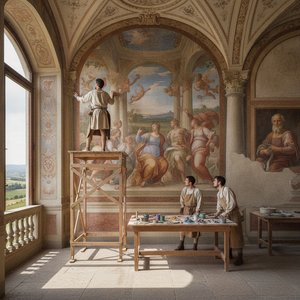
Explore the profound history and technical mastery of fresco painting. From ancient Roman murals to Michelangelo's Sistine Chapel, discover the enduring chemistry and artistry behind this timeless wall painting technique used by the world's greatest masters.


Μείνετε ενημερωμένοι για τις τελευταίες ειδήσεις σχετικά με την τέχνη, αποκλειστικές προσφορές και ιδέες διακόσμησης.
Πείτε μας περισσότερα για το έργο σας και οι ειδικοί μας στην τέχνη θα σας προσφέρουν 3 εξατομικευμένες προτάσεις έργων τέχνης.
Αφήστε μας να επιμεληθούμε 3 επιλογές αποκλειστικά για εσάς – Δωρεάν!


 Αποστολή
 Κοινοποίηση
 Λεπτομέρειες

 Λήψη
Λήψη
 Παρόμοια αντικείμενα συλλογής
 Παρουσίαση


 Διαβάστε περισσότερα




































 Η επιλογή με γυαλί είναι διαθέσιμη μόνο για μεγέθη κάτω από 110 εκ.


![Scrovegni - Last Judgment (detail) [01] — Τζιόττο Ντι Μποντόνε, Proto-renaissance](/media/artworks/images/thumbnails/bc/d0/bcd0b6f1b5274c808b0801509d350235.jpg)


