x

 Oil On PaperAbstract Modernism
 1942
1942 87.0 x 112.0 cm
 Γκαλερί Τέχνης Νέας Νοσάουθ Γουόλες
Εκτύπωση giclée ή σε καμβά ποιότητας μουσείου με γρήγορη παραγωγή και ευέλικτες επιλογές φινιρίσματος. ( Αγορά χειροποίητου πίνακα Αγορά ψηφιακής εικόνας)





























Επιλέξτε από τις προκαθορισμένες διαστάσεις μας που διατηρούν τις αρχικές αναλογίες του έργου τέχνης.

Μπορείτε να εισαγάγετε δικές σας διαστάσεις ώστε να ταιριάξουν με ένα συγκεκριμένο πλαίσιο ή χώρο. Εάν το επιλεγμένο μέγεθος δεν συμπίπτει με τις αναλογίες της πρωτότυπης εικόνας, θα κόψουμε το έργο τέχνης ή θα επεκτείνουμε την εικόνα με καθρεφτισμένη ή μονόχρωμη ατέλεια. Θα σας αποσταλεί ένα ψηφιακό mockup για έγκρισή σας πριν από την έναρξη της παραγωγής.
Παρακαλούμε σημειώστε ότι η προεπισκόπηση στην οθόνη δεν αντικατοπτρίζει την πραγματική κοπή ή επέκταση. Μόνο το mockup θα δείξει με ακρίβεια την τελική σύνθεση.
Παρόλο που είναι διαθέσιμες προσαρμοσμένες διαστάσεις, προτείνουμε την επιλογή μιας διάστασης από τη προκαθορισμένη λίστα για τη διατήρηση των αρχικών αναλογιών.
Παγκόσμια Αποστολή () σε 2 εβδομάδες αντί για τις συνήθεις 4/5 εβδομάδες. (17 Αύγουστος)


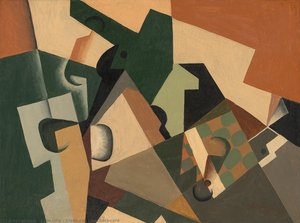
Construction in green
Διαστάσεις Αναπαραγωγής
Ralph Balson’s “Construction in Green,” painted in 1942, is more than just an abstract composition; it’s a window into the burgeoning modernist movement in Australia and a testament to Balson’s pioneering spirit. The artwork, measuring 87 x 112 cm, presents a captivating interplay of form and color against a dominant field of green. It's a piece that invites contemplation, drawing the viewer into its geometric world while simultaneously evoking a sense of quiet dynamism.
At first glance, "Construction in Green" appears deceptively simple. A vibrant green background serves as the canvas for a scattering of circular forms – at least twelve distinct circles of varying sizes are present. These aren't organic shapes; they’re precise, geometric constructions that seem deliberately placed within the composition. Balson, having explored cubist principles earlier in his career (1934-1937 at the Crowley-Fizelle School), moved decisively towards complete abstraction during this period. This work exemplifies that shift, marking a departure from representational art and embracing the pure language of form and color. The year 1942 was pivotal; Balson’s exhibition showcasing entirely non-figurative work in Sydney was groundbreaking, establishing him as a key figure in Australia's modernist landscape. He wasn't merely following European trends but forging his own path, adapting abstract principles to the Australian context.
The choice of green is significant. It’s not a passive backdrop; it pulsates with life, suggesting growth, nature, and perhaps even a sense of hope amidst the anxieties of wartime. The circles themselves are rendered in a range of colors – reds, yellows, blues—each carefully positioned to create visual tension and balance. They aren't randomly distributed; there’s a deliberate choreography at play. Some cluster near the top left corner, while others anchor the composition towards the center or bottom right. This arrangement creates a sense of movement within the stillness of the abstract form. Balson’s technique, though seemingly straightforward—oil on paperboard—demonstrates a mastery of color relationships and spatial dynamics. The flatness of the picture plane, characteristic of his later style, emphasizes the two-dimensionality of the canvas, further distancing the work from any illusionistic depth.
While abstract art often resists easy interpretation, "Construction in Green" possesses a subtle emotional power. The circles could be seen as representing various elements – perhaps planets orbiting a central point, or even simplified representations of human figures engaged in an unseen activity. The overall effect is one of quiet contemplation and restrained energy. It’s not a chaotic explosion of color but rather a carefully orchestrated harmony. Balson's later work, influenced by Piet Mondrian, further refined this approach, moving towards rectilinear shapes and softer palettes. However, "Construction in Green" retains a unique vibrancy—a testament to the artist’s early explorations into the possibilities of abstract expression. Owning a reproduction of this piece is not just acquiring an artwork; it's embracing a moment in Australian art history and inviting a sense of calm, considered beauty into your space.


1890 - 1964 , United Kingdom

Discover the profound emotional depth and investment potential of contemporary abstraction. Our expert guide explores how texture, movement, and form create timeless value for discerning art collectors and sophisticated interiors.


Μείνετε ενημερωμένοι για τις τελευταίες ειδήσεις σχετικά με την τέχνη, αποκλειστικές προσφορές και ιδέες διακόσμησης.
Πείτε μας περισσότερα για το έργο σας και οι ειδικοί μας στην τέχνη θα σας προσφέρουν 3 εξατομικευμένες προτάσεις έργων τέχνης.
Αφήστε μας να επιμεληθούμε 3 επιλογές αποκλειστικά για εσάς – Δωρεάν!


 Δείτε σε πραγματικό χώρο
 Αποστολή
 Κοινοποίηση
 Λεπτομέρειες

 Λήψη
Λήψη
 Παρόμοια αντικείμενα συλλογής
 Ακτινογραφία
 Παρουσίαση
 Διαβάστε περισσότερα







 Η επιλογή με γυαλί είναι διαθέσιμη μόνο για μεγέθη κάτω από 110 εκ.