x

 Oil On PanelEarly Netherlandish Renaissance
 1435Renaissance
 220.0 x 262.0 cm
 Μουσείο του Πράδο
Χειροποίητη oil painting σε καμβά στο δικό σας μέγεθος και πλαίσιο, κατά παραγγελία από τους καλλιτέχνες μας. ( Αγορά εκτύπωσης Αγορά ψηφιακής εικόνας)





























Επιλέξτε από τις προκαθορισμένες διαστάσεις μας που διατηρούν τις αρχικές αναλογίες του έργου τέχνης.

Μπορείτε να ορίσετε δικές σας διαστάσεις ώστε το έργο να ταιριάζει σε ένα συγκεκριμένο πλαίσιο ή χώρο. Εάν το επιλεγμένο μέγεθος δεν συμπίπτει με τις αναλογίες της αρχικής εικόνας, θα περικοψούμε το έργο ή θα επεκτείνουμε τη ζωγραφιά με πρόσθετα χειρόγραφα στοιχεία. Ένα ψηφιακό προσχέδιο θα σας αποσταλεί για έγκριση πριν την έναρξη της παραγωγής.
Παρακαλούμε σημειώστε ότι η προεπισκόπηση στην οθόνη δεν αντικατοπτρίζει την πραγματική περικοπή ή επέκταση. Μόνο το προσχέδιο θα δείξει με ακρίβεια την τελική σύνθεση.
Παρόλο που είναι διαθέσιμα προσαρμοσμένα μεγέθη, συνιστούμε να επιλέξετε μια διάσταση από τη λίστα των προκαθορισμένων μεγεθών για τη διατήρηση των αρχικών αναλογιών.
Παγκόσμια Αποστολή () σε 3-4 εβδομάδες αντί για τις συνήθεις 5 εβδομάδες. (19 Αύγουστος). Χωρίς συμβιβασμούς στην ποιότητα.


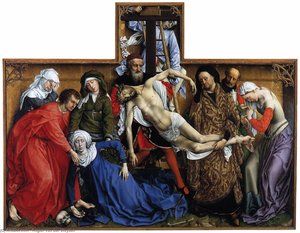
Deposition
Διαστάσεις Αναπαραγωγής
In the quiet, hallowed halls of art history, few works command the soul with such immediate, visceral intensity as Rogier van der Weyden’s Deposition. Completed around 1435, this monumental panel painting is not merely a depiction of a biblical event; it is a profound psychological landscape that captures the very essence of human sorrow. The scene unfolds with a breathtaking sense of drama, portraying the moment Christ is lowered from the cross, his lifeless body supported by those who loved him most. As the viewer gazes upon this sacred tableau, they are not just observers of a historical narrative, but witnesses to an intimate, agonizing farewell. The composition is a masterclass in emotional architecture, where every slumped shoulder and tear-streaked face contributes to a collective experience of mourning that transcends the centuries.
The technical brilliance of Van der Weyden lies in his ability to marry the meticulous precision of the Early Netherlandish tradition with an unprecedented emotional depth. Utilizing a refined approach to sfumato, the artist subtly blends colors to create soft, atmospheric transitions that lend a lifelike quality to the figures. His background as a trained goldsmith is evident in the exquisite rendering of textures; one can almost feel the heavy weight of the velvet drapery, the coldness of the skin, and the intricate details of the garments. This hyper-realistic approach serves a higher purpose: by making the physical world so tangible, he makes the spiritual suffering of the figures undeniably real. The vibrant primary colors—deep reds, celestial blues, and stark whites—are not merely decorative but serve to guide the eye through the complex choreography of grief.
Every element within this composition is laden with symbolic significance, designed to invite deep contemplation. The arrangement of the figures creates a striking visual rhythm, often noted for its T-shaped configuration which subtly echoes the shape of a crossbow—a nod to the Leuven Guild of Archers who commissioned this magnificent altarpiece. Mary, the Mother of Christ, serves as the emotional anchor of the work; her posture of profound humility and maternal compassion mirrors the limp, broken form of her son. This mirroring of physical states suggests a spiritual unity in their suffering. Even the light within the painting plays a narrative role, illuminating the faces of the mourners to highlight their individual reactions—from the stoic strength of Nicodemus to the frantic devotion of Mary Magdalene.
For the discerning collector or interior designer, a high-quality reproduction of this masterpiece offers more than just aesthetic beauty; it brings a sense of historical gravity and intellectual depth to a space. The Deposition is a testament to the power of art to capture the most complex human emotions. Whether placed in a curated gallery setting or as a focal point in a sophisticated study, this work inspires a mood of reverence and quiet reflection. It stands as an enduring icon of the Burgundian Renaissance, reminding us that true beauty often resides in the most vulnerable and profound moments of the human condition.


1400 - 1464 , Βέλγιο

Ανακαλύψτε τα 10 αριστουργήματα της Πρώιμης Φλαμανδικής Αναγέννησης! Jan van Eyck, Rogier van der Weyden & άλλοι δάσκαλοι. Ιστορία τέχνης, συμβολισμός και εκπληκτικές αναπαραγωγές υψηλής ποιότητας στην Most-Famous-Paintings.
Ανακαλύψτε τους 25 κορυφαίους πίνακες του Vincent van Gogh! Ιμπρεσιονισμός, μετα-ιμπρεσιονισμός & η συγκλονιστική ιστορία της τέχνης του. Βρείτε αναπαραγωγές υψηλής ποιότητας για να εμπνεύσετε τον χώρο σας. Εξερευνήστε την πλήρη συλλογή στο Most-Famous-Paintings.com

Explore the revolutionary art of Rogier van der Weyden, a pivotal figure of the Early Netherlandish Renaissance. Discover his emotional realism, innovative compositions, and lasting impact on painting history.

Ανακαλύψτε τα 10 αριστουργήματα που καθόρισαν την Πρώιμη Φλαμανδική Ζωγραφική! Jan van Eyck, Rogier van der Weyden & άλλοι δάσκαλοι. Ιστορία τέχνης, συμβολισμός και τεχνικές σε καμβά. Βρείτε πίνακες για διακόσμηση στο Most-Famous-Paintings.com.

Explore the revolutionary art of Hugo van der Goes – a master of Early Netherlandish painting renowned for his dramatic realism, psychological depth & profound influence on Renaissance artists. Discover his iconic works and lasting legacy.


Μείνετε ενημερωμένοι για τις τελευταίες ειδήσεις σχετικά με την τέχνη, αποκλειστικές προσφορές και ιδέες διακόσμησης.
Πείτε μας περισσότερα για το έργο σας και οι ειδικοί μας στην τέχνη θα σας προσφέρουν 3 εξατομικευμένες προτάσεις έργων τέχνης.
Αφήστε μας να επιμεληθούμε 3 επιλογές αποκλειστικά για εσάς – Δωρεάν!


 Δείτε σε πραγματικό χώρο
 Αποστολή
 Κοινοποίηση
 Λεπτομέρειες

 Λήψη
Λήψη
 Παρόμοια αντικείμενα συλλογής
 Ακτινογραφία
 Παρουσίαση
 Διαβάστε περισσότερα







 Η επιλογή με γυαλί είναι διαθέσιμη μόνο για μεγέθη κάτω από 110 εκ.