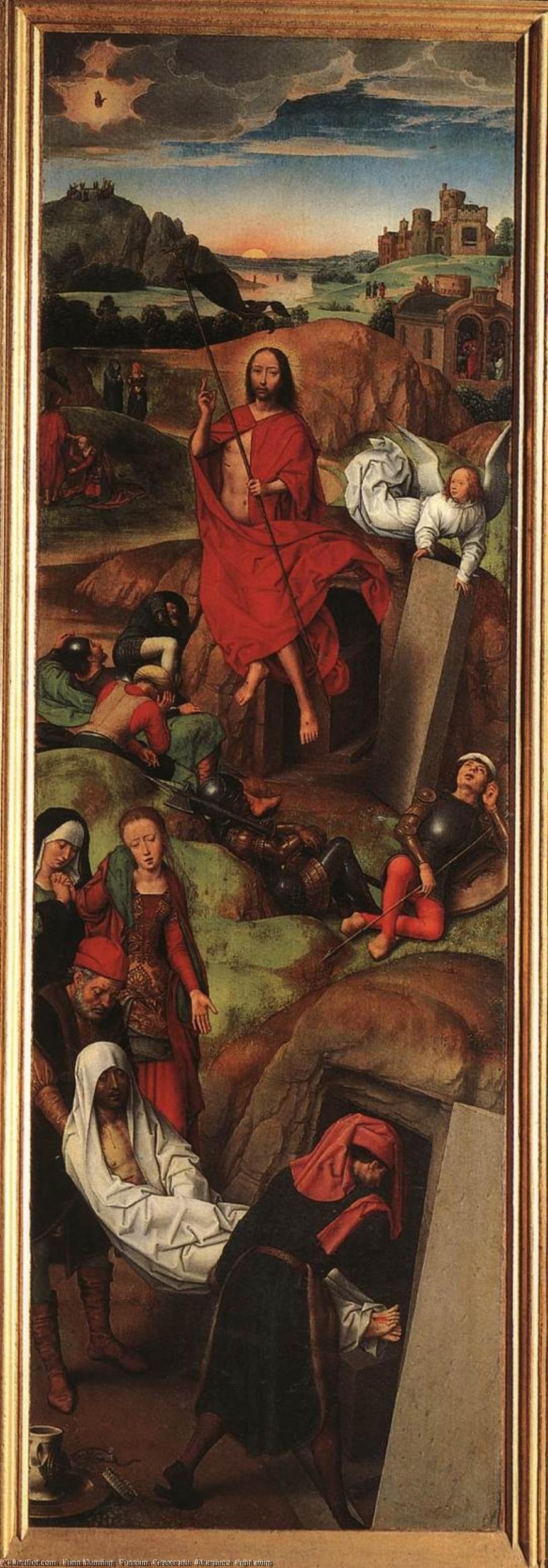
Passion (Greverade) Altarpiece (right wing) – A Window into Early Netherlandish Devotion
Most-Famous-Paintings.com presents a breathtaking hand-painted reproduction of Hans Memling’s “Passion (Greverade) Altarpiece” – specifically, the right wing panel from this monumental devotional work. Completed in 1491, this piece offers an unparalleled glimpse into the artistic and spiritual landscape of early 15th-century Bruges, a city then at the heart of European trade and religious patronage. Measuring 205 x 75 cm, the scale invites contemplation, drawing the viewer into the intensely emotional scene depicted.
The Scene: A Moment of Profound Sorrow
This particular panel captures a pivotal moment within the Passion narrative – the crucifixion of Christ. Memling masterfully portrays Jesus on the cross, his body rendered with an almost sculptural realism that speaks to his deep understanding of human anatomy and emotion. The figures surrounding the cross are not merely observers; they are participants in this profound act of suffering and sacrifice. Their postures—some standing in horrified reverence, others offering gestures of comfort—evoke a palpable sense of grief and devotion. The inclusion of two horses, strategically placed within the background, adds to the dramatic intensity of the scene, hinting at the Roman Empire’s role in Christ's demise.
- Subject Matter: Crucifixion of Jesus Christ
- Key Figures: Jesus Christ, surrounding mourners and witnesses
- Composition: Dynamic arrangement emphasizing emotional impact
Hans Memling’s Masterful Technique
Hans Memling was a true master of the Early Netherlandish style, renowned for his meticulous attention to detail and his ability to imbue his paintings with profound spiritual meaning. Trained under Rogier van der Weyden, Memling inherited a legacy of technical brilliance, particularly in the use of oil paint – a relatively new medium at the time that allowed for unprecedented levels of realism and luminosity. Notice the subtle gradations of color, the delicate rendering of fabrics, and the precise modeling of forms. These elements combine to create an image of astonishing depth and texture. The painting’s surface is treated with a glazing technique, building up layers of translucent paint to achieve a rich, jewel-like quality.
Key Techniques:
- Oil Paint Application: Utilizing the properties of oil paint for realism and luminosity
- Glazing Technique: Layering translucent paints to create depth and richness
- Sculptural Modeling: Precise rendering of form, reflecting Memling’s understanding of human anatomy
Symbolism and Historical Context
The “Passion (Greverade) Altarpiece” was commissioned for the Greverade Chapel in Bruges, a testament to the city's wealth and devotion. The altarpiece reflects the broader religious fervor of the late medieval period, when pilgrimages, relics, and devotional art played a central role in European life. The scene itself is laden with symbolism – the cross representing sacrifice and redemption, the figures embodying faith, sorrow, and compassion. Memling’s work aligns perfectly with the artistic trends of Bruges during this time, a city that became a major center for religious art production, attracting artists from across Europe.
Historical Context:
- Late Medieval Period: Heightened religious devotion and patronage
- Bruges as a Center of Art: A hub for artistic innovation and production
- Symbolic Representation: The use of imagery to convey spiritual meaning
Emotional Impact & Reproduction
This hand-painted reproduction captures the essence of Memling’s masterpiece, offering an authentic representation of this powerful religious scene. It's more than just a print; it's a work of art in its own right, imbued with the same emotional depth and spiritual resonance as the original. Perfect for adorning a chapel, a study, or any space where contemplation and reverence are valued, this reproduction is an investment in beauty, history, and enduring artistic legacy.