


x

 AcrylicWallArtRomantic Portraiture
 1806
1806 126.0 x 100.0 cm
 University College
Hand-painted oil on canvas in your size and frame, made to order by our artists. ( Buy Print Buy Image)





























Pick from our preset sizes that match the artwork's original proportions.

You may enter your own dimensions to fit a specific frame or space. If your selected size does not match the original image's proportions, we will either crop the artwork or extend the painting with additional hand-painted elements. A digital mockup will be sent for your approval before production begins.
Please note that the on-screen preview does not reflect the actual cropping or extension. Only the mockup will accurately show the final composition.
While custom sizes are available, we recommend selecting a dimension from the predefined list to preserve the original proportions.
Worldwide Delivery () in 3/4 weeks instead of standard 5 weeks. (20 August). No compromise on quality.


Sir William Scott (1745–1836), afterwards Baron Stowell, Elder Brother of the Earl of Eldon, Fellow (1764), Judge of the High Court of the Admiralty
Reproduction Size
John Hoppner's 1806 portrait of Sir William Scott, later Baron Stowell, stands as a testament to the Romantic era’s fascination with intellect and aristocratic bearing. Executed during Scott’s distinguished legal career – culminating in his appointment as Judge of the Admiralty – this canvas transcends mere likeness; it embodies the spirit of a man deeply invested in scholarship and public service.
The painting depicts Scott seated formally, bathed in soft light emanating from behind a crimson curtain. His gaze is direct yet contemplative, conveying an air of quiet authority. The inclusion of two chairs flanking him reinforces the impression of solemn deliberation, while a book resting on his lap subtly underscores his scholarly pursuits. Hoppner’s meticulous attention to detail captures not only Scott's physical appearance – the prominent wig and meticulously embroidered suit – but also his inner character.
Hoppner’s style aligns closely with the Romantic aesthetic, prioritizing expressive brushwork and tonal modulation over strict realism. He employs a rich palette dominated by warm reds and browns, skillfully blending hues to create depth and luminosity. The artist's technique is characterized by loose strokes that convey movement and texture, particularly evident in the drapery of Scott’s robe. Hoppner’s masterful handling of light contributes significantly to the painting’s emotive impact, highlighting Scott’s face and conveying a sense of dignified repose.
Painted during Scott's tenure as a judge – a position he held until his death in 1836 – this portrait reflects the broader cultural landscape of Victorian Britain. The Romantic movement championed individualism, emotion, and imagination, influencing artistic sensibilities across disciplines. Hoppner’s work aligns with the trend toward portraying prominent figures not merely as rulers or statesmen but also as human beings grappling with complex moral dilemmas.
The crimson curtain serves as a visual barrier, symbolizing privacy yet simultaneously framing Scott within a space of intellectual contemplation. The book represents knowledge and erudition – qualities highly valued during Scott’s lifetime. More broadly, the portrait captures the essence of Scott's character: a man of unwavering integrity and profound intellect, whose legacy continues to inspire admiration for reasoned judgment and scholarly pursuits.


1758 - 1810 , United Kingdom
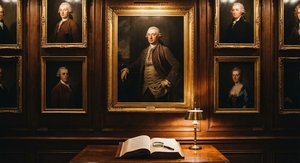
Explore 25 captivating portraits by Sir Joshua Reynolds, a master of British art. Discover stories behind his iconic paintings, elegant style & historical influence. Find museum-quality reproductions and elevate your home decor on Most-Famous-Paintings.com.

Explore the life & work of John Hoppner, a leading Georgian portraitist. Discover his vibrant style, influential patrons, and lasting impact on British art history. Expert insights for collectors.

Explore 25 iconic John Singer Sargent paintings – from dazzling portraits to Impressionist landscapes. Discover the stories behind Madame X, El Jaleo & more! Find museum-quality art reproductions and elevate your home decor with Most-Famous-Paintings.com.
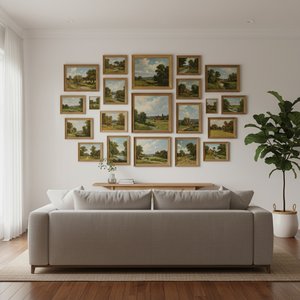
Journey through John Constable's 25 most celebrated landscapes. Explore Romanticism, Dedham Vale & his masterful use of light in iconic paintings like 'Hay Wain'. Find museum-quality art reproductions and elevate your home decor on Most-Famous-Paintings.com.

Explore 25 iconic Sir Alfred Munnings paintings! Discover the beauty of British Impressionism, equine art & rural England. Find museum-quality reproductions and elevate your home decor with Most-Famous-Paintings. Explore the full collection online.


Stay updated with the latest art news, exclusive offers, and decoration ideas.
Tell us about your project and our art experts will provide you with 3 personalized art suggestions.
Let Us Curate 3 Options Just for You - Free!


 Preview
 Send
Send Share
Share
 Details

 Download
 Similars
 X-Ray
X-Ray Diaporama
 Read More







 Glass option is only available in size under 110 CM


