


x

Hand-painted oil on canvas in your size and frame, made to order by our artists. ( Buy Print Buy Image)





























Pick from our preset sizes that match the artwork's original proportions.

You may enter your own dimensions to fit a specific frame or space. If your selected size does not match the original image's proportions, we will either crop the artwork or extend the painting with additional hand-painted elements. A digital mockup will be sent for your approval before production begins.
Please note that the on-screen preview does not reflect the actual cropping or extension. Only the mockup will accurately show the final composition.
While custom sizes are available, we recommend selecting a dimension from the predefined list to preserve the original proportions.
Worldwide Delivery () in 3/4 weeks instead of standard 5 weeks. (23 August). No compromise on quality.


Ignudo (13)
Reproduction Size
Within the breathtaking grandeur of the Sistine Chapel, nestled amidst scenes of biblical drama and divine intervention, resides a seemingly simple fresco—a nude male figure known as *Ignudo* (Latin for “ignorant” or “unlearned”). Painted by Michelangelo Buonarroti in 1509, this small yet profoundly moving work transcends its modest scale to offer a glimpse into the artist’s genius, his understanding of human anatomy, and perhaps, a reflection on the very nature of man. More than just a decorative element within the larger narrative of the Chapel, *Ignudo* stands as an intimate meditation on vulnerability, repose, and the quiet dignity of the human form.
The fresco’s context is crucial to understanding its power. The Sistine Chapel, commissioned by Pope Sixtus IV, was intended as a visual testament to Catholic doctrine, depicting scenes from Genesis and the Old Testament. Michelangelo, already renowned for his sculptures like *David* and *Pietà*, was tasked with adorning the chapel’s ceiling – a monumental undertaking that consumed him for years. Amidst this colossal project, *Ignudo* emerges as a delicate counterpoint to the grander narratives, a moment of serene contemplation within a whirlwind of artistic activity. The figure is positioned in the lower left corner of the “Sacrifice of Noah” panel, a scene depicting the aftermath of the great flood. Its placement suggests a pause, a quiet observation amidst the chaos and renewal depicted above.
Michelangelo’s mastery of anatomy is immediately apparent in *Ignudo*. The figure's body is rendered with an astonishing level of detail—every muscle, vein, and contour meticulously observed and flawlessly translated onto the frescoed surface. Yet, this isn’t a cold, clinical depiction; rather, it’s imbued with a palpable sense of life. The relaxed posture, with arms raised to shield the face, conveys a feeling of vulnerability and introspection. The slight twist of the torso, executed through masterful *contrapposto* (a technique where weight is shifted to one leg), creates a dynamic balance within the figure's stillness. Notice how the subtle curve of his spine echoes the gentle arc of his arms—a visual harmony that speaks volumes about Michelangelo’s understanding of proportion and movement.
The artist’s use of *sfumato* – a technique employing hazy, blurred outlines to soften transitions between light and shadow – further enhances the figure's ethereal quality. The background is subtly rendered with two small birds—one near the top left corner and another towards the bottom right—and a vase on the far left, adding depth and visual interest without distracting from the central subject. These elements contribute to the overall impression of tranquility and seclusion.
The identity of the figure remains deliberately ambiguous, contributing to *Ignudo’s* enduring appeal. Some scholars suggest he represents a young Adam, shielding himself from the knowledge of sin—a poignant premonition of humanity's fall. Others interpret him as a symbol of innocence or vulnerability, a reminder of our shared human condition. The act of covering his face could be seen as a gesture of protection, a desire to escape the harsh realities of the world. Regardless of its precise meaning, *Ignudo* invites viewers to contemplate themes of mortality, faith, and the search for inner peace.
Michelangelo’s decision to include this seemingly simple figure within such a monumental work is itself significant. It demonstrates his ability to create moments of profound emotional resonance even amidst grander narratives. *Ignudo* serves as a reminder that art can be both visually stunning and deeply contemplative, offering a space for individual reflection and connection with the timeless themes explored throughout human history.
Most-Famous-Paintings is proud to offer meticulously crafted oil painting reproductions of Michelangelo’s *Ignudo*. Our skilled artisans painstakingly recreate every detail of the original fresco, using only the finest pigments and archival-quality materials. Whether you're an art enthusiast, a collector seeking a piece of Renaissance history, or simply drawn to the beauty and serenity of this iconic image, our reproduction provides a stunning way to experience Michelangelo’s genius in your own home. Explore our collection today and discover the perfect *Ignudo* reproduction to complement your space and inspire contemplation.
Discovering the Art of the Sistine Chapel | Sistine Chapel ceiling | Michelangelo


1475 - 1564 , Italy
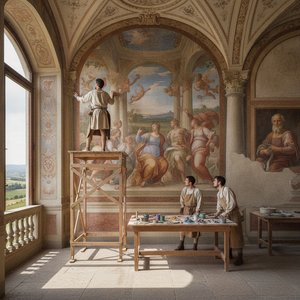
Explore the profound history and technical mastery of fresco painting. From ancient Roman murals to Michelangelo's Sistine Chapel, discover the enduring chemistry and artistry behind this timeless wall painting technique used by the world's greatest masters.


Stay updated with the latest art news, exclusive offers, and decoration ideas.
Tell us about your project and our art experts will provide you with 3 personalized art suggestions.
Let Us Curate 3 Options Just for You - Free!


 Preview
 Send
Send Share
Share
 Details

 Download
 Similars
 X-Ray
X-Ray Diaporama


 Read More







 Glass option is only available in size under 110 CM


