x

 Tempera On PanelEarly Renaissance
 1470Renaissance
 73.0 x 49.0 cm
Hand-painted oil on canvas in your size and frame, made to order by our artists. ( Buy Print Buy Image)





























Pick from our preset sizes that match the artwork's original proportions.

You may enter your own dimensions to fit a specific frame or space. If your selected size does not match the original image's proportions, we will either crop the artwork or extend the painting with additional hand-painted elements. A digital mockup will be sent for your approval before production begins.
Please note that the on-screen preview does not reflect the actual cropping or extension. Only the mockup will accurately show the final composition.
While custom sizes are available, we recommend selecting a dimension from the predefined list to preserve the original proportions.
Worldwide Delivery () in 3/4 weeks instead of standard 5 weeks. (14 August). No compromise on quality.


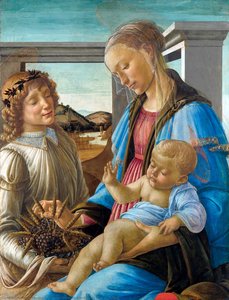
Madonna and Child
Reproduction Size
In the quiet sanctity of the National Gallery of Art resides a masterpiece that captures the very heartbeat of the Early Renaissance: Sandro Botticelli’s Madonna and Child. Completed in 1470, this exquisite work is far more than a mere religious portrait; it is a profound window into the intellectual and spiritual fervor of Florence during the golden age of the Medici. As one gazes upon the Virgin Mary cradling the Christ child, there is an immediate sense of being transported to a period where humanist ideals began to dance alongside deep Christian devotion. The painting serves as a delicate bridge between the earthly and the divine, inviting the viewer into a space of profound contemplation and serene beauty.
The composition is anchored by an ethereal grace that has become Botticelli’s unmistakable signature. Moving away from the rigid, often heavy conventions of the preceding Gothic era, Botticelli embraced a new aesthetic of idealized beauty. He utilized flowing drapery and soft, rhythmic contours to breathe life into his figures, drawing subtle inspiration from the classical elegance of ancient Greek sculpture. The Virgin is depicted with a luminous quality, her features rendered with such precision that she seems to glow from within. This sense of otherworldly light is achieved through a masterful application of technique, where edges are softened to create a dreamlike atmosphere, evoking a feeling of peace that transcends the boundaries of time.
To appreciate this work is to admire the painstaking labor of the artist’s hand. Executed using tempera on panel, the painting is a testament to a demanding and meticulous process. Unlike the more forgiving nature of oil, tempera requires the artist to apply pigment in thin, translucent layers, or glazes, onto a prepared wooden surface. This method allowed Botticelli to build up rich, jewel-like tones and delicate gradations of light that give the skin of the Madonna and Child their lifelike, pearlescent sheen. Every brushstroke was a deliberate act of devotion, contributing to a texture that feels both substantial and weightless.
Beyond its technical brilliance, the painting is rich with symbolic resonance. The crowns adorning both Mary and Jesus serve as potent reminders of their celestial status, marking this not just as a tender moment between mother and son, but as a depiction of the Queen of Heaven and the King of Kings. The background, featuring a rugged mountainous landscape, provides a dramatic contrast to the delicate figures in the foreground, perhaps symbolizing the trials of the earthly world contrasted against the eternal peace of the divine. For the discerning collector or interior designer, this piece offers more than just visual splendor; it brings a sense of historical depth and spiritual tranquility to any space.
For those seeking to surround themselves with art that inspires awe and emotional resonance, Botticelli’s Madonna and Child remains an incomparable choice. Whether displayed in a curated gallery setting or as a focal point in a sophisticated residential interior, its soft palette and harmonious composition possess a unique ability to soothe the spirit and elevate the surrounding environment. A high-quality reproduction of this work allows the timeless elegance of the Florentine Renaissance to reside within a contemporary home, offering a daily encounter with one of the most beautiful expressions of human creativity ever captured on wood.

Sandro Botticelli, born Alessandro di Mariano di Vanni Filipepi around 1445 in Florence, Italy, emerged during a period of extraordinary cultural ferment—the Early Renaissance. His life was deeply rooted in the city’s artistic and social fabric; he never strayed far from his neighborhood of Ognissanti, a testament to both familial ties and the vibrant creative ecosystem that nurtured him. His father, Mariano Filipepi, initially a goldsmith and later a tanner, provided an early exposure to craftsmanship and meticulous detail—qualities that would profoundly influence Botticelli’s artistic approach. Though initial reports suggested training as a goldsmith, he soon found his calling under the tutelage of Fra Filippo Lippi, a leading painter of the time. This apprenticeship proved pivotal, immersing him in the techniques and aesthetics of the Florentine school while also connecting him to influential patrons like the Medici family.
Botticelli’s artistic style is instantly recognizable for its lyrical beauty, characterized by elegant linearity, flowing contours, and a delicate use of color. He masterfully bridged the gap between the late Gothic traditions and the burgeoning Renaissance aesthetic, absorbing influences from masters like Fra Angelico and Paolo Uccello yet forging a uniquely personal vision. His figures possess an ethereal quality, often depicted with elongated proportions and graceful poses that convey both serenity and a subtle melancholy. A defining feature of his work is the frequent incorporation of classical mythology—a reflection of the humanist interests sweeping through Renaissance Florence. He didn’t merely illustrate these ancient tales; he imbued them with new layers of meaning, exploring themes of love, beauty, and spiritual longing.
Botticelli's technique was innovative for its time. He often employed a silverpoint drawing method underpainting his canvases, contributing to the luminosity and delicate detail seen in his finished works. His use of tempera paint allowed for precise rendering and vibrant colors, while his later experiments with oil paints broadened his expressive possibilities.
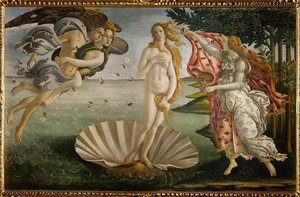
Botticelli’s legacy rests upon a handful of iconic paintings that continue to captivate audiences centuries later. The Birth of Venus, completed around 1486, stands as perhaps his most celebrated work—an allegorical depiction of the goddess emerging from a seashell, embodying Renaissance ideals of beauty and harmony. Its graceful composition, delicate color palette, and evocative symbolism have made it an enduring symbol of the era. Equally renowned is Primavera, created around 1482, a complex and enigmatic painting celebrating spring and love, populated with symbolic figures drawn from classical mythology. These works showcase Botticelli’s mastery of composition, his ability to create atmospheric depth, and his profound understanding of human emotion.
His artistic journey unfolded in distinct phases. The early 1470s saw him focusing on religious subjects, honing his technical skills and establishing a reputation for skillful execution. The 1480s marked the peak of his creative powers, with the creation of his most famous mythological paintings. However, the late 1490s witnessed a shift in his style, influenced by the fervent preaching of Girolamo Savonarola—a Dominican friar who condemned what he saw as the decadence and moral corruption of Florence. This period resulted in more austere and emotionally charged works, reflecting a growing spiritual intensity.
Following his death in 1510, Botticelli’s reputation gradually faded into obscurity. For nearly three centuries, his work was largely forgotten, overshadowed by the achievements of High Renaissance masters like Leonardo da Vinci and Michelangelo. However, a remarkable rediscovery occurred in the late 19th century with the rise of the Pre-Raphaelite Brotherhood—a group of English artists who rejected academic conventions and sought inspiration in the art of the early Italian Renaissance. They were captivated by Botticelli’s linear grace, vibrant colors, and poetic sensibility, recognizing him as a kindred spirit.
This renewed appreciation sparked a widespread reassessment of his work, establishing him as one of the most important artists of the Early Renaissance. Today, Botticelli is celebrated for his unique artistic vision, his masterful technique, and his enduring ability to evoke beauty, emotion, and spiritual contemplation. His influence can be seen in subsequent generations of artists who have sought to capture the same sense of grace and elegance in their own work. He remains a symbol of Florentine artistic achievement and a testament to the power of Renaissance humanism.
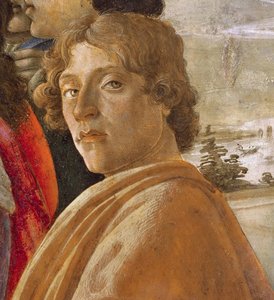
1445 - 1510 , Italy

Explore the profound history and technical mastery of woodcut relief printing. From ancient origins to German Expressionism, discover how artists use the subtractive process to create iconic works. A definitive guide for art students, collectors, and historians.

Discover the technical mastery behind Most-Famous-Paintings.com's premium Giclée canvas prints. Our guide for elite collectors explores archival pigment inks, museum-grade substrates, and the science of high-fidelity reproduction to ensure lasting beauty and historical accuracy.


Stay updated with the latest art news, exclusive offers, and decoration ideas.
Tell us about your project and our art experts will provide you with 3 personalized art suggestions.
Let Us Curate 3 Options Just for You - Free!


 Preview
 Send
Send Share
Share
 Details

 Download
 Similars
 X-Ray
X-Ray Diaporama
 Read More







 Glass option is only available in size under 110 CM