


x


 PastelRococo Portraiture
 175319th Century
 47.0 x 38.0 cm
 Musée d'Art et d'Histoire
Hand-painted oil on canvas in your size and frame, made to order by our artists. ( Switch to Print Switch to Image)





























Pick from our preset sizes that match the artwork's original proportions.

You may enter your own dimensions to fit a specific frame or space. If your selected size does not match the original image's proportions, we will either crop the artwork or extend the painting with additional hand-painted elements. A digital mockup will be sent for your approval before production begins.
Please note that the on-screen preview does not reflect the actual cropping or extension. Only the mockup will accurately show the final composition.
While custom sizes are available, we recommend selecting a dimension from the predefined list to preserve the original proportions.
Worldwide Delivery () in 3/4 weeks instead of standard 5 weeks. (29 July). No compromise on quality.


Portrait of Jean-Jacques Rousseau
Reproduction Size
The pastel portrait of Jean-Jacques Rousseau, executed in 1753 by Maurice Quentin de La Tour, is more than merely a likeness; it’s a carefully constructed embodiment of the intellectual and social currents swirling around the burgeoning Enlightenment. Measuring a modest 47 x 38 cm, this work – currently residing within the esteemed Musée d'Art et d'Histoire in Geneva – possesses an intimacy that draws the viewer into the thoughtful gaze of its subject. De La Tour, a master of Rococo portraiture, expertly employs pastel to achieve a remarkable softness and luminosity, qualities perfectly suited to capturing the nuances of Rousseau’s character.
De La Tour's choice of pastel as the medium is crucial to understanding the work’s impact. Pastels, composed of finely ground pigment mixed with a binder, offer unparalleled blending capabilities, allowing for subtle gradations in tone and texture. The artist skillfully manipulates these soft sticks, layering them upon the paper to build up depth and luminosity. Note the almost ethereal quality of Rousseau's skin tones – a hallmark of De La Tour’s technique. The use of pastel was particularly favored by artists seeking a more immediate and expressive approach than oil painting, allowing for rapid changes in mood and composition.
Rousseau's direct gaze, framed by his characteristic beard and mustache, invites the viewer into a silent conversation. The simple brown coat suggests a man of modest means, yet imbued with intellectual authority. The portrait isn’t simply a representation; it’s an attempt to capture the essence of Rousseau – his intelligence, perhaps even a hint of melancholy – qualities that resonated deeply with the philosophical debates of the time. This work embodies the spirit of questioning and introspection that defined the Enlightenment, inviting us to contemplate the complexities of human thought and experience.


1704 - 1788 , France
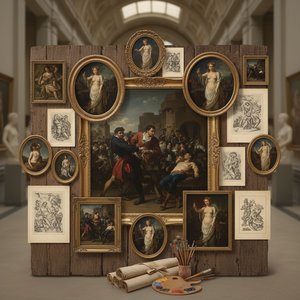
Delve into the world of Francisco Goya with Most-Famous-Paintings. Explore 25 iconic paintings – from 'The Third of May' to his haunting Black Paintings. Discover the stories, techniques & emotions behind these Spanish masterpieces. Find museum-quality art reproductions for your home at Most-Famous-Paintings.com!

Journey through 25 iconic artworks at the Metropolitan Museum of Art! Explore Van Gogh, Monet, Rembrandt & more. Discover art history, inspiring stories, and museum-quality reproductions to elevate your home decor. Explore the full collection on Most-Famous-Paintings.com.

APS ofrece reproducciones de bellas artes y encargos personalizados desde 2004. Confían en nosotros corporaciones, hoteles y coleccionistas selectos para obras de arte de calidad museística, servicio discreto y soluciones artísticas completas. ¡Póngase en contacto con nosotros para obtener un presupuesto personalizado!

Explore 10 iconic portrait paintings – from Mona Lisa to Van Gogh’s self-portraits. Discover the stories behind these masterpieces, artistic techniques & find museum-quality art reproductions for your home at Most-Famous-Paintings.com.
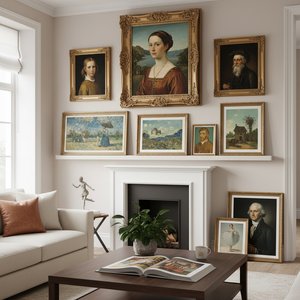
Explore 25 iconic artworks from Washington DC's National Gallery of Art! Discover masterpieces by Cézanne, Matisse & Picasso. Find museum-quality art reproductions and elevate your home decor with timeless paintings. Explore the full collection online at Most-Famous-Paintings.com.


Stay updated with the latest art news, exclusive offers, and decoration ideas.
Tell us about your project and our art experts will provide you with 3 personalized art suggestions.
Let Us Curate 3 Options Just for You - Free!


 Preview
 Send
Send Share
Share
 Details

 Download
 Similars
 X-Ray
X-Ray Diaporama
 Read More







 Glass option is only available in size under 110 CM


