


x

 Oil On CanvasWallArtRomanticism
 19th Century
 82.0 x 82.0 cm
 Royal Albert Memorial Museum
Hand-painted oil on canvas in your size and frame, made to order by our artists. ( Switch to Print Switch to Image)





























Pick from our preset sizes that match the artwork's original proportions.

You may enter your own dimensions to fit a specific frame or space. If your selected size does not match the original image's proportions, we will either crop the artwork or extend the painting with additional hand-painted elements. A digital mockup will be sent for your approval before production begins.
Please note that the on-screen preview does not reflect the actual cropping or extension. Only the mockup will accurately show the final composition.
While custom sizes are available, we recommend selecting a dimension from the predefined list to preserve the original proportions.
Worldwide Delivery () in 3/4 weeks instead of standard 5 weeks. (8 August). No compromise on quality.


Bridge near South Brent, Devon (Didsworthy Bridge )
Reproduction Size
To gaze upon this depiction of the Bridge near South Brent, Didsworthy Bridge, is to be instantly transported to a pastoral dreamscape of Devon. It is more than just a rendering of stone spanning water; it is an immersion into a moment suspended in time—a quintessential English countryside tableau. The composition draws the eye across the gentle curve of the river, leading it inevitably toward the distant, hazy embrace of the mountains that frame the background. One senses the cool breath of the flowing water and the quiet industry of rural life unfolding beneath the vast, open sky.
This evocative scene is attributed to John Gendall, an artist whose career spanned a pivotal era in British art. As a Devon Landscape Pioneer, Gendall captured the very soul of his homeland for posterity. His work embodies the Romantic fascination with nature’s sublime power juxtaposed against the comforting rhythm of human existence. While the scene itself speaks to the picturesque ideals popular during the 19th century, Gendall's touch lends it a unique authenticity. The inclusion of figures—a man perhaps fishing near the bank, others strolling nearby, and the graceful presence of a horse on the right—grounds the sublime landscape in relatable human experience.
The mastery displayed here lies in Gendall's ability to create profound depth. The bridge itself acts as a crucial compositional element, serving not only as a crossing but as a leading line that pulls the viewer deep into the pictorial space. Notice how the foreground activity—the people and the horse—provides immediate intimacy, while the receding river and layered mountains build an expansive sense of perspective. Whether executed through watercolor or printmaking techniques characteristic of his time, the handling of light across the water and over the distant hills suggests a keen understanding of atmospheric perspective, making the scene feel vibrantly alive.
Beyond its sheer beauty, the bridge carries potent symbolism. A bridge, in art, is universally understood as a point of transition—a passage from one state or place to another. Here, it symbolizes connection: connecting two banks of land, connecting human activity with natural grandeur, and perhaps even connecting memory with the present moment for the viewer. The scattered figures suggest community and shared appreciation for this beautiful confluence of nature and engineering. It invites contemplation on journeys taken and those yet to come.
For collectors and designers alike, this reproduction offers more than mere decoration; it offers a narrative anchor for any space. Imagine this scene rendered in your drawing-room or study—a window onto an idealized English afternoon. The soft palette, the gentle drama of the landscape, and the palpable sense of tranquility make it an unparalleled piece for those who seek to infuse their interiors with history, romance, and the enduring beauty of the natural world.

Born in the historic city of Exeter in 1789, John Gendall emerged as a transformative figure in the British art scene, bridging the gap between traditional landscape painting and the revolutionary dawn of lithography. His life was deeply rooted in the intellectual and cultural soil of Devon, a region that would forever serve as his primary muse. Growing up in an environment of scholarly pursuit—the son of a respected physician—Gendall possessed a refined sensibility that allowed him to perceive the subtle nuances of the natural world. His early years were not merely about observing nature, but about understanding its structure, a skill that would later allow him to master both the brush and the lithographic stone.
The trajectory of Gendall’s career was irrevocably altered by a serendipitous encounter in the bustling art markets of London. When he met Rudolf Ackermann, one of the most influential print sellers of the era, the seeds of a technical revolution were sown. Working under Ackermann, Gendall was introduced to the burgeoning medium of lithography. This process, which allowed for the reproduction of delicate drawings through stone printing, offered a new way to disseminate the beauty of the English countryside to a wider audience. His early contributions to works such as “Picturesque Tour of the Seine” demonstrated an emerging mastery over tonal depth and texture, marking his transition from a talented draftsman to a sophisticated printmaker.
As Gendall’s reputation grew, so too did his involvement in the professional networks that defined the nineteenth-century art world. His partnership with William Cole stands as a testament to his collaborative spirit. Together, they operated a print shop that became a vital hub for topographical and landscape art. This period of his life was characterized by an intense focus on capturing the grandeur of the Thames and the intimate, rolling hills of his native Devon. Through these collaborations, Gendall was able to merge the precision of topographical recording with a romanticized, emotive approach to light and atmosphere.
Beyond the technicalities of printmaking, Gendall’s life was anchored by a profound connection to his community. His marriage to Maria in 1824 brought a sense of domestic stability that mirrored the peacefulness found in his landscapes. He was not merely an observer of Devon; he was a builder of its cultural legacy. His instrumental role in the early development of what would become the museum at Exeter University highlights a man dedicated to the preservation and celebration of local heritage. This commitment ensured that his artistic vision was inextricably linked to the historical identity of the West Country.
The significance of John Gendall lies in his ability to capture the picturesque—a movement that sought to find beauty in the rugged, the rural, and the everyday. His works serve as a visual diary of a bygone era, documenting river scenes, local life, and the shifting light of the English landscape with an authenticity that resonates even today. His mastery of lithography helped democratize art, making high-quality landscape imagery accessible to the burgeoning middle class of the Victorian era.
Reflecting on his immense contribution, one can observe several key pillars of his enduring impact:
Today, Gendall is remembered not just as a painter, but as a pioneer who captured the soul of the British landscape during a period of profound industrial and social change.

1789 - 1865 , United Kingdom

Journey through 25 iconic artworks at the Metropolitan Museum of Art! Explore Van Gogh, Monet, Rembrandt & more. Discover art history, inspiring stories, and museum-quality reproductions to elevate your home decor. Explore the full collection on Most-Famous-Paintings.com.
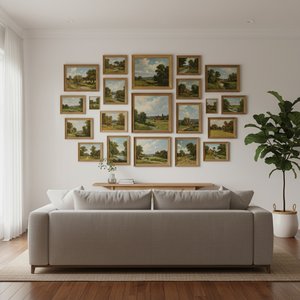
Journey through John Constable's 25 most celebrated landscapes. Explore Romanticism, Dedham Vale & his masterful use of light in iconic paintings like 'Hay Wain'. Find museum-quality art reproductions and elevate your home decor on Most-Famous-Paintings.com.

Explore 25 iconic Sir Alfred Munnings paintings! Discover the beauty of British Impressionism, equine art & rural England. Find museum-quality reproductions and elevate your home decor with Most-Famous-Paintings. Explore the full collection online.

Journey through 10 Romantic landscape masterpieces by Friedrich, Turner & Cole. Explore emotional art, sublime nature scenes & iconic 19th-century paintings. Find museum-quality reproductions for your home at Most-Famous-Paintings.com – discover the full collection online!
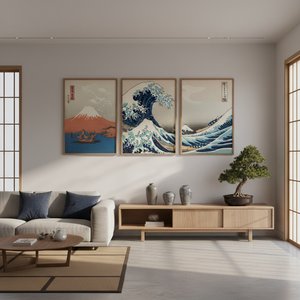
Journey through Katsushika Hokusai’s 25 most iconic artworks, including *The Great Wave*. Explore the ukiyo-e master's history, style & timeless Japanese woodblock prints. Find museum-quality reproductions for your home at Most-Famous-Paintings.com.


Stay updated with the latest art news, exclusive offers, and decoration ideas.
Tell us about your project and our art experts will provide you with 3 personalized art suggestions.
Let Us Curate 3 Options Just for You - Free!


 Preview
 Send
Send Share
Share
 Details

 Download
 Similars
 X-Ray
X-Ray Diaporama
 Read More







 Glass option is only available in size under 110 CM


